|
To date, China has not announced import bans, product recalls, or new specific mercury limits for Dissostichus eleginoides
China Warns Against Frequent Consumption of Large Predatory Fish Following Mercury Case Linked to Patagonian Toothfish
 CHINA
Wednesday, October 07, 2026, 00:20 (GMT + 9)
Chinese health authorities recommend diversifying diets and avoiding prolonged intake of deep-sea predatory species, particularly for young children and pregnant women.
The National Center for Food Safety Risk Assessment of China (CFSA) issued an official advisory on October 5 regarding the consumption of deep-sea seafood following public concern over a high mercury exposure case involving a minor.
The regulatory agency explained that methylmercury accumulates progressively throughout the food chain, reaching higher concentrations in large carnivorous fish. Among the species and categories highlighted by the authority are shark, swordfish, tuna, and "silver cod" (a commercial term used in China to describe certain deep-sea fish).
.png)
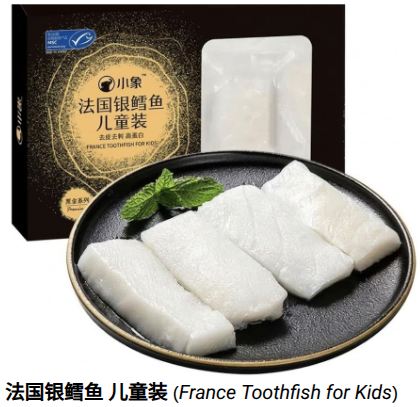
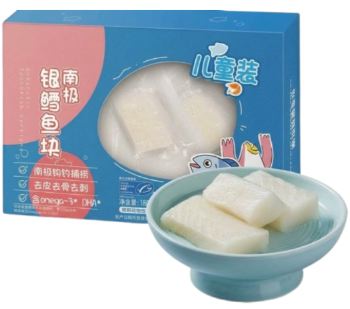
The case that triggered the alert involved a 2-year-old child who consumed a product marketed as child-size portions of Patagonian toothfish for approximately 8 months. According to published reports in China, the minor ate the fish 2 to 3 times per week, with an estimated average intake of 110 grams per week.
A clinical analysis conducted on September 23 revealed a total blood mercury concentration of 27.87 µg/L, significantly exceeding the reference value of less than 10 µg/L.
.png)
Researcher Fang Haiqin pointed out that, due to the bioaccumulation effect in the food chain, aquatic products—especially deep-sea fish—are highly susceptible to mercury contamination from the environment, with organic mercury (primarily methylmercury) posing a significant health risk.
Species Identification and Regulatory Controversy
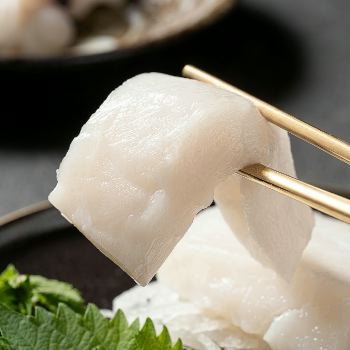
Although the Chinese commercial name is ambiguous and can also refer to sablefish (Anoplopoma fimbria), the species involved in this incident was formally identified as Dissostichus eleginoides, known in English as Patagonian toothfish or Chilean sea bass, and in Spanish as merluza negra.
In technical tests conducted by the supplier, the analyzed product recorded 0.21 mg/kg of methylmercury, a level well below the technical limit of 1.0 mg/kg. Consequently, the supplying company maintained that the batch fully complied with current regulations.
The controversy centers not on a violation of official standards for a single shipment, but on the potential cumulative effects of frequent and prolonged exposure to a species capable of bioaccumulating methylmercury in early childhood diets.
Authority Recommendations
The CFSA recommended avoiding the continuous intake of a single large predatory fish species and suggested diversifying diets with seafood species that typically exhibit lower contaminant levels. The advisory pays special attention to young children, pregnant women, and lactating mothers.
Furthermore, the health authority reiterated that seafood remains an essential source of high-quality protein, micronutrients, and omega-3 fatty acids. Therefore, the measure does not aim to discourage overall consumption, but rather to prevent excessive exposure to specific species.
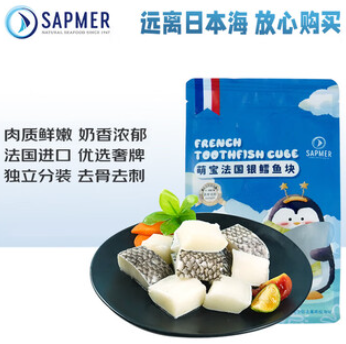 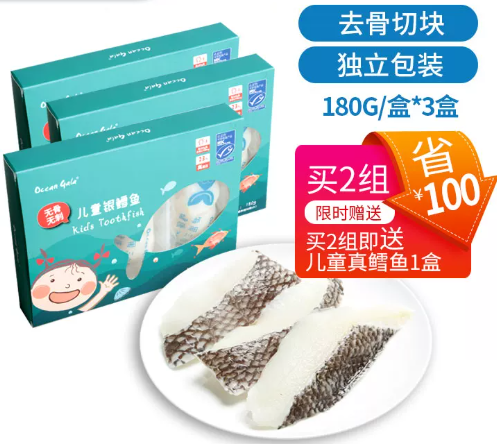
Photo: JD.com
To date, China has not announced import bans, product recalls, or new specific mercury limits for Dissostichus eleginoides. The regulatory signal emphasizes a broader issue: compliance with chemical safety limits does not automatically render a product suitable for frequent and long-term consumption by young children.
Noticia relacionada:
🇯🇵 日本語 (Japanese Version) | AIによる自動翻訳
中国、マジェランアイナメに伴う水銀検出事例を受け大型捕食魚の頻繁な摂取に注意喚起
中国衛生当局は、特に乳幼児や妊婦を対象に、深海捕食魚の長期的な摂取を避け、食事の多様化を図るよう推奨
中国の食品安全リスク評価センター(CFSA)は10月5日、小児の高水銀暴露事例が波紋を呼んだことを受け、深海の水産物の摂取に関する公式勧告を発表しました。
規制機関の説明によると、メチル水銀は食物鎖を通じて段階的に生体濃縮され、大型肉食魚類においてより高い濃度に達します。当局が挙げた主要な魚種・区分には、サメ、カジキ、マグロ、および「銀鱈」(中国の商業市場において特定の深海魚を指す名称)が含まれています。
今回の警告の契機となった事例は、幼児用カット切り身として販売されていたマジェランアイナメを約8ヶ月間摂取していた2歳の男児に関するものです。中国国内の報道によると、この男児は週に2〜3回、週平均約110gのペースで当該魚を摂取していました。
9月23日に実施された病院での血液検査では、血中総水銀濃度が27.87 µg/Lと測定され、基準値である10 µg/L未満を大幅に上回っていることが判明しました。
研究員の方海琴(Fang Haiqin)氏は、食物連鎖における蓄積効果により、水産物(特に深海魚)は環境中の水銀汚染の影響を受けやすく、有機水銀(主にメチル水銀)は健康に対する重大なリスクをもたらすと指摘しました。
魚種の特定と規制を巡る議論
中国における商業名「銀鱈」は曖昧であり、ギンダラ(Anoplopoma fimbria)を指す場合もありますが、本件に関与した商品は学名 Dissostichus eleginoides(マジェランアイナメ/パタゴニアントゥースフィッシュ/Chilean sea bass)であることが明確に特定されました。
サプライヤーが実施した製品分析では、メチル水銀検出値は0.21 mg/kgであり、技術基準上限とされる1.0 mg/kgを十分に下回っていました。そのため、販売企業側は該当ロットが適用法規に適合していると主張しています。
したがって、議論の焦点は基準違反製品の流通ではなく、メチル水銀を生体濃縮しやすい魚種を乳幼児が頻繁かつ長期的に摂取することによる累積的影響にあります。
当局の推奨事項
CFSAは、単一の大型捕食魚を連続して摂取することを避け、通常は水銀濃度の低い水産物を取り入れて食事を多様化することを推奨しました。この勧告では、特に乳幼児、妊婦、授乳中の女性に対する配慮が強調されています。
一方で、衛生当局は水産物が引き続き高品質なタンパク質、微量栄養素、およびオメガ3脂肪酸の重要な供給源であることを強調しており、今回の措置は魚介類の消費全般を抑制するものではなく、特定の魚種に対する過剰な暴露を防ぐことを目的としています。
現時点において、中国は Dissostichus eleginoides に対する輸入禁止措置、全般的な回収指示、あるいは新たな個別水銀基準値の設定などは発表していません。規制当局の警告は、汚染物質の基準値適合が必ずしも乳幼児による頻繁かつ長期的な摂取に対する安全性を保証するものではないという点を明確に示しています。
🇨🇳 中文 (Simplified Chinese Version) | 由人工智能自动翻译
中国因犬牙南极鱼引发血汞偏高事件,警告勿频繁食用大型掠食性鱼类
中国卫生部门建议公众,尤其是婴幼儿及孕妇,避免长期频繁食用深海掠食性鱼类,并积极采取多样化饮食结构。
中国国家食品安全风险评估中心(CFSA)于10月5日针对深海水产品食用安全发布了专门提示。此前,一起幼儿因食用相关鱼类导致血汞浓度偏高事件引发了社会广泛关注。
评估机构指出,甲基汞会在食物链中逐级累积,并在大型肉食性鱼类体内达到较高浓度。官方提及的鱼类种类及类别包括鲨鱼、剑鱼、金枪鱼以及“银鳕鱼”(中国商业市场上用于称呼多种深海鱼类的名称)。
引发此次预警的案例涉及一名2岁幼儿。该幼儿连续约8个月食用一款标示为儿童餐切块的深海鱼产品。根据中国相关报道,该幼儿每周食用2至3次,估计每周平均摄入量约为110克。
在9月23日进行的医院检测中,该幼儿血液中的总汞浓度达到27.87 µg/L,远高于小于10 µg/L的参考标准值。
研究员方海琴指出,由于食物链的富集效应,水产品特别是深海鱼类容易受到环境中汞的污染,其中有机汞(主要是甲基汞)对人体健康存在较大风险。
物种鉴定与监管争议
尽管“银鳕鱼”在中国市场属于模糊的商业统称,有时也可指代裸盖鱼(Anoplopoma fimbria),但涉事产品经确认为小头犬牙南极鱼(Dissostichus eleginoides),即国际上通称的 Patagonian toothfish 或 Chilean sea bass(南极犬牙鱼/巴塔哥尼亚犬牙鱼)。
供应商对涉事产品进行的检测结果显示,甲基汞含量为0.21 mg/kg,低于1.0 mg/kg的官方技术限量标准。因此,涉事企业主张该批次产品符合现行监管要求。
由此,争议焦点并非在于批次产品检测超标,而在于幼儿长期频繁食用具有较高甲基汞生物富集能力的高链端鱼类所带来的潜在累积风险。
官方建议与监管导向
CFSA建议公众避免长期单一食用某种大型掠食性鱼类,并应通过选择汞含量较低的水产品来实现膳食多样化。该建议特别强调了对婴幼儿、孕妇及哺乳期女性的保护。
同时,卫生部门重磅强调,水产品依然是优质蛋白质、微量元素以及奥米加-3(Omega-3)脂肪酸的重要来源。因此,该风险提示意在防范特定鱼类的过量暴露,而非阻碍公众对水产品的正常消费。
截至目前,中国尚未针对 Dissostichus eleginoides 宣布任何进口禁令、全面召回指令或出台新的特定汞限量标准。监管部门发出的明确信号表明:符合食品安全污染物限量标准,并不等同于该产品适合婴幼儿进行高频次、长期的日常食用。
[email protected]
www.seafood.media
|




 Print