|
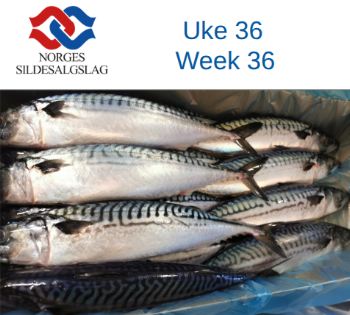
Photo: Norges Sildesalgslag/Åge Røttingen / FIS
Norway Pelagic Fisheries Report, Week 36
 NORWAY
Tuesday, September 08, 2026, 00:20 (GMT + 9)
Best Autumn Week for Mackerel (Scomber scombrus) in the Norwegian Sea
Record Catches Reaching 23,000 Tonnes Landed, While Blue Whiting (Micromesistius poutassou) and Sprat (Sprattus sprattus) Complete Sector Operations
Mackerel (Scomber scombrus)
(2).jpeg)
By far the best week of the autumn was recorded with a total of 23,000 tonnes entered in the landing log. The highest-performing day was Tuesday with a total of 9,200 tonnes, while the opposite extreme was observed on Thursday with only 500 tonnes.
Purse seiners (ringnot) harvested the largest volume with 16.900 tonnes, followed by coastal vessels with coastal purse seine/nets (SUK) with 1,300 tonnes, the coastal fleet with 700 tonnes, and trawlers with 600 tonnes. Additionally, twelve foreign vessels — ten of which originate from the Faroe Islands — contributed 3,500 tonnes.
Main fishing operations took place in the Norwegian Sea across established grounds located 140-170 nautical miles northwest of Ålesund. Furthermore, just under 1,000 tonnes were harvested at Vikingbanken over the weekend.
As usual at this time of year, mackerel (Scomber scombrus) proved capricious: gathering in massive concentrations one day, only to vanish for several days following. The schools targeted during the first part of the week moved rapidly toward the southwest, presumably migrating into the British zone of the Norwegian Sea.
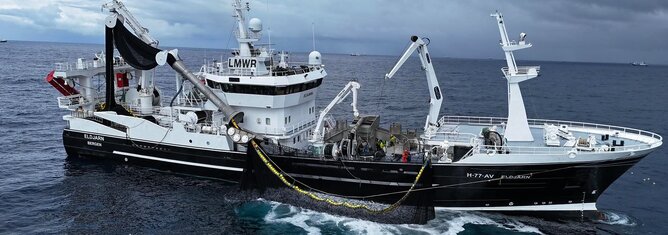
Photo: Norges Sildesalgs / FISlag/Åge Røttingen
Large mackerel (Scomber scombrus) were targeted in the Norwegian Sea, with average weights ranging from 400 grams up to 600 grams, achieving a weighted average of 522 grams. Mackerel (Scomber scombrus) caught at Vikingbanken registered an average weight of 375 grams.
For the smallest vessels operating along the coast, conditions remain challenging due to reported resource scarcity. Where mackerel (Scomber scombrus) is present, the size remains very small. In total, this coastal fleet landed just 190 tonnes along the coast from Tysvær in the south to Haram in the north.
Sizes in this coastal area range from 220 grams to 400 grams, with a weighted average of 273 grams. Coastal operators hope for improved conditions around the upcoming new moon when mackerel (Scomber scombrus) responds to light fishing.
Out of this year's available quota of over 77,000 tonnes, a total of 31,000 tonnes has been harvested to date, leaving a remaining balance of just under 46,000 tonnes. Several vessels, particularly within the purse seine (ringnot) fleet, have now completed their allocated mackerel (Scomber scombrus) quota.
It remains to be seen whether fishing will continue in the Norwegian Sea moving forward, or if operations must transition into the British zone of the North Sea. Last year, the final landing from the Norwegian Sea occurred on 13 September, while the first catch from the British zone was recorded on 15 September.
North Sea Herring (Clupea harengus)
(1)(2).jpeg)
A volume slightly larger than preceding weeks was reported, totaling 4,300 tonnes. This total comprises 2,700 tonnes from five foreign vessels, with individual catches ranging between 300 and 1,000 tonnes. From three vessels in the purse seine (ringnot) group, 800 tonnes were registered, with the coastal fleet providing 600 tonnes, SUK vessels 150 tonnes, and trawlers 80 tonnes.
The vast majority, 3,500 tonnes, was caught within the British zone. Foreign vessels operated within the 12-nautical-mile limit of Fair Isle, south of Shetland. Herring (Clupea harengus) from this ground is currently spawning, with roe pressing active on this fishing ground.
Norwegian vessels operated in the area 50-60 nautical miles southeast of Shetland. Herring (Clupea harengus) sizes from the British sector ranged from 180 grams up to a maximum average weight of 272 grams, with a weighted average of 219 grams.
In the Norwegian zone, minor catches were taken near the border with the Danish sector. These comprised smaller herring (Clupea harengus) with average weights between 114 and 124 grams, deemed unsuitable for direct human consumption and allocated for fishmeal and fish oil processing.
Norwegian Spring-Spawning Herring - NVG (Clupea harengus)
.png)
Good concentrations of herring (Clupea harengus) assembled in the area around Hitra. Across five different vessels in the coastal group, 730 tonnes were landed. These specimens represented high-quality fish with sizes ranging from 300 grams to 380 grams.
Continued fishing activity is anticipated in this area in the coming days.
Sprat (Sprattus sprattus) / Blue Whiting (Micromesistius poutassou)
(1)(2).png) (2).jpg)
A single Danish vessel reported 1,160 tonnes of sprat (Sprattus sprattus) harvested in the Dutch and German sectors of the European Union zone.
Regarding blue whiting (Micromesistius poutassou) operations along the edge area known as "Kanten", two landings totaling 680 tonnes were registered.
Original source: Kenneth Garvik / Norges Sildesalgslag
🇯🇵 日本語 (Japanese Version) | AIによる自動翻訳
ノルウェー海におけるサバ(Scomber scombrus)の今秋好漁週
水揚げ量23,000トンを記録、ブルーホワイティング(Micromesistius poutassou)およびスプラット(Sprattus sprattus)も漁獲を補完
サバ(Scomber scombrus)
今秋最高となる合計23,000トンの水揚げが報告日誌に記録されました。最も好漁となったのは火曜日で9,200トンに達した一方、最も低調だったのは木曜日でわずか500トンにとどまりました。
最も多く漁獲したのはまき網(ringnot)漁船で16,900トン、次いで沿岸小規模まき網/刺し網(SUK)漁船が1,300トン、沿岸漁船が700トン、トロール漁船が600トンとなりました。さらに、外国漁船12隻(うち10隻はフェロー諸島船籍)から3,500トンが水揚げされました。
主たる漁場はオーレスンの北西140〜170海里に位置するノルウェー海の既存漁場でした。加えて、週末にはバイキングバンクにて1,000トン弱が漁獲されました。
この時期の例年通り、サバ(Scomber scombrus)の動きは気まぐれで、ある日に大規模な群れを形成したかと思えば、その後数日間にわたり姿を消す現象が見られます。週の前半に漁獲された群れは南西方向へ素早く移動し、ノルウェー海の英国排他的経済水域内へ移動したと推測されます。
ノルウェー海で漁獲されたサバ(Scomber scombrus)は大型で、平均重量は400グラムから600グラムに達し、加重平均は522グラムとなりました。一方、バイキングバンクで漁獲されたサバ(Scomber scombrus)の平均重量は375グラムでした。
沿岸で操業する小型漁船にとっては、極めて厳しい状況が続いています。資源の不漁が報告されており、サバ(Scomber scombrus)が確認される海域であってもサイズは非常に小型です。南のティスヴェルから北のハラムに至る沿岸全域でのこれら小型船による総漁獲量はわずか190トンにとどまりました。
同海域の魚体サイズは220グラムから400グラムの範囲で、加重平均は273グラムです。沿岸漁業者らは、サバ(Scomber scombrus)が集魚灯に反応しやすくなる新月前後の漁況回復に期待を寄せています。
本年の利用可能割当枠約77,000トンのうち、これまでに31,000トンが消化され、残漁獲枠は46,000トン弱となっています。特にまき網(ringnot)漁船グループを中心に、複数の漁船がすでに割り当てられたサバ(Scomber scombrus)枠を消化完了しています。
今後の漁場が引き続きノルウェー海に留まるか、あるいは北海の英国水域へシフトするか注目されています。昨年のデータでは、ノルウェー海からの最終水揚げは9月13日であり、英国水域からの初水揚げは9月15日に記録されています。
北海ニシン(Clupea harengus)
前週を上回る合計4,300トンの水揚げが記録されました。この内訳は、外国漁船5隻による2,700トン(1隻あたり300〜1,000トン)、まき網(ringnot)グループの3隻による800トン、沿岸漁船による600トン、SUK漁船による150トン、トロール漁船による80トンとなっています。
大半の3,500トンは英国水域で漁獲されました。外国漁船はシェトランド諸島南部に位置するフェア・アイランドの12海里圏内で操業を行いました。同海域のニシン(Clupea harengus)は現在産卵期を迎えており、魚卵(カズノコ)採取用の加工が行われています。
ノルウェー漁船はシェトランド諸島の南東50〜60海里の海域で操業しました。英国水域産のニシン(Clupea harengus)の平均重量は180グラムから最高272グラムで、加重平均は219グラムでした。
ノルウェー水域内では、デンマーク水域との境界付近で若干の漁獲がありました。これらは平均重量114〜124グラムの小型ニシン(Clupea harengus)であり、食用には適さず、魚粉および魚油の原材料として取引されました。
ノルウェー春そうまきニシン - NVG(Clupea harengus)
ヒトラ島周辺の海域に良好なニシン(Clupea harengus)の群れが集まりました。沿岸漁船グループの5隻により730トンが漁獲されました。魚体サイズは300グラムから380グラムと高品質な個体となっています。
同海域では今後も継続的な操業が見込まれています。
スプラット(Sprattus sprattus)/ ブルーホワイティング(Micromesistius poutassou)
欧州連合水域のオランダおよびドイツセクターにおいて、デンマークの漁船1隻から1,160トンのスプラット(Sprattus sprattus)が報告されました。
「カンテン」と呼ばれる大陸棚縁辺部におけるブルーホワイティング(Micromesistius poutassou)漁については、2件の航海で合計680トンの水揚げが報告されています。
🇨🇳 中文 (Simplified Chinese Version) | 由人工智能自动翻译
挪威海迎秋季大西洋鲭鱼(Scomber scombrus)最佳捕捞周
卸货量达23,000吨创纪录,蓝鳕(Micromesistius poutassou)与粕鲱(Sprattus sprattus)补足产区作业
大西洋鲭鱼(Scomber scombrus)
挪威海迎来今秋最为丰收的一周,入港登记总量达到23,000吨。其中产量最高的一天为星期二,单日达9,200吨;而产量最低的一天为星期四,仅有500吨。
围网(ringnot)捕捞船队为主要捕捞力量,贡献了16,900吨;其次是小型围网/刺网(SUK)船队1,300吨,沿海船队700吨,拖网船队600吨。此外,12艘外籍渔船(其中10艘来自法罗群岛)共计卸货3,500吨。
主要捕捞作业集中在挪威海的传统渔场,位于奥勒松西北方向140至170海里处。此外,周末期间在维京浅滩(Vikingbanken)也捕获了近1,000吨。
与每年该时段的规律一致,大西洋鲭鱼(Scomber scombrus)的游动路线多变:某一天会大量聚集,随后数日又消失无踪。本周前半段捕获的鱼群向西南方向快速游动,推测已进入挪威海的英国管辖水域。
在挪威海捕获的大西洋鲭鱼(Scomber scombrus)体型较硕大,平均重量在400克至600克之间,加权平均重量为522克。而在维京浅滩捕获的大西洋鲭鱼(Scomber scombrus)平均重量则为375克。
对于在沿岸作业的小型渔船而言,捕捞形势不容乐观,普遍反映资源匮乏。即便在出现大西洋鲭鱼(Scomber scombrus)的水域,鱼体规格也非常小。从南部蒂斯韦尔(Tysvær)到北部哈拉姆(Haram)的整个沿海区域,此类小型渔船总共仅捕获190吨。
该沿海区域的规格在220克至400克之间,加权平均重量为273克。沿岸渔民希望在新月前后渔况有所好转,届时大西洋鲭鱼(Scomber scombrus)对趋光捕捞的反应更为明显。
在本年度约77,000吨的可用配额中,截至目前已捕捞31,000吨,剩余配额仅剩46,000吨左右。已有数艘渔船(特别是围网船队)完成了分配给各自的大西洋鲭鱼(Scomber scombrus)捕捞配额。
未来捕捞作业是继续留在挪威海,还是转移至北海的英国水域,仍有待观察。去年的数据显示,挪威海的最后一次捕捞记录为9月13日,而英国水域的首次捕捞记录为9月15日。
北海鲱鱼(Clupea harengus)
本周捕捞总量达到4,300吨,较前几周略有增加。其中包括来自5艘外籍渔船的2,700吨(单船捕获量在300至1,000吨之间);来自围网船队3艘渔船的800吨;沿海船队600吨;SUK船队150吨;以及拖网船队80吨。
绝大部分渔获(3,500吨)捕自英国水域。外籍渔船主要在设得兰群岛以南费尔岛(Fair Isle)12海里领海线内作业。该海域的北海鲱鱼(Clupea harengus)正处于产卵期,捕获后主要用于提取鱼籽。
挪威本国渔船则在设得兰群岛东南50至60海里的水域作业。英国水域产出的北海鲱鱼(Clupea harengus)规格在180克至最高272克之间,加权平均重量为219克。
在挪威水域内,靠近丹麦管辖区边界的水域有少量捕获。此处的鲱鱼(Clupea harengus)体型较小,平均重量在114至124克之间,不适于直接食用,已转作鱼粉和鱼油加工原料。
挪威春季产卵鲱鱼 - NVG(Clupea harengus)
希特拉岛(Hitra)周边水域聚集了大量鲱鱼(Clupea harengus)。来自沿海船队的5艘渔船共捕获730吨。这批鲱鱼品质优良,规格在300克至380克之间。
预计未来几天该水域的捕捞作业仍将持续。
粕鲱(Sprattus sprattus)/ 蓝鳕(Micromesistius poutassou)
仅1艘丹麦渔船申报了1,160吨粕鲱(Sprattus sprattus),捕捞自欧洲联盟区内的荷兰和德国管辖水域。
在沿大陆架边缘“Kanten”海域进行的蓝鳕(Micromesistius poutassou)捕捞方面,共计有2批卸货,总量为680吨。
[email protected]
www.seafood.media
|




 Print