|
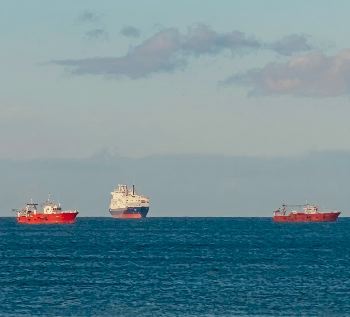
Two outrigger trawlers waiting to enter Puerto Madryn
Argentine red shrimp fishery in national waters enters final phase with gradual subarea closures and dispatch deadlines
 ARGENTINA
Wednesday, September 09, 2026, 03:00 (GMT + 9)
The Undersecretariat of Aquatic Resources and Fisheries set the last vessel dispatch for September 9, following biological recommendations from INIDEP due to increased hake bycatch, lower crustacean concentration, and the start of the reproductive stage.
The harvesting campaign for Argentine red shrimp (Pleoticus muelleri) in Argentina’s federal jurisdiction waters has entered its definitive early closure, moving forward nearly a month compared to usual timelines. The measure aims to ensure the biological sustainability of the marine resource following a series of technical and operational evaluations across the fishing grounds.
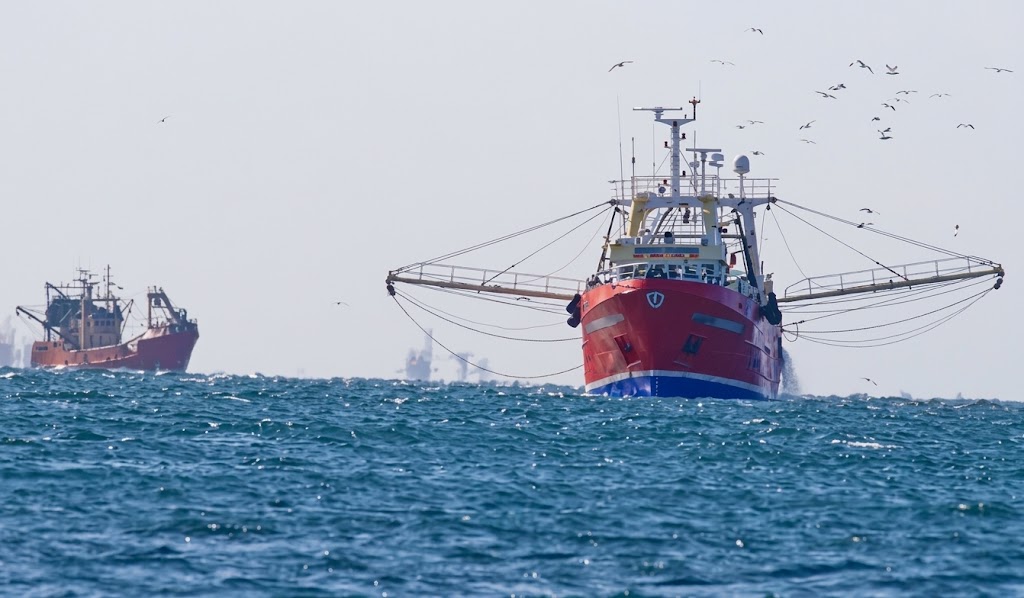
Photo: Stockfile / FIS
The National Directorate of Fisheries Coordination and Control, operating under the Undersecretariat of Aquatic Resources and Fisheries, finalized the closure of Subareas 4 and 5 for targeted red shrimp fishing starting at 00:00 hours on Tuesday, September 8, 2026. Additionally, the enforcement authority established the deadline for the last vessel dispatch targeted at the species in national waters as Wednesday, September 9, 2026 at 23:59 hours, projecting the complete conclusion of operations by September 13.
Biological and scientific rationale
The decisions made by the national fisheries authority are backed by the National Institute for Fisheries Research and Development (INIDEP) and the Federal Fisheries Council (CFP). The biological evaluations responded to several factors observed during the final weeks of operations:
-
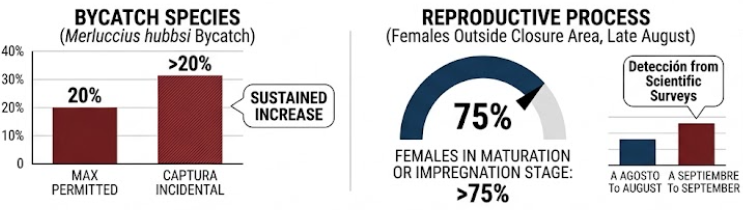
Incidental catch: A sustained increase in the incidental catch (bycatch) of Argentine hake (Merluccius hubbsi), exceeding the maximum permitted limit of 20%.
-
Reproductive process: Scientific surveys detected that, by late August, more than 75% of females located outside the closure area were in the maturation or impregnation stage.
-
Operational yield: A lower concentration of specimens within the fishing grids, combined with the dispersion of schools.
Catch performance during the 2026 season
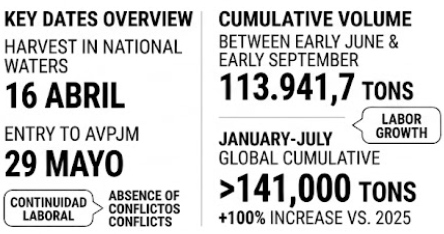
The harvesting season in national waters was formally authorized on April 16, while on May 29 commercial fleet access was permitted in specific sectors within the Permanent Hake Juvenile Closure Area (AVPJM). The season recorded high productive performance with distinct monthly fluctuations:
-
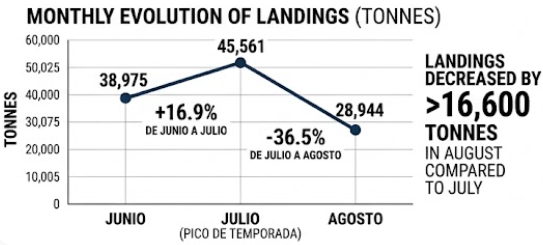
Monthly evolution: In June, landings reached 38,975 tonnes, peaking in July at 45,561 tonnes (a 16.9% increase compared to the previous month).
-
August decline: During August, a downward trend began with landings of 28,944 tonnes, representing a 36.5% decrease (more than 16,600 tonnes less than in July).
-
Cumulative volume: Between early June and early September, total landings reached 113,941.7 tonnes. Overall cumulative landings from January to July exceeded 141,000 tonnes, marking an increase of over 100% compared to the same period in 2025, supported by labor continuity and the absence of trade union conflicts.
Fleet and industrial sector status
Faced with declining catches and rising operating costs, the fresh-fish high-seas fleet began its gradual retreat in mid-August, followed later by freezer vessels. Currently, less than one-third of the red shrimp fleet remains operational at sea, moving to areas outside the AVPJM, north of parallel 41°S, and east of Subareas 12 and 14.
.png)
The conclusion of the season reopened the debate among industrial associations. Entities such as the Chamber of Argentine Freezer Fishing Shipowners (CAPIP) supported INIDEP’s technical reports to protect the spawning stock, while sectors of the freezer fleet expressed caution regarding the economic impact of the early closure. The situation brought back to the agenda the discussion on the feasibility of implementing an Individual Transferable Quota (ITQ) system for the red shrimp fishery in Argentina.
🇯🇵 日本語 (Japanese Version) | AIによる自動翻訳
国域水域におけるアルゼンチンアカエビ漁業が段階的区画閉鎖と出港期限の設定により最終段階へ突入
水産・水生資源水産局は、ハチビキ(メルルーサ)の混獲増加、甲殻類の資源密度低下、および繁殖期の開始に伴うINIDEPの生態学的勧告を受け、最終出港期限を9月9日に設定した。
アルゼンチンの連邦管轄水域におけるアルゼンチンアカエビ(Pleoticus muelleri)の漁獲キャンペーンは、例年より約1ヶ月前倒しで前倒し終漁の最終段階に入った。この措置は、漁場全域にわたる一連の技術的・操業的評価を経て、海洋資源の生物学的持続可能性を確保することを目的としている。
水産・水生資源水産局傘下の全国漁業調整・取締総局は、2026年9月8日火曜日00:00より、サブエリア4および5におけるアルゼンチンアカエビの対象漁業を閉鎖することを正式に発表した。さらに、取締当局は国域水域における同種を対象とした最終出港期限を2026年9月9日水曜日23:59までに設定し、9月13日までに操業が完全に終了する見通しを示した。
生物学的および科学的根拠
国家漁業当局による決定は、全国水産研究開発研究所(INIDEP)および連邦漁業評議会(CFP)の支援に基づいている。生物学的評価は、操業最終週に観察された複数の要因に対応したものである:
-
混獲(バイキャッチ): メルルーサ(Merluccius hubbsi)の混獲率が持続的に増加し、許容上限である20%を超過した。
-
繁殖プロセス: 科学的調査によると、8月末までに禁漁区外に生息する雌の75%以上が成熟または受精段階にあることが確認された。
-
操業歩留まり: 漁獲区画内における個体濃度の低下と、群れの分散が確認された。
2026年シーズンにおける漁獲実績
国域水域での操業は4月16日に正式に解禁され、5月29日にはメルルーサ幼魚永久禁漁区(AVPJM)内の特定エリアへの商業船団の立ち入りが許可された。今シーズンは高い生産性を記録したものの、月ごとの変動が顕著であった:
-
月別推移: 6月の水揚げ量は38,975トンに達し、7月にはシーズン最高の45,561トン(前月比16.9%増)を記録した。
-
8月の減少: 8月に入ると減少傾向に転じ、水揚げ量は28,944トンとなり、7月と比較して36.5%の減少(16,600トン以上の減少)となった。
-
累計水揚げ量: 6月初旬から9月初旬までの総水揚げ量は113,941.7トンに達した。1月から7月までの全体の累計水揚げ量は141,000トンを超え、労働の継続性と労組争議の不在に支えられ、2025年の同期間と比較して100%以上の増加を記録した。
船団および産業部門の状況
漁獲量の減少と操業コストの上昇に直面し、生鮮船団(フレッシュボート)は8月中旬に段階的な撤退を開始し、その後トロール冷凍船団が続いた。現在、洋上で操業を続けているアルゼンチンアカエビ船団は3分の1未満に減少しており、AVPJM外の南緯41度線以北、およびサブエリア12および14の東側へ移動している。
今シーズンの終了を受け、産業団体間の議論が再燃している。アルゼンチン冷凍漁船主協会(CAPIP)などの団体は、親エビ資源を保護するためのINIDEPの技術報告書を支持した一方、冷凍船団の一部からは早期閉鎖による経済的影響を懸念する慎重な意見が出された。この状況により、アルゼンチンにおけるアルゼンチンアカエビ漁業への個別譲渡可能割当(ITQ)制度の導入の実現可能性についての議論が再び脚光を浴びている。
🇨🇳 中文 (Simplified Chinese Version) | 由人工智能自动翻译
国家管辖水域红虾捕捞业因分区逐步关闭及出港截止日期的确定进入最终阶段
鉴于无须鳕兼捕量增加、甲壳类资源密度下降及繁殖期开始,水产及水生资源副秘书处根据INIDEP的生物学建议,将最终出港期限定于9月9日。
在对各渔场进行了一系列技术和作业评估后,阿根廷联邦管辖水域的阿根廷红虾(Pleoticus muelleri)捕捞季已进入提早正式结束的最终阶段,比往年常规时间提前了近一个月。该措施旨在确保海洋资源的生物可持续性。
隶属于水产及水生资源副秘书处的全国渔业协调与稽查总署正式宣布,自2026年9月8日星期二00:00起,关闭第4和第5副区的红虾专项捕捞作业。此外,主管当局将国家管辖水域内针对该物种的最后船只出港截止时间定为2026年9月9日星期三23:59,预计所有捕捞作业将于9月13日全面结束。
生物学与科学依据
国家渔业当局做出的决定得到了全国水产研究与发展研究所(INIDEP)和国家联邦渔业委员会(CFP)的支持。生物学评估是对最后几周作业期间观察到的多重因素做出的回应:
-
兼捕量(Bycatch): 兼捕无须鳕(Merluccius hubbsi)的数量持续增加,超过了20%的最高允许上限。
-
繁殖进程: 科学调查发现,截至8月底,禁渔区外超过75%的雌性个体已处于成熟或受精阶段。
-
作业产量: 捕捞网格内的单体浓度下降,且虾群出现分散现象。
2026产季捕捞表现
国家管辖水域的捕捞季于4月16日正式开放,而5月29日批准了商业船队进入无须鳕幼鱼永久禁渔区(AVPJM)内的特定区域。本产季表现出高产出,但月度波动明显:
-
月度变化: 6月卸货量达到38,975吨,7月达到产季巅峰,录得45,561吨(比上月增长16.9%)。
-
8月下降: 8月期间呈现下降趋势,卸货量为28,944吨,较7月下降36.5%(减少了16,600多吨)。
-
累计捕捞量: 6月初至9月初期间,总卸货量达到113,941.7吨。1月至7月的全年累计卸货量超过141,000吨,在劳工连续性及无工会纠纷的推动下,比2025年同期增长了100%以上。
船队与产业部门现状
面对捕捞量下降和运营成本上升,鲜鱼船队于8月中旬开始逐步撤离,随后冷冻船队也陆续撤离。目前,仅有不到三分之一的红虾船队仍在海上作业,转移至AVPJM以外、南纬41度以北以及第12和第14副区以东的海域。
本产季的结束再次引发了行业协会之间的讨论。阿根廷冷冻渔船船主协会(CAPIP)等机构支持INIDEP的技术报告,以保护产卵亲体资源;而冷冻船队的部分部门则对提前关闭带来的经济影响持谨慎态度。这一局势使关于在阿根廷红虾捕捞业中引入可转让个体配额(ITQ)制度可行性的讨论重回议程。
[email protected]
www.seafood.media
|





 Print