|
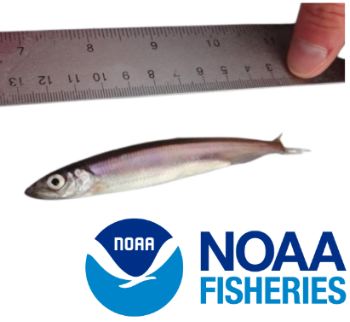
Pacific capelin with unknown maturity. Credit: NOAA Fisheries
NOAA Scientists Discover Repeat Spawning in Pacific Capelin
 UNITED STATES
Wednesday, August 19, 2026, 03:10 (GMT + 9)
SEATTLE — A landmark scientific study led by the National Oceanic and Atmospheric Administration (NOAA) has revealed the first biological evidence that Pacific capelin (Mallotus villosus) possesses the physiological capacity to spawn across multiple seasons throughout its lifespan, challenging the historical assumption that the species was strictly semelparous.
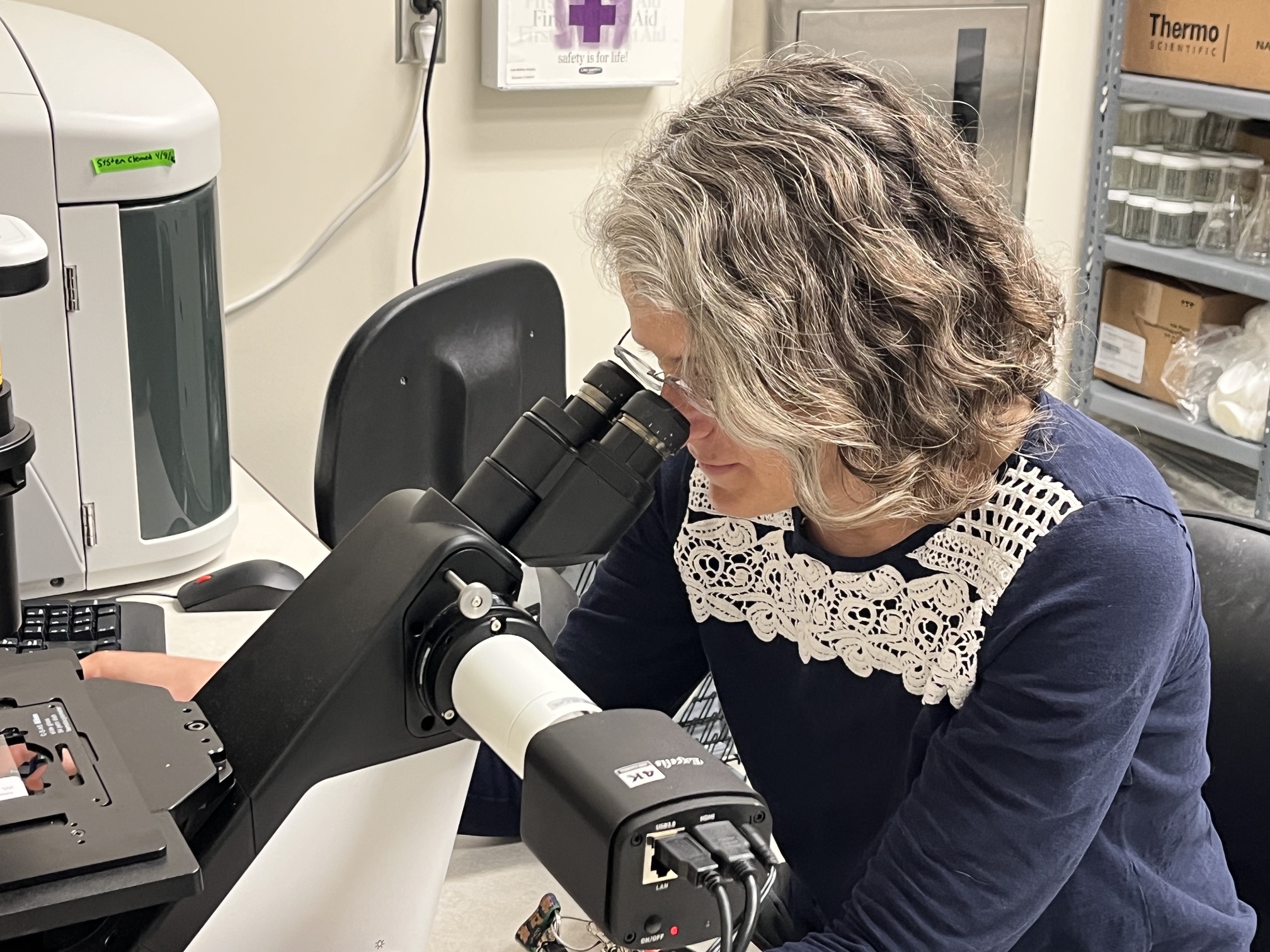
Cara Rodgveller, lead author of this new study, looks at ovarian tissue from Pacific capelin under a microscope. Credit: NOAA Fisheries
Until now, the scientific community assumed that Pacific capelin (Mallotus villosus) shared the same reproductive strategy as Pacific salmon, in which adults undergo a single massive spawning event and die immediately afterward. However, microscopic observations conducted at the Alaska Fisheries Science Center confirmed that a significant proportion of the population exhibits iteroparity—the ability to survive and spawn again in subsequent years.
.jpg)
Scientists collect Pacific capelin on a research survey. Credit: NOAA Fisheries
Microscopic Evidence of Ovarian Development
The research, led by scientist Cara Rodgveller, relied on detailed analysis of ovarian structure and oocyte development in captive females. Through tissue staining, biologists identified key cellular structures that determine individual reproductive strategy:
-
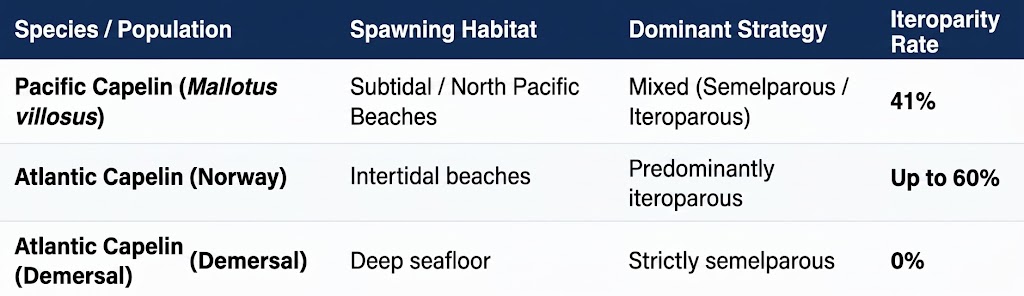
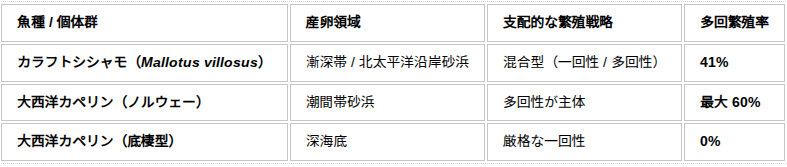
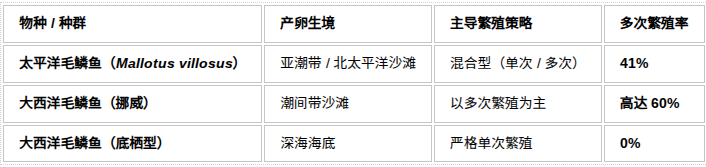
Iteroparity rate detected: A total of 41% of analyzed samples demonstrated the physiological capability for repeat spawning.
-
Cellular coexistence: Large, mature oocytes (rich in proteins and lipids) were observed simultaneously alongside immature reserve-stage oocytes and degrading tissue remaining from past spawning events.
-
Comparative survival: While beach-spawning Atlantic capelin in northern Norway display iteroparity rates up to 60%, demersal Atlantic capelin are strictly semelparous and die after a single spawn.
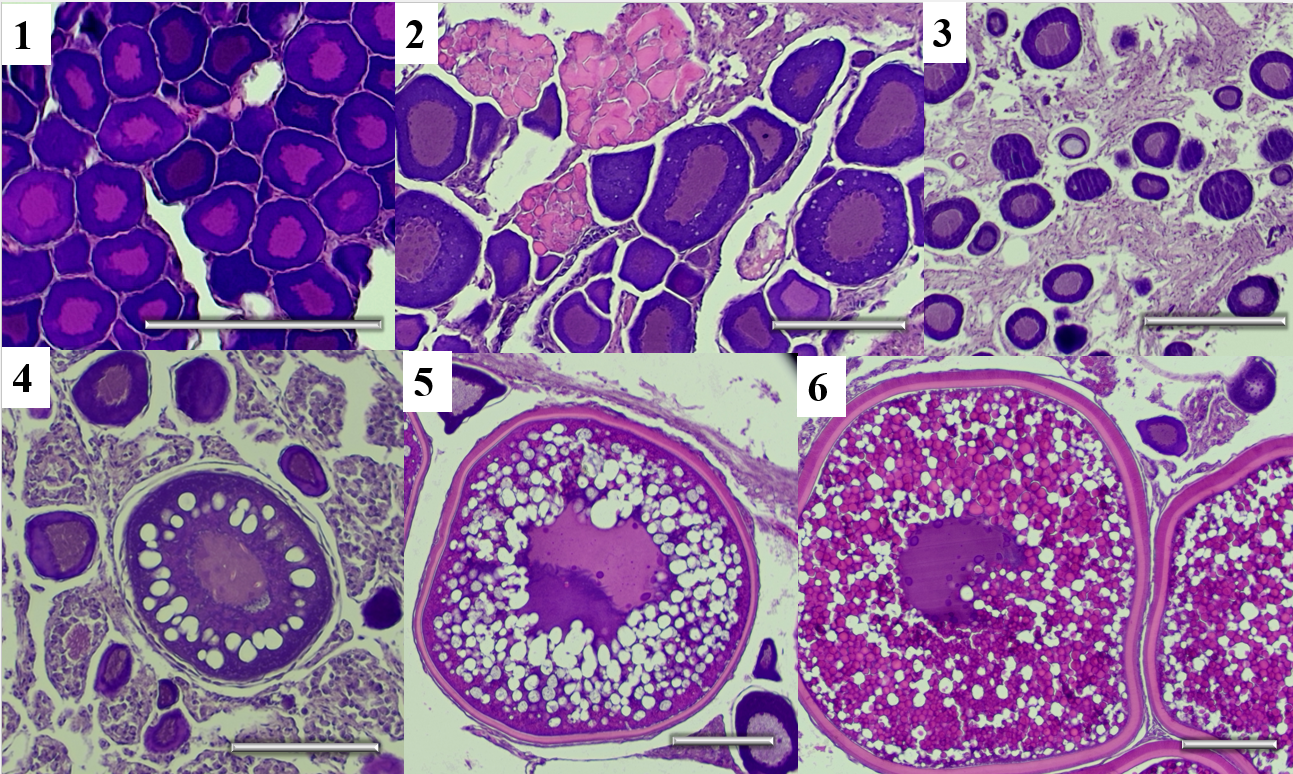
Microscopic images of stained ovarian tissue, including immature oocytes, which are smaller and dark purple (all), and large, pink maturing oocytes that will become eggs (2, 5, 6). Capelin that have the capability to spawn more than one year have both immature and maturing oocytes (2, 5, 6), or degrading tissue left over from past spawning plus immature oocytes (3, 4). Those with only maturing oocytes will spawn only once and die (not pictured). Credit: NOAA Fisheries
Ecological Implications and Resilience in a Changing Ecosystem
Pacific capelin (Mallotus villosus) is a short-lived forage fish—with a typical lifespan of 1 to 4 years—that serves as a critical link in the food web of the North Pacific and Arctic Ocean. It constitutes a primary food source for key predators including Steller sea lions (Eumetopias jubatus), humpback whales (Megaptera novaeangliae), and various commercially valuable groundfish species.
Over the past decade, severe marine heatwaves in the North Pacific caused drastic contractions in capelin distribution and depleted energy reserves, triggering multiyear population crashes. In this context, reproductive flexibility allows the species to hedge risks: semelparity maximizes offspring during optimal conditions, whereas iteroparity ensures adult survival to rebuild populations following adverse environmental events.
Future Directions in Field Research
NOAA plans to expand investigations by pairing field sampling surveys off Alaska with controlled laboratory experiments. Future research priorities include assessing the frequency of skipped spawning under high-temperature conditions, monitoring subtidal spawning habitats, and measuring the productivity scale of each reproductive strategy in wild populations.
Report prepared based on official research published by NOAA Fisheries (Alaska Fisheries Science Center) and the study led by Cara Rodgveller.
🇯🇵 日本語 (Japanese Version) | AIによる自動翻訳
NOAAの研究者がカラフトシシャモ(太平洋カペリン)の複数回産卵を確認
米国シアトル — 米国海洋大気庁(NOAA)が主導した先駆的な科学研究により、カラフトシシャモ(Mallotus villosus)が生涯において複数回の産卵期にわたり繁殖する生理的能力を持つことが、初めて生物学的に証明されました。これにより、本種が一回性繁殖(セメルパリティ)のみを行うという従来の定説が覆されました。
これまで科学界では、カラフトシシャモ(Mallotus villosus)は太平洋サケと同様に、成魚が生涯に一度だけ大規模な産卵を行い、その直後に死滅する繁殖戦略をとっていると考えられていました。しかし、アラスカ水産科学センターで実施された顕微鏡観察により、個体群の相当な割合が多回性繁殖(イテロパリティ)、すなわち生き残って翌年以降に再び産卵する能力を備えていることが確認されました。
卵巣発達に関する顕微鏡的証拠
カーラ・ロドヴェラー(Cara Rodgveller)研究員が率いる研究チームは、飼育下の雌の卵巣構造と卵母細胞の発達を詳細に分析しました。組織染色を通じて、生物学者は個体の繁殖戦略を決定づける重要な細胞構造を特定しました:
-
確認された多回繁殖率: 解析されたサンプルの41%が、複数回産卵を行う生理的能力を示しました。
-
細胞の共存: タンパク質と脂質を豊富に含んだ大型の成熟卵母細胞と、休眠状態にある未成熟な卵母細胞、さらに過去の産卵で残された退化組織が同時に観察されました。
-
生存率の比較: ノルウェー北部の砂浜で産卵する大西洋カペリンの多回繁殖率が最大60%に達する一方で、深海底で産卵する大西洋カペリンは厳格な一回性繁殖を行い、一度の産卵後に死亡します。
変動する生態系における生態学的意義と回復力
カラフトシシャモ(Mallotus villosus)は、寿命が通常1〜4年の短命な餌料性魚類(フォレージ・フィッシュ)であり、北太平洋および北極海の食物網において中核的な役割を果たしています。本種は、トド(Eumetopias jubatus)やザトウクジラ(Megaptera novaeangliae)、さらに商業的に重要な底棲魚類など、主要な捕食者にとって primary な栄養源となっています。
過去10年間において、北太平洋を襲った深刻な海洋ヒートウェーブは、カラフトシシャモの生息域を激減させ、エネルギー蓄積を枯渇させて数年間にわたる資源崩壊を引き起こしました。このような環境下において、繁殖様式の柔軟性はリスクヘッジとして機能します。環境が最適な時期には一回性繁殖によって子孫を最大化し、環境悪化時には多回性繁殖によって成魚の生存を確保し、その後の資源回復を可能にします。
野外調査における今後の展望
NOAAは、アラスカ沖での野外サンプリング調査と実験室での対照実験を組み合わせ、研究をさらに拡大する計画です。今後の prioritized な研究課題には、高水温環境下における産卵スキップ(見送り)の発生頻度の評価、漸深帯産卵生息地のモニタリング、および野生個体群における各繁殖戦略の生産性スケールの測定が含まれます。
本レポートは、NOAA Fisheries(アラスカ水産科学センター)の公式発表およびカーラ・ロドヴェラー氏主導の研究論文に基づいて作成されました。
🇨🇳 中文 (Simplified Chinese Version) | 由人工智能自动翻译
美国国家海洋和大气局科学家发现太平洋毛鳞鱼具备多次产卵能力
美国西雅图 — 由美国国家海洋和大气局(NOAA)主导的一项里程碑式科学研究,首次提供了生物学证据,证明太平洋毛鳞鱼(Mallotus villosus)在其生命周期中具备跨多个产卵季进行繁殖的生理能力。这一发现打破了长期以来认为该物种属于严格单次繁殖(一次性繁殖)的传统认知。
此前,科学界一直认为太平洋毛鳞鱼(Mallotus villosus)采取与太平洋鲑鱼相同的繁殖策略,即成年个体在完成一次大规模集中产卵后便立即死亡。然而,在阿拉斯加水产科学中心进行的显微镜观察证实,该种群中相当比例的个体展现出多次繁殖(多周期繁殖)特性,即能够在产卵后存活并在后续年份再次繁殖。
卵巢发育的显微镜学证据
该项研究由首席科学家卡拉·罗德格维勒(Cara Rodgveller)领衔,重点对人工饲养的雌鱼卵巢结构及卵母细胞发育进行了精细化分析。通过组织染色技术,生物学家识别出了决定个体繁殖策略的关键细胞结构:
-
检测到的多次繁殖率: 在分析的样本中,共有 41% 的个体展现出重复产卵的生理能力。
-
细胞共存现象: 观察到富含蛋白质和脂质的大型成熟卵母细胞,与处于储备阶段的未成熟卵母细胞,以及以往产卵残留的退化组织同时存在。
-
生存策略对比: 在挪威北部沙滩产卵的大西洋毛鳞鱼,其多次繁殖率高达 60%;而产卵于深海海底的大西洋底栖型毛鳞鱼则属于严格的单次繁殖,在首次产卵后即全部死亡。
生态学意义与变动生态系统中的韧性
太平洋毛鳞鱼(Mallotus villosus)是一种短寿命的饵料鱼类——典型寿命为 1 至 4 年——在北太平洋及北冰洋的食物网中发挥着枢纽作用。它是北海狮(Eumetopias jubatus)、座头鲸(Megaptera novaeangliae)以及多种具备重要商业价值的底层鱼类等核心捕食者的主要食物来源。
在过去十年中,北太平洋发生的严重海洋热浪导致毛鳞鱼的地理分布大幅收缩,并消耗了其体内的能量储备,引发了持续数年的种群崩溃。在这种背景下,繁殖策略的灵活性为了该物种提供了风险对冲机制:在环境适宜时,单次繁殖可实现后代数量的最大化;而在恶劣环境到来时,多次繁殖能力则确保了成鱼的存活,以便在随后年份重建种群。
野外科研的未来方向
NOAA 计划将阿拉斯加沿岸的野外采样调查与实验室控制变量实验相结合,进一步扩展该项研究。未来的重点科研课题包括:评估高水温环境下跳过产卵(放弃当季繁殖)的发生频率、监测亚潮带产卵生境,以及定量测量野生种群中每种繁殖策略的生产力规模。
本报告根据 NOAA Fisheries(阿拉斯加水产科学中心)发布的官方研究成果及卡拉·罗德格维勒领衔的研究论文整理编写。
[email protected]
www.seafood.media
|





 Print
Print