|

Image: Revista Puerto / FIS
Lafuente Matos, Shrimp: ´It will be renegotiated downwards or we will have to stop working´
 ARGENTINA
Wednesday, October 11, 2023, 01:00 (GMT + 9)
Looking ahead to the Rawson season we spoke with Buenaventura Lafuente Matos about the challenges that arise for fresh shrimp internally and in the face of a world that is not willing to pay what this wild and natural crustacean is worth. The changes that the frozen product requires and the difficulties that applying them will present are part of this interview.
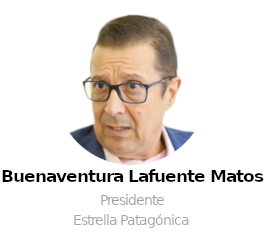
Buenaventura Lafuente Matos is the general manager of Estrella Patagónica, a company that was created after its separation from Pescapuerta, so with a change of company name it has been in Patagonia for more than two decades. Ventura Lafuente, as he is known in the sector, was president of CAPIP and has vast experience in the sector, first in freezing and then in the processing of different species such as hake, squid and in recent times he has established himself as one of the shrimp processors with the largest number of workers in Puerto Madryn. The changes observed in shrimp marketing involve internal restructuring that will not be easy to achieve; For our interviewee, both in the frozen and fresh markets, these changes will require agreements to be able to adapt to a world in which people do not want to spend money: review of labor agreements, the management plan and renegotiation of the price of fresh shrimp.

Source: Estrella Patagónica
REVISTA PUERTO: What changes that are being considered do you think should be addressed first to find a solution to the drop in demand for frozen shrimp?
BUENAVENTURA LAFUENTE: Whenever there is a crisis we think about changes, some think that we have to make a product with greater added value, which is associated with a higher added cost, which is difficult. Others believe that we have to change the way we work with smaller, more efficient containers; others that certain policies have to be changed on boats and plants, even the issue of organizing the fishing ground is mixed with quotas. There are all kinds of opinions and perhaps what needs to be done is a combination of everything. It is true that we must make a product with greater added value at source, that will help us, but the local variables we have make it very difficult for us to get there. The problems that the country has, labor problems, are something that must be overcome to have a more salable product, more shelf-stable, and then perhaps we must review the entire fishing ground management policy, which was already done at the time. . This management plan must be updated.
 RP: Is it feasible to review labor agreements to adapt to market demands? RP: Is it feasible to review labor agreements to adapt to market demands?
BL: There is no doubt that the revision of the agreements is something necessary, feasible... we will see, because what we do is a negotiation with the unions and they have to be willing to do the same, to negotiate. If they impose conditions such that we cannot comply with that negotiation, well, we will say yes because that is what companies have done historically and what has left us in this situation today. We can show how the market is, how the world is, how the shrimp is, what our costs are, but we need the other party to receive and understand it, if that were the case we could reach an agreement. It is necessary because if not, at some point, production will have to stop and that is not good for anyone. This is regarding the shrimp on board, which is already a product that achieves an important quality because it is made on board, two kilos, accommodated; It may need some modification, but that box works for both a housewife and a wholesaler. The product is broad, I don't think the market problems are due to this, although you could think about smaller packages because in a time of crisis in which people do not want to spend a lot of money, it is not the same to buy a smaller package , although in absolute money it is the same.
RP: Fresh shrimp is in demand, but the price entered a downward curve.
 <-- Photo: Pescar <-- Photo: Pescar
BL: With land-based shrimp, the same thing happens in part, we were doing well, we created the plants, the employment that was needed because it requires intensive labor, the investments were made, profits were obtained, but now the participation of the different actors of the chain ate the benefit of the plants. The plants provide the capital, the rest of the chain does its business, which is totally legal, but they ate the plant's share of the pie. It is necessary that there is an understanding of the different links to negotiate it.
RP: Is there a possibility of renegotiating the price of shrimp for plants?
BL: I think it will be renegotiated downwards because if not, many of us will have to stop working. If we are going to lose money, that may happen for one season, it may happen for two, so as not to lose markets, so as not to lose clients, but the third time is not going to happen because no one is willing to lose money for so long. I think it will go down because there will be a lack of demand and the equation will turn around. I understand that the issue could begin to be resolved there, where there was a reasonable price and it was in accordance with the market sales price. Shipowners have a high price expectation, but during the season in national waters there were not many boats, very few people worked, almost all of us produced less than last year due to this combination of factors. If we reach a reasonable price it will be done; and if not, less or nothing will be produced.
RP: Is it necessary to think about regulating the volume of capture so as not to overcrowd the market and lower the price further?
BL: I don't think it can be done, the product is coming out, but cheap because people can't pay more, at this moment we know that the world is bad and we know that it is like that, so we are going to have to fix our numbers if we want let the machine continue. Let's not forget that all this is not a question of seller and buyer either, in the middle there are many jobs and we should all think a little about that.
.jpg)
Source: Stockfile FIS
RP: Is there another way to compete with substitutes like vannamei other than lowering the price?
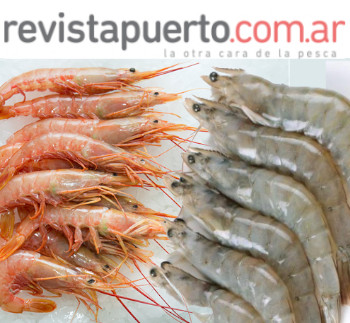
BL: We have a quality shrimp that, if we compare it with others, is worth much more; but not everyone thinks that way, because they choose these substitutes. We are immersed in a complicated situation in that sense, we have to adjust to the price that the client can pay because if he does not buy it is because he cannot pay it. The clearest account we have of this is that of the Japanese, who have a tray that they offer to the market in which the shrimp participates along with other products; That tray has a price because they know that if they raise the price, they don't sell it, so what they do is change a more expensive product for a cheaper one. Consequently, we have to lower the price to be able to continue in that little box. That happens in Japan, but with or without a box it happens all over the world; The issue is that if we lower the price further, they do not give us the costs. But we are not price makers, we have to assume what they pay us, especially having a competitor as strong as vannamei, so the rest of the chain would have to assume that price too and I think the trend is going there.
Author: Karina Fernández | Revista Puerto
.png)
Related Articles:

[email protected]
www.seafood.media
|
|





 Print
Print