|
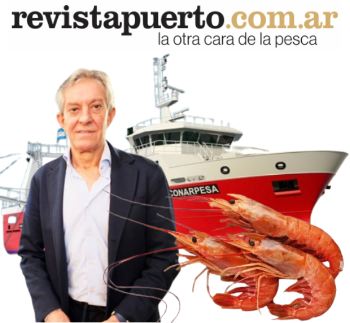
Fernando Álvarez Castellano, president of the fishing company Conarpesa
Álvarez Castellano of Conarpesa Proposes Quota System for Shrimp to End Fishery Debate
 ARGENTINA
Wednesday, November 12, 2025, 00:10 (GMT + 9)
The businessman asserts it is the only way to ensure transparent resource management, criticizes the increase in artisanal fishing to 500 crates per vessel, and reveals that Conarpesa has been investing and purchasing licenses in Chubut for its entire existence without receiving special permits.
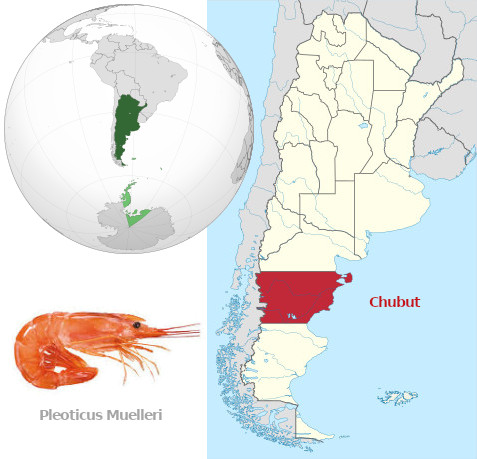
In a conversation with REVISTA PUERTO, Fernando Álvarez Castellano, president of the fishing company Conarpesa, defended his support for the note rejecting the project by the Government of Chubut to grant two new fishing permits and shared his views on the issues facing the shrimp fishery.
Álvarez Castellano stated that supporting the request for explanations before granting new licenses was a "logical" action toward a "new administration," although he clarified that, in previous administrations, permits were issued "much less justified" and he "kept quiet" at those times.
"For me, sooner or later the resource must be assigned quotas. Period. It is the only way."
The businessman was emphatic when proposing a solution to conflicts over the allocation of fishery resources: "For me, sooner or later the resource must be assigned quotas. Period. It is the only way". He maintained that a quota system, similar to that applied in the hake fishery, would end the debate and relieve pressure on authorities, as a governor could be tempted to grant permits in exchange for investments, such as one for 100 million dollars.
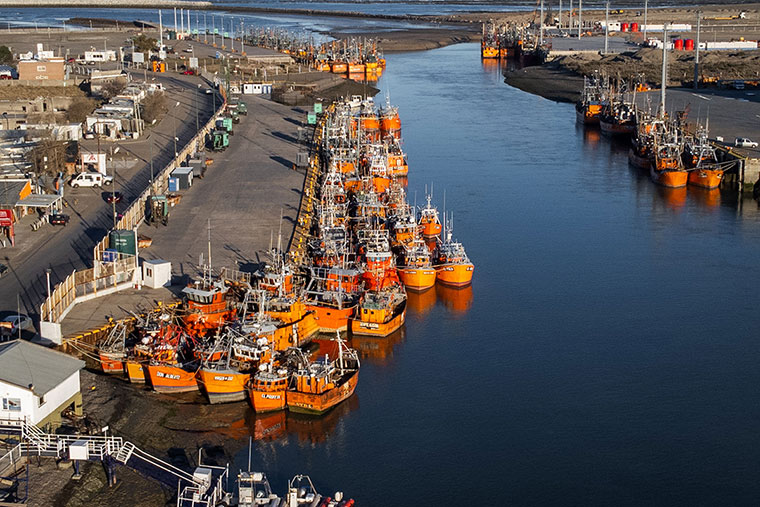
Shrimp 'yellow' (coastal) trawler fleet of the port of Rawson. Photo: Revista Puerto
Criticism of "Artisanal" Fishing and Pressure on the Fishing Ground
Álvarez Castellano affirmed that the shrimp fishing ground in Chubut is in "good health," but he considered the artisanal boat sector to pose a much greater threat than the granting of just two additional permits.
The president of Conarpesa harshly criticized the legitimization of the increased catch volume allowed for the artisanal fleet, stating that:
-
Artisanal fishermen were supposed to catch 100 crates.
-
Previous administrations authorized them to carry up to 500 crates.
-
Now, some artisanal boats bring in up to 800 crates, more than his small boats from Isla Escondida.
"The artisanal boats seem much worse for the fishery, and for everything... That really is acting against the resource," he concluded, while acknowledging that if the application authority permits it, he has no room to maneuver either.
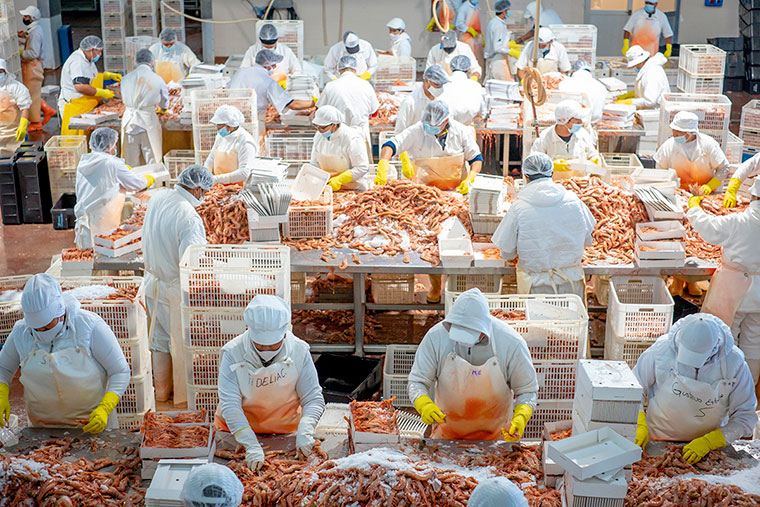
Photo: Revista Puerto
Investments and Low Profitability of Shirmp Tails
Regarding his own company, the president of Conarpesa highlighted its history of investment in the province, mentioning that it owns two plants in Chubut and another two exclusive plants that will work for his company this year in the same province. He emphasized that everything he owns has been "bought," and he has not received "any special permits," despite others having obtained them.
Concerning the market, Álvarez Castellano warned that the price of shrimp tails continues to fall and is more likely to drop further. He suggested the need to seek greater added value or "other products" to survive. However, he acknowledged that two factors prevent Argentina from competing in the production of higher value-added products (such as peeled shrimp):
-
The high cost of labor.
-
The need for mechanization (technology), which would imply reducing personnel.
He explained that it would be "much cheaper to send it to Peru, China, or another place" for processing, and that, with the current volume of his own fleet, if Conarpesa decided to focus on peeling, it would need five more plants like the ones it already has.
[email protected]
www.seafood.media
|





 Print
Print