|

Photo: Stockfile/FIS
Illex Squid 2026: Early Departure, Bad Weather, and Zero Catch in 'Exploration' Phase
 ARGENTINA
Wednesday, January 07, 2026, 00:10 (GMT + 9)
The start of the Illex argentinus squid season in 2026 has been characterized by aggressive logistics that, so far, have not been rewarded with resource abundance.
With an early departure scheme, the industry sought to capitalize on the first days of the year but was met with a meteorological barrier and catch yields that are raising alarms within the fishing sector.

Photo: courtesy Revista Puerto
Mar del Plata Port: The Logistical Hub
The Port of Mar del Plata has reaffirmed its role as the country's primary operational terminal. More than 60% of the national jigger fleet is based in this city in Buenos Aires Province. Out of a total of 75 jigger vessels planned for the global campaign, 30 vessels have already departed from the local docks, while another 15 are finalizing details to join the fishing zone in the coming hours.
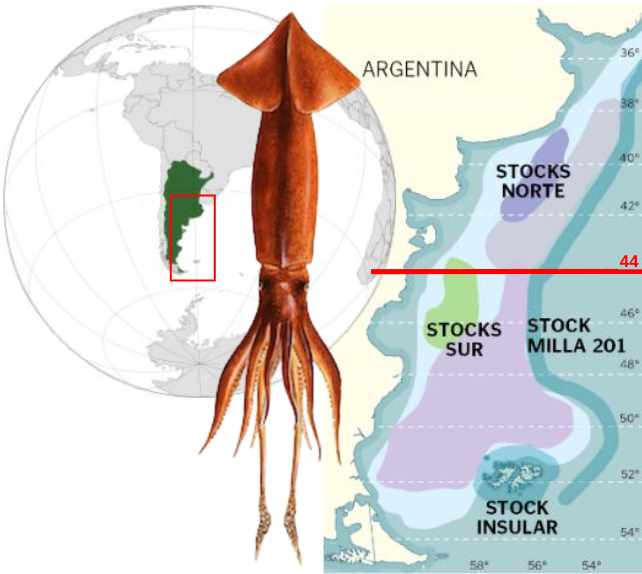
Exploration South of Parallel 44° S
Although the formal season starts today, January 7, current regulations allowed for a strategic prior movement this year: a premature departure of 53 vessels before December 31. The technical objective was to position the fleet south of Parallel 49° S to begin harvesting as of January 2.
However, weather conditions imposed their own rules:
-
Severe Storm: A high-intensity front forced units coming from Mar del Plata, Buenos Aires, Puerto Belgrano, Necochea, Puerto Madryn, and Puerto Deseado to take refuge in the outer roads of the latter port in Santa Cruz.
-
Operational Zone: As of today, 62 vessels are engaged in exploratory fishing efforts or are in transit toward the fishing grounds.
Catch Results: SS Sizes and Dispersion
As of this morning, reports from the high seas are not encouraging. Prospecting tasks were initially concentrated 60 miles East of San Julián. Given the scarcity, the fleet decided to extend its search radius to Mile 110, in a quadrant bounded by Parallel 49° S to the north and 49° 40' S to the south.
.jpg)
Photo: courtesy Revista Puerto
Technical Note: Captures recorded so far are of SS size (small specimens), appearing in an isolated and sporadic manner. The massive concentration required to guarantee the profitability of the initial trips has not yet been detected.
The Scenario at Mile 201
The situation is not exclusive to the national fleet. Satellite observers and fisheries intelligence reports indicate that the foreign fleet operating on the edge of the Exclusive Economic Zone (EEZ), beyond Mile 200, faces a similar outlook. Reports show low squid presence and highly atomized resources (SS sizes widely dispersed), suggesting that the recruitment of the South Patagonic Stock may be delayed by oceanographic variables.

Photo: Stockfile/FIS
Projections and Next Steps
The sector remains on edge on this first official day of the harvest, waiting for an improvement in sea conditions. For now, the 2026 season begins with engines running but with biological uncertainty not seen in the early stages of previous years.
[email protected]
www.seafood.media
|





 Print
Print