IN BRIEF - Russia Switches Fishing Fleet Monitoring to Domestic Satellites
RUSSIAN FEDERATION
Tuesday, January 20, 2026
Russia has fully transitioned its fishing fleet to domestic satellite systems for vessel monitoring, abandoning foreign networks as of January 1, 2026.
Accordingto the Federal Agency for Fisheries, fishing vessels now transmit location data exclusively via Russian orbital constellations—Gonets, Yamal, and Express—to the Industry Monitoring System (IMS).
The move follows Order No. 250 of the Ministry of Agriculture, which ended the use of British Inmarsat satellite stations as technical monitoring equipment on ships. Authorities say the switch reduces the risk of vessels being disconnected from foreign satellite networks and strengthens uninterrupted operational oversight.
The transition, launched on May 13, 2024, lasted 18 months and involved the complete replacement of foreign-made shipborne monitoring stations with domestic ones. The new requirements apply to vessels with a gross tonnage over 80 tons and engine power exceeding 55 kW.
According to Alexander Mikhailov, head of the Fisheries Monitoring and Communications System Center, tests conducted in December 2025 showed that Gonets stations were more than twice as reliable as Inmarsat equipment in 2025. He added that the domestic system also significantly lowers communication costs for shipowners.
A surge in capelin roe landings has kept fish processing plants operating at full pace in Neskaupstaður, Iceland, over the weekend, according to the Icelandic Coal Processing Company, cited by Auðlindin.
Major pelagic vessels delivered large catches to port. Börkur NK landed 1,600 tonnes, Barður NK delivered 1,750 tonnes, while the Greenlandic vessels Polar Amaroq and Polar Ammassak brought in 1,600 tonnes and 1,400 tonnes respectively—nearly 6,400 tonnes in total.
Fishing grounds showed different roe maturity levels. Capelin caught by Börkur and Barður off Reykjanes showed about 100% roe development, indicating fully mature eggs. Meanwhile, catches taken by the Greenlandic fleet in Breiðafjörður showed roughly 40% development.
According to Þorkell Pétursson, captain of Barði, the crew conducted a test cast on Wednesday evening, catching around 100 tonnes and confirming 100% roe maturity, which led to most of the vessel’s catch being secured in three casts on Thursday.
While Börkur, Polar Amaroq, and Barði have already returned to the fishing grounds, Polar Ammassak continues unloading. Rough seas halted fishing during the weekend.
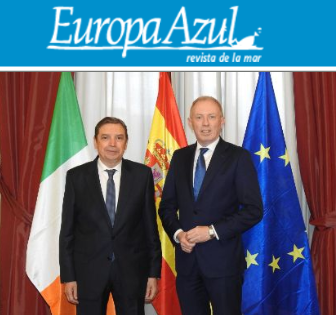
The meeting on March 5 and 6 ended without an agreement on the allocation of the TAC for mackerel in the Northeast Atlantic, while Spain and Ireland close ranks in defense of the historical rights of the EU fleet.
Negotiations on mackerel in the Northeast Atlantic have stalled once again. The meeting held in Copenhagen on March 5 and 6 between the European Commission and the coastal states ended without an agreement on the allocation of the Total Allowable Catch (TAC) for 2026, confirming that one of the most sensitive issues for pelagic fisheries in Northern Europe remains trapped in an increasingly bitter political and economic standoff.
The Government is negotiating with Portugal to revise the agreement that grants approximately 130 Portuguese vessels 66.5% of the quota shared by the two countries, while some 270 Spanish vessels receive only 33.5%.
Following its announcement at the end of last year, the General Secretariat for Fisheries is entering into negotiations with the Portuguese Secretariat for Fisheries and Maritime Affairs to renew the Iberian sardine management agreement, which will be in effect next year and subsequent years.
The Ministry of Agriculture, Fisheries and Food frames the meeting between Spanish and Portuguese fisheries authorities as part of the "periodic meetings to strengthen collaboration and joint work."
Source: La Voz de Galicia | Read the full article here
Korshags launches frozen land-based salmon sourced from Salmon Evolution.
Swedish seafood company Korshags Food has launched a frozen land-based salmon product supplied by Norwegian producer Salmon Evolution, as part of its strategy to expand the use of alternative raw materials within the seafood category.
The Falkenberg-based company said the product would broaden distribution of land-based farmed salmon through a frozen format designed for higher volumes and wider retail reach.
Source: SalmonBusiness | Read the full article here
Twenty-three people have been rescued by helicopter crews in Ontario, Canada, after the ice shelf they were standing on broke, sending the group floating into Lake Huron.
Ontario Provincial Police said on social media that the rescue began around noon (16:00 GMT) on Sunday after "winds and current moved the ice shelf away from shore" approximately 2km (1.2 miles).
The rescue involved two helicopters making multiple trips to pluck people off the shelf as it continued to fracture into more pieces in the Owen Sound, about 200km north-west of Toronto.
Author: Max Matza / BBC | Read the full article here
A recently-released investigation by Greenpeace in collaboration with the Uniting Church in Australia, Synod of Victoria and Tasmania, alleges the Indonesian tuna industry is engaging in environmentally destructive fishing and labor rights abuses.
A report on the investigation, “Forced to the Bottom: Squeezing Indonesian Fishers and Oceans for Dirty Tuna Profits,” alleges 17 different fishing vessels and multiple processing companies engaged in labor rights abuses, including instances of forced labor and debt bondage. It also alleged five processing companies – PT Aneka Tuna Indonesia, PT Samudera Mandiri Sentosa, PT Sinar Pure Food International, PT Pahala Bahari Nusantara, and PT Intimas Surya
Author: Chris Chase / SeafoodSource | Read the full article here
As part of its strategic plan to support the international promotion of Galician seafood products, the Galician Ministry of the Sea is promoting them at the 51st Foodex Japan, which begins tomorrow, March 10, in Tokyo and runs until Friday the 13th. Four companies will be present: Cerqueira Canned Goods, Ramón Franco, Portomar Canned Goods, and Cíes Pasteurized Foods.
This trade fair is one of the world's leading food and beverage events, making it a strategic meeting point for producers, distributors, and importers from the Asian country.
Source: Industrias Pesqueras | Read the full article here
If Europe wants to begin strengthening its self-sufficiency and reducing its dependence on third parties in terms of supplying marine protein to markets, it will be “essential to explore the potential of aquaculture,” especially considering that the growth capacity of wild catches is limited by the “finite” nature of resources.
However, achieving the full deployment of aquaculture will require reviewing the current model at all levels, both productive and regulatory.
This was stated by the Director-General for Fisheries of DG MARE, Charlina Vitcheva, at the meeting “Towards a 2040 Vision for a Prosperous Fisheries and Aquaculture Sector,” held in Brussels as part of the European Ocean Days, organized by the European Commission.
Source: iPac.aquacultura | Read the full article here
Preparations for the conference commemorating 50 years of salmon farming in Chile continue to progress ahead of the event scheduled for May 28 in Puerto Montt. The conference will bring together industry representatives, authorities, academics, and suppliers.
Organized by Mundo Acuícola, the event aims to create a space for reflection on the development of the industry over the past five decades, as well as to outline the challenges that will shape the future of Chilean aquaculture.
The initiative is also sponsored by the Salmon Council, an organization that brings together major producers in the sector and has supported this industry commemoration.
Source: MundoAcuícola | Read the full article here
The Seafood Carbon Emissions Profiling Tool (SCEPT), and the multi-partner collaboration which is seeing it play a key role in driving seafood industry decarbonisation, have been recognised in two key industry awards over the past week.
The SCEPT was named Best Carbon Initiative in the Waitrose Supplier Award and was a finalist in the North Atlantic Seafood Forum’s inaugural Sustainability Award.
The free, online tool has been developed by Seafish in collaboration with the UK Seafood Federation (UKSF) and other partners to help seafood businesses measure and reduce their carbon footprints.



 RUSSIAN FEDERATION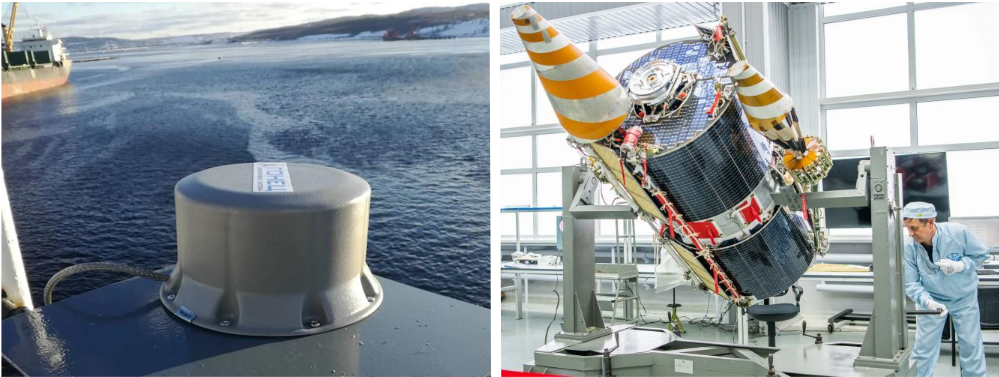
 ICELAND
 Major pelagic vessels delivered large catches to port. Börkur NK landed 1,600 tonnes, Barður NK delivered 1,750 tonnes, while the Greenlandic vessels Polar Amaroq and Polar Ammassak brought in 1,600 tonnes and 1,400 tonnes respectively—nearly 6,400 tonnes in total.
 DENMARK
 The meeting on March 5 and 6 ended without an agreement on the allocation of the TAC for mackerel in the Northeast Atlantic, while Spain and Ireland close ranks in defense of the historical rights of the EU fleet.
 SPAIN
SPAIN.png) Following its announcement at the end of last year, the General Secretariat for Fisheries is entering into negotiations with the Portuguese Secretariat for Fisheries and Maritime Affairs to renew the Iberian sardine management agreement, which will be in effect next year and subsequent years.
Following its announcement at the end of last year, the General Secretariat for Fisheries is entering into negotiations with the Portuguese Secretariat for Fisheries and Maritime Affairs to renew the Iberian sardine management agreement, which will be in effect next year and subsequent years. SWEDEN
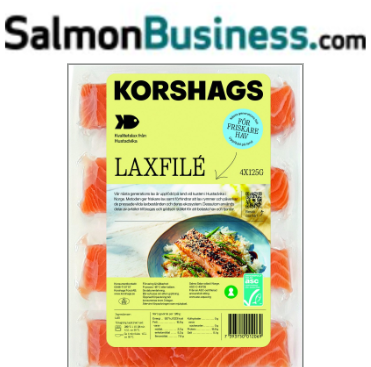 Korshags launches frozen land-based salmon sourced from Salmon Evolution.
 CANADA
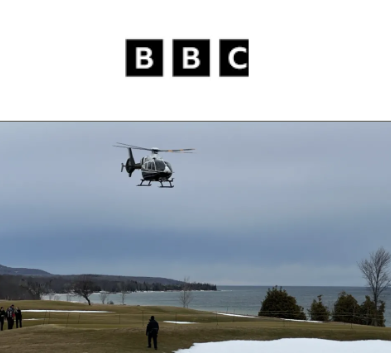 Twenty-three people have been rescued by helicopter crews in Ontario, Canada, after the ice shelf they were standing on broke, sending the group floating into Lake Huron.
 INDONESIA
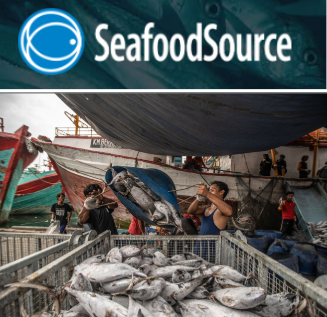 A recently-released investigation by
  JAPAN
JAPAN As part of its strategic plan to support the international promotion of Galician seafood products, the Galician Ministry of the Sea is promoting them at the 51st
  EUROPEAN UNION
.png) However, achieving the full deployment of aquaculture will require reviewing the current model at all levels, both productive and regulatory.
However, achieving the full deployment of aquaculture will require reviewing the current model at all levels, both productive and regulatory. CHILE
CHILE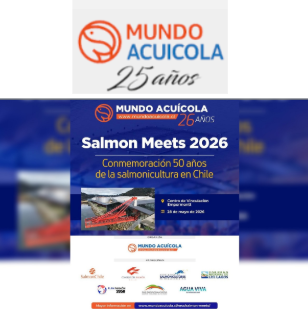 Preparations for the conference commemorating 50 years of salmon farming in Chile continue to progress ahead of the event scheduled for May 28 in Puerto Montt. The conference will bring together industry representatives, authorities, academics, and suppliers.
 UNITED KINGDOM
 The Seafood Carbon Emissions Profiling Tool (SCEPT), and the multi-partner collaboration which is seeing it play a key role in driving seafood industry decarbonisation, have been recognised in two key industry awards over the past week.