If you would like to send us an article, contact Margaret Stacey
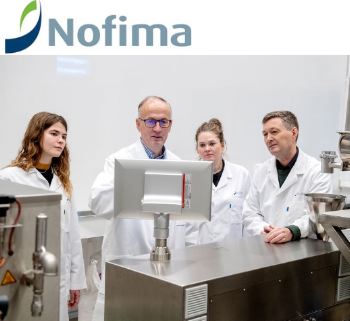
Photo: NOFIMA
Nofima Explores Microalgae in Sustainable Salmon Feed
(NORWAY, 12/17/2024)
Norwegian research institute Nofima has conducted an in-depth study on the use of microalgae as a sustainable ingredient in salmon feed, examining every stage—from ingredient delivery to the feed technology center to the salmon’s growth and performance at harvest.
A Dual Challenge: Technical and Nutritional
Developing sustainable feed ingredients involves overcoming both technical and nutritional challenges. Senior researcher Tor Andreas Samuelsen succinctly explains, “If you can’t get the ingredient into the feed, you can’t get it into the fish.” This underscores the complexity of replacing fish oil with more sustainable, oil-rich alternatives like microalgae.
Microalgae, positioned at the bottom of the food chain, represent a promising sustainable resource for aquaculture feed, particularly for their omega-3-rich oils, such as DHA.
Case Study: Microalgae Oil in Feed
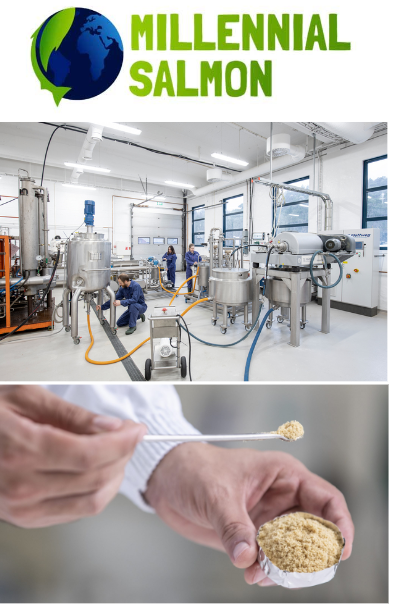
Nofima’s Millennial Salmon project focused on assessing how much microalgae-derived product could be incorporated into salmon feed and its effects on fish growth and health. The test ingredient, AlgaPrime™ DHA LS, supplied by Corbion, combined microalgae biomass with rapeseed oil to form a liquid product rich in DHA, a critical marine omega-3 fatty acid.
This project required initial technical evaluation to understand how the ingredient would perform in feed production before being tested in fish trials. Previous trials using algae-based dry powder had proven challenging, but the liquid form offered unique opportunities and new challenges.
The Science of Feed Production
Fish feed production involves extrusion technology, a process where feed mixtures are cooked, kneaded, and expanded into pellets. After extrusion, a “vacuum coater” adds oil to the porous pellets to enhance their nutritional value.
The challenge in this study was ensuring that the algae biomass particles mixed with rapeseed oil could penetrate the pellet pores without leaking during storage or feeding. The pellets needed to maintain their structural integrity while delivering high levels of oil-rich nutrients.
Positive Trial Results
Nofima’s researchers tested the algae-based feed at their Aquafeed Technology Center in Bergen, analyzing pellet quality, hardness, water stability, oil leakage, and pore size. These trial feeds were then evaluated on salmon at Nofima’s research station in Sunndalsøra.
Key findings:
Higher-than-expected levels of the algae-based product could be added to the feed without compromising pellet quality.
Salmon readily consumed and efficiently digested the experimental feeds.
Unlike many microalgae products, it was not necessary to rupture cell walls to make the nutrients bioavailable to the fish, simplifying feed production.
While the results were promising, practical application depends on factors such as fat levels in other ingredients, pellet pore size, and feed production conditions.
Industry Impact and Sustainability
The success of this study validates the technical viability of using algae-based oils in salmon feed, paving the way for greater adoption of sustainable omega-3 sources in aquaculture. Tim Rutten, Vice President of Nutrition at Corbion, remarked: “Corbion is constantly seeking to create new innovative and sustainable solutions, and we are pleased that the results of this study affirm the technical performance of our product, enabling the industry to use a sustainable source of omega-3 at high inclusion levels.”
Collaborative Efforts and Funding
The research was part of a collaborative initiative funded by the Research Council of Norway and key industrial partners, including MOWI, Labeyrie Fine Foods, Cargill, Corbion, Innovafeed, and Auchan.
This study represents a step forward in making aquaculture more sustainable by leveraging innovative ingredients like microalgae to reduce dependency on fish oil while maintaining fish health and growth performance.





 (NORWAY, 12/17/2024)
 Developing sustainable feed ingredients involves overcoming both technical and nutritional challenges. Senior researcher Tor Andreas Samuelsen succinctly explains,
  While the results were promising, practical application depends on factors such as fat levels in other ingredients, pellet pore size, and feed production conditions.


 Print
Print