New Irish €26.8 million investment under Brexit Processing Capital Support Scheme.
Ireland’ Minister for Agriculture, Food and the Marine, Charlie McConalogue, has announced details of a €26.8 million investment in 44 seafood processing projects which are helping drive transformational change in the sector.
The Seafood Capital Processing Scheme is funded by the European Union under the Brexit Adjustment Reserve (BAR). Bord Iascaigh Mhara (BIM), Ireland’s seafood development agency, administers the scheme on behalf of the Department of Agriculture, Food and the Marine, which provides for up to €45 million in funding to the seafood processing sector.
Announcing details of the investment on European Maritime Day, Minister McConalogue said:
“The Processing Capital Support Scheme is providing significant investment in seafood processing enterprises, which employ some 4,000 people in rural coastal communities.
“This scheme is supporting seafood processing industry to develop their enterprises, navigate the challenging trading environment and support jobs in this important sector.
“I am pleased to highlight Brexit Adjustment Reserve funding opportunities available to the Irish seafood processing sector as Europe’s marine community come together on European Maritime Day.”
The six coastal states formally concluded their multilateral consultations at the London headquarters of the North-East Atlantic Fisheries Commission (NEAFC) without formalizing a binding catch-sharing agreement for the 2027 season.
Despite exhausting the official schedule of dialogue, delegations from the United Kingdom, the European Union, Norway, Iceland, the Faroe Islands, and Greenland failed to reach a consensus on the political distribution of quota shares.
The main bone of contention centered on reconciling historical catch rights with demands for territorial access. The persistence of an earlier four-party framework that sidelined the European Union has led, in practice, to accumulated unilateral allocations that exceed sustainable biological limits.
Negotiators reviewed scientific advice from the International Council for the Exploration of the Sea (ICES), which recommended a total allowable catch (TAC) ceiling of 352,938 tonnes for 2027. Although the spawning stock biomass registered a favorable 4.5% increase above the biological limit point, the industry laments that the lack of a comprehensive settlement will perpetuate operational uncertainty.
Moscow — The governments of Russia and China agreed to promote and expand commercial trade in seafood products, following the conclusion of the 31st regular meeting between the heads of government of both nations. The high-level summit was led by Russian Prime Minister Mikhail Mishustin and Chinese Premier Li Qiang.
As confirmed in the final joint communiqué, both delegations established a priority technical agenda for the fisheries sector. Among the key agreements, both nations will work in coordination to restore the export status of key enterprises and advance the formal registration of fishing companies in both jurisdictions.
Furthermore, the parties agreed to expand the list of accredited suppliers, expedite review and processing timelines for commercial applications, and deepen bilateral cooperation mechanisms aimed at ensuring food quality and safety standards across reciprocal shipments of aquatic products.
The Ministry of Maritime Affairs and Fisheries (KKP) of Indonesia intercepted 154 vessels involved in illegal, unreported, and unregulated (IUU) fishing in jurisdictional waters through September 2026.
This tally adds to the surveillance operations conducted by the agency in recent periods, following the seizure of 88 illegal vessels in 2024 and 355 vessels across 2025.
Minister of Maritime Affairs and Fisheries Sakti Wahyu Trenggono emphasized in Jakarta that maritime enforcement actions aim to curb the unlawful exploitation of national fisheries resources and ensure they deliver maximum benefit to local fishing communities. Alongside the interdiction of offending vessels, the official noted that the ministry is stepping up marine conservation measures to protect the archipelago's ocean ecosystems.
The Environment and Energy Agency has granted a temporary permit to Samherji to immediately resume operations at its fish drying facility in Laugar, located in the Reykjadalur valley.
The provisional measure remains in effect while the Northeastern Health Committee processes a new permanent operating license, with a maximum validity set at 1 year. The plant, which employs approximately 20 people and represents the largest workplace in the area outside the municipality itself, handles the final processing stages of the company's commercial catch.
The resumption comes after the original permit was revoked in mid-September by the Environmental and Natural Resources Appeals Committee. The tribunal ruled that the local health board had issued the authorization without sufficient baseline data on the status of surrounding water bodies, while clarifying that there were no operational deficiencies on the part of Samherji. Under this renewed temporary authorization, the seafood company must maintain rigorous, updated wastewater monitoring while the administrative procedure is rectified.
An FAO report notes a recovery in resources and growth in aquaculture, while warning of uneven profitability across fishing fleets and the challenges of attracting young people to the sector.
Fisheries in the Mediterranean and the Black Sea are showing progress in the recovery of their resources, though significant biological and economic imbalances persist. The report *The State of Mediterranean and Black Sea Fisheries 2025*, produced by the FAO’s General Fisheries Commission for the Mediterranean (GFCM), indicates that average fishing pressure dropped by approximately 50% between 2013 and 2023, and that the biomass of the commercial species assessed increased by 25%. Nevertheless, 52% of the populations analyzed remain overexploited—even though this figure is at its lowest point in the recorded series.
Scientists and authorities from eight coastal nations across the Americas warned that the 2026 El Niño event is consolidating as one of the largest instrumentally recorded, pointing to a steady increase in both the frequency and magnitude of ENSO cycles.
The alert was issued during a regional conference held in Panama City from October 14 to 16, 2026.
The delegation from Chile was led by the executive director of the Fisheries Development Institute (IFOP), Luis Parot, representing the Undersecretariat for Fisheries, alongside oceanographer Dr. Jaime Letelier Pino (ERFEN-Chile). The summit also brought together experts from the FAO and the Permanent Commission for the South Pacific (CPPS).
Specialists emphasized that coastal ecosystems and local fish stocks exhibit high vulnerability starting in the initial stages of the phenomenon, impacting their distribution, abundance, and reproductive cycles. In response to these direct marine habitat alterations, IFOP will intensify monitoring of strategic fishery resources, including swordfish (Xiphias gladius).
The cod farmer Norcod has successfully started fish oil production at its Kråkøy harvesting facility in Norway, enabling almost every part of each harvested cod to be utilised and generate value for the company.
In the first two weeks of operation, the Norwegian cod farmer’s new facility has produced more than 14 tons of high-quality fish oil.
Author: Vince McDonagh / Fish Farmer | Read the full article here
Businesses in Australia, Malaysia and the Netherlands have reached the finals of Britain’s prestigious international fish and chip awards
Three fish and chip businesses in Australia, Malaysia and the Netherlands have been named finalists for International Fish & Chip Operator of the Year at the National Fish & Chip Awards, recognising their efforts to bring the traditional British dish to customers overseas.
Organised by the National Federation of Fish Friers (NFFF), the awards celebrate businesses maintaining the quality, standards and traditions associated with Britain’s popular takeaway while introducing it to new international markets.
Tokyo — Japanese seafood group Nissui announced that its subsidiary, Nissui Logistics, has fully restored cargo receiving and shipping operations at all 17 facilities following an IT disruption caused by unauthorized access to systems operated by its technology provider, IDC Frontier.
The incident initially disrupted the company's logistics activities. Operations began to resume partially on October 9, with full restoration confirmed on October 20.
Nissui stated that it will strengthen its cybersecurity measures, third-party risk management, and business continuity and recovery procedures.
The incident highlights the vulnerability of cold-chain logistics to cyberattacks affecting technology providers and underscores the importance of maintaining operational continuity across the food supply chain.
Presents "Vision 2040" with measures that fail to address urgent problems
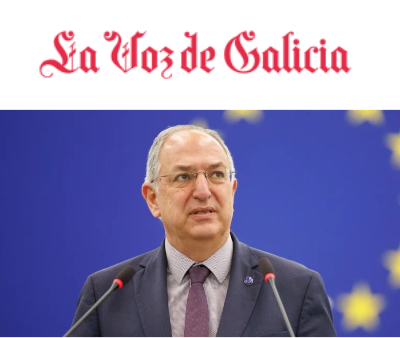
Yesterday in Strasbourg, Commissioner for Fisheries and Oceans Costas Kadis unveiled the long-awaited "Vision 2040" for EU fisheries and aquaculture—a strategy designed to build a competitive, resilient, and sustainable sector over the next 15 years. However, this forward-looking plan defers too many issues that, according to industry professionals, require urgent, immediate action. Specifically, it sidesteps a reform of the 2013 Common Fisheries Policy (CFP)—a reform that the European Commission continues to avoid, thirteen years later.
Author: J. G. Santalla / S. M. / La Voz de Galicia | Read the full article here
Global and Commercial Overview of the Tuna Market Worldwide
Raw material supply, Japanese wholesale auctions, Mediterranean ranching operations, and international regulatory frameworks
Raw Material and Processing Market: Bangkok, Manta, and EPO Closures
The ...
Copyright 1995 - 2026 Seafood Media Group Ltd.| All Rights Reserved. DISCLAIMER





 REPUBLIC OF IRELAND
 11_03_42.png)
 UNITED KINGDOM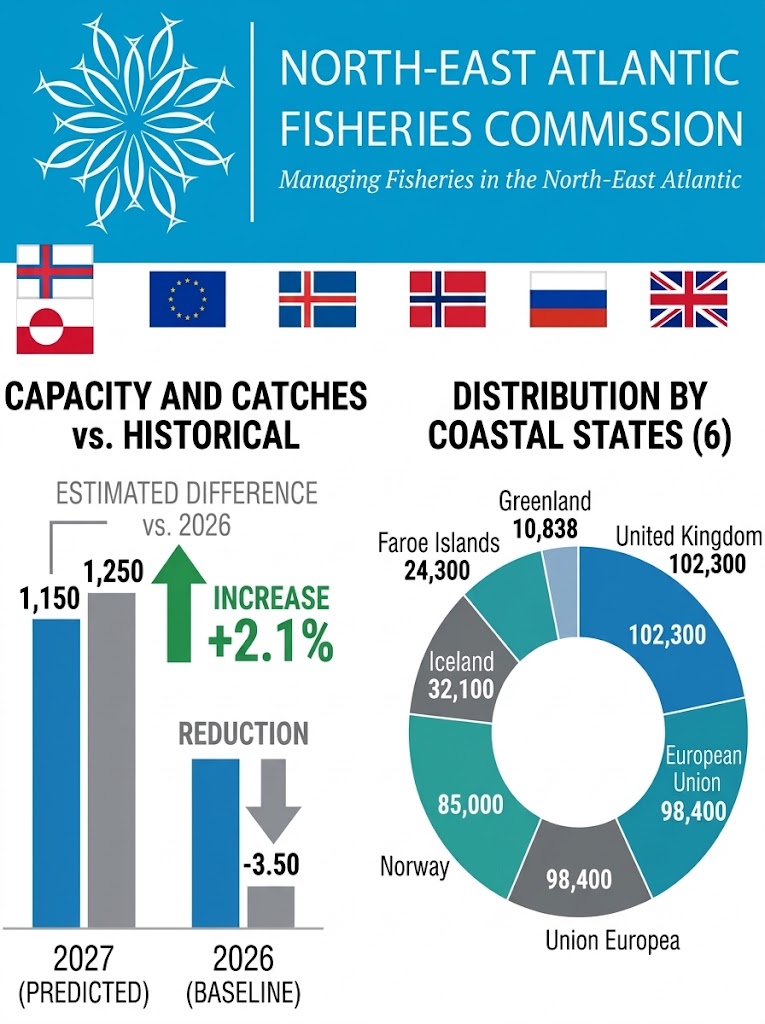
 RUSSIAN FEDERATION
.jpeg)
 INDONESIA
.png)
 ICELAND
.png)
 ITALY
ITALY An
An PANAMA
.png)
 NORWAY
.png) The cod farmer
The cod farmer 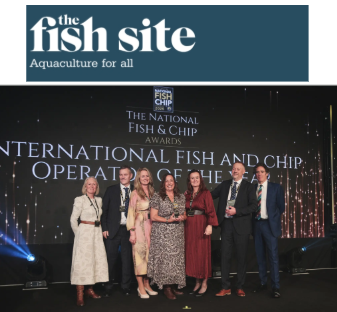 Businesses in Australia, Malaysia and the Netherlands have reached the finals of Britain’s prestigious international fish and chip awards
 JAPAN
JAPAN.png) Tokyo — Japanese seafood group Nissui announced that its subsidiary, Nissui Logistics, has fully restored cargo receiving and shipping operations at all 17 facilities following an IT disruption caused by unauthorized access to systems operated by its technology provider, IDC Frontier.
Tokyo — Japanese seafood group Nissui announced that its subsidiary, Nissui Logistics, has fully restored cargo receiving and shipping operations at all 17 facilities following an IT disruption caused by unauthorized access to systems operated by its technology provider, IDC Frontier. EUROPEAN UNION
 Yesterday in Strasbourg, Commissioner for Fisheries and Oceans Costas Kadis unveiled the long-awaited "Vision 2040" for EU fisheries and aquaculture—a strategy designed to build a competitive, resilient, and sustainable sector over the next 15 years. However, this forward-looking plan defers too many issues that, according to industry professionals, require urgent, immediate action. Specifically, it sidesteps a reform of the 2013 Common Fisheries Policy (CFP)—a reform that the European Commission continues to avoid, thirteen years later.