IN BRIEF - New rules for saury catch quota and 10% reduction this year to 225,000 tons
JAPAN
Monday, April 22, 2024
The 8th annual meeting of the North Pacific Fisheries Commission (NPFC) was held for four days from the 15th to the 18th at the Osaka Prefectural International Conference Center.
Regarding the management of saury resources, it was agreed that from this year, for the first time, fishery management rules will be introduced to calculate the total allowable catch (TAC) according to the resource level. However, the TAC calculated from the latest resource levels is subject to fluctuations of up to 10% compared to the previous year, and in 2024 it is set at 225,000 tons, a 10% decrease from the previous year.
The conference was attended by nine member countries and regions, including Japan, Taiwan, China, and Russia. A press conference was held after the meeting.
At last year's annual meeting, the saury TAC stated that for the two years from 2023 to 2024, the amount within the treaty zone (high seas) should be kept at 150,000 tons, and within the exclusive economic zones (EEZ) of Japan and Russia, less than 100,000 tons. [....]
Source: The Suisan-Keizai Daily News (translated from original in Japanese)
The company begins a new business phase after one of the most significant insolvency proceedings in the Spanish tuna industry.
The company emerging from the restructuring of the tuna group Atunlo will keep its headquarters in Vigo, ensuring the continuity of business operations that, in recent years, have weathered one of the most complex insolvency processes seen in Spain's seafood processing industry.
This news represents a major boost for the economic ecosystem linked to the Galician tuna sector, as it guarantees the continued presence in Vigo of an operator historically tied to the international marketing of tuna.
The Global Squid Supply Chain Roundtable (SR) has issued a public statement expressing concern regarding the bill that would allow industrial trawling in Chile.
Twenty-seven of the world's leading squid-buying companies, gathered in the Buyers' Sectoral Roundtable, issued an alert regarding Bill No. 18.173-21. This bill, currently under discussion in the Chilean Congress, proposes reintroducing industrial trawling in specific areas of the country, thereby reversing the provisions of the "Jibia Law" (Jumbo Squid Law).
Companies endorsing the statement include Wofco, Santa Monica Seafood, Quirch Foods, Grupo Profand, Panapesca USA, and Congalsa, among others.
Kenya, Seychelles, Gabon, Tanzania and South Africa advance country-led actions to strengthen fisheries transparency with tuna leading broader momentum toward full electronic monitoring.
At the Our Ocean Conference hosted in Kenya, the governments of Kenya, Seychelles, Gabon, Tanzania and South Africa unveiled a set of country-led commitments to advance electronic monitoring—the use of onboard video cameras, GPS and sensors to monitor and verify fishing activities—to strengthen transparency across their fisheries. These announcements reflect growing African leadership in modernizing fisheries management and improving accountability at sea.
The move of Aquaculture UK from Aviemore to Glasgow attracted a record attendance, organiser Diversified UK has announced.
The biennial trade show, which ran from June 16-17 at the Scottish Event Campus (SEC) on the Clyde, saw a 22% increase in visitors since the last Aquaculture UK in Aviemore, with the number of international attendees surging by 33%.
Also making his debut was Scotland’s new agriculture, marine, and the islands minister Jim Fairlie, who cut the ribbon at the SEC and reaffirmed the Scottish government’s commitment to working with the sector.
Source: fishfarmingexpert | Read the full article here
Nekkar has exercised an option to acquire the 40.43 percent stake in FiiZK held by Bevest, increasing its ownership in the aquaculture technology company to approximately 86 percent.
The transaction also gives Nekkar control of around 90 percent of FiiZK’s outstanding voting shares.
The exercise price for the stake was NOK 55.1 million (€5 million), based on NOK 0.10 per FiiZK share. Settlement took place on 22 June through the transfer of 3,649,079 treasury shares in Nekkar, valued at the company’s 30-day volume-weighted average share price of NOK 15.09.
Source: SalmonBusiness | Read the full article here
The construction process of Pesantar 1, the latest generation trawler that Nodosa Shipyard builds for the Argentine shipowner Pesantar, in which Newsan and Profand participate, has marked a milestone this week. This week, the Marín shipyard facilities hosted the launching ceremony of the ship, designed and developed entirely in Nodosa. After successfully touching the water, the hull of the fishing vessel, 85 meters long and 14 meters wide, was transferred to a slipway with greater capacity with the aim of starting its next construction phase. The goal is for the work to be completed in spring 2027, when delivery is scheduled. With the Pesantar 1, Nodosa, which this year celebrates 50 years of experience, reaffirms its “ability to develop highly complex fishing vessel projects for international shipowners
Source: Industrias Pesqueras | Read the full article here
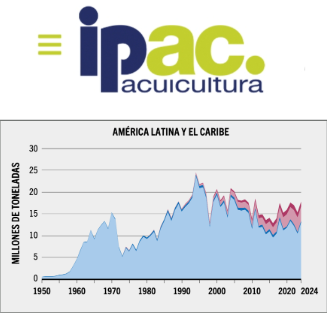
According to the SOFIA 2026 report presented last week, global aquaculture production registered a new record of 142 million tons in 2024, of which 103 million tons (live weight equivalent) corresponded to aquatic animals and 39 million tons (wet weight) to algae. Asia concentrated 92% of the total, followed by Latin America and the Caribbean (3%), Europe (2%), Africa (2%), North America (0.4%) and Oceania (0.2%).
If only aquatic animals are taken into account (103 million tonnes), aquaculture reached a new record, 53% of the total, having surpassed capture fisheries in the production of aquatic animals in 2021, thus confirming its role as a driver of growth in total aquatic animal production.
Source: ipac.aquacultura | Read the full article here
The Okayama University of Science and Murakami City have launched a joint research project to cultivate chum salmon (Oncorhynchus keta) in a land-based aquaculture system using an innovative land-based closed-recirculation aquaculture system (c-RAS).
Operating at the university’s Next-Generation Aquaculture Center, the initiative marks a major milestone for sustainable aquaculture. The initial batch of juvenile salmon, delivered from Murakami earlier this year, has grown to an average weight of 23 grams and an average length of 13 centimetres.
Murakami has been known as one of Japan’s leading salmon-producing regions along the Sea of Japan coast since the Heian period (794–1185). In recent years, however, climate change has altered the distribution of marine species, resulting in increased predation on released salmon juveniles by species such as yellowtail and Spanish mackerel that have expanded northward into the region.
Source: The Fish Site | Read the full article here
Norway’s government has approved production growth in three salmon farming regions while ordering a capacity reduction in one area under the country’s traffic light system for aquaculture.
The decision, announced by Fisheries and Oceans Minister Marianne Sivertsen Næss on Friday, could result in approximately 8,300 tonnes of additional maximum allowed biomass (MTB) being allocated in green-rated production areas. At the same time, production capacity in one red-rated area will be reduced by an estimated 5,300 tonnes.
The traffic light system determines whether salmon farming capacity can increase, remain unchanged or be reduced based on the impact of sea lice on wild salmon populations.
Source: SalmonBusiness | Read the full article here
Tetra Pakand Spanish seafood producer Jealsa have launched what they describe as the world’s first carton packaging solution for shelf-stable tuna, marking a significant innovation in one of the food industry’s most established categories.
The new packaging, based on Tetra Pak’s Tetra Recart technology, was introduced in Sweden last month through retailer Axfood in a 200ml Mini format and is now being made available to food producers and brands globally.
Developed through a collaboration between the two companies, the solution aims to provide an alternative to traditional metal cans while helping brands stand out in the growing shelf-stable tuna market, which is forecast to reach 12.4 billion units by 2030





 JAPAN
JAPAN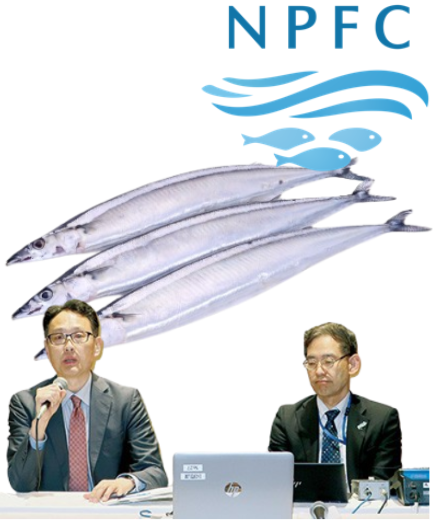 Regarding the management of saury resources, it was agreed that from this year, for the first time, fishery management rules will be introduced to calculate the total allowable catch (TAC) according to the resource level. However, the TAC calculated from the latest resource levels is subject to fluctuations of up to 10% compared to the previous year, and in 2024 it is set at 225,000 tons, a 10% decrease from the previous year.
 SPAIN
SPAIN.png) The company begins a new business phase after one of the most significant insolvency proceedings in the Spanish tuna industry.
The company begins a new business phase after one of the most significant insolvency proceedings in the Spanish tuna industry. CHILE
CHILE.png) Twenty-seven of the world's leading squid-buying companies, gathered in the Buyers' Sectoral Roundtable, issued an alert regarding Bill No. 18.173-21. This bill, currently under discussion in the Chilean Congress, proposes reintroducing industrial trawling in specific areas of the country, thereby reversing the provisions of the "Jibia Law" (Jumbo Squid Law).
Twenty-seven of the world's leading squid-buying companies, gathered in the Buyers' Sectoral Roundtable, issued an alert regarding Bill No. 18.173-21. This bill, currently under discussion in the Chilean Congress, proposes reintroducing industrial trawling in specific areas of the country, thereby reversing the provisions of the "Jibia Law" (Jumbo Squid Law). KENYA
KENYA.png) At the Our Ocean Conference hosted in Kenya, the governments of Kenya, Seychelles, Gabon, Tanzania and South Africa unveiled a set of country-led commitments to advance electronic monitoring—the use of onboard video cameras, GPS and sensors to monitor and verify fishing activities—to strengthen transparency across their fisheries. These announcements reflect growing African leadership in modernizing fisheries management and improving accountability at sea.
At the Our Ocean Conference hosted in Kenya, the governments of Kenya, Seychelles, Gabon, Tanzania and South Africa unveiled a set of country-led commitments to advance electronic monitoring—the use of onboard video cameras, GPS and sensors to monitor and verify fishing activities—to strengthen transparency across their fisheries. These announcements reflect growing African leadership in modernizing fisheries management and improving accountability at sea. UNITED KINGDOM
 The move of
  NORWAY
 Nekkar
.png) The construction process of Pesantar 1, the latest generation trawler that
The construction process of Pesantar 1, the latest generation trawler that  WORLDWIDE
 According to the SOFIA 2026 report presented last week, global aquaculture production registered a new record of 142 million tons in 2024, of which 103 million tons (live weight equivalent) corresponded to aquatic animals and 39 million tons (wet weight) to algae. Asia concentrated 92% of the total, followed by Latin America and the Caribbean (3%), Europe (2%), Africa (2%), North America (0.4%) and Oceania (0.2%).
.png) Operating at the university’s Next-Generation Aquaculture Center, the initiative marks a major milestone for sustainable aquaculture. The initial batch of juvenile salmon, delivered from Murakami earlier this year, has grown to an average weight of 23 grams and an average length of 13 centimetres.
Operating at the university’s Next-Generation Aquaculture Center, the initiative marks a major milestone for sustainable aquaculture. The initial batch of juvenile salmon, delivered from Murakami earlier this year, has grown to an average weight of 23 grams and an average length of 13 centimetres..png) The decision, announced by Fisheries and Oceans Minister Marianne Sivertsen Næss on Friday, could result in approximately 8,300 tonnes of additional maximum allowed biomass (MTB) being allocated in green-rated production areas. At the same time, production capacity in one red-rated area will be reduced by an estimated 5,300 tonnes.
The decision, announced by Fisheries and Oceans Minister Marianne Sivertsen Næss on Friday, could result in approximately 8,300 tonnes of additional maximum allowed biomass (MTB) being allocated in green-rated production areas. At the same time, production capacity in one red-rated area will be reduced by an estimated 5,300 tonnes. SWEDEN
.png) The new packaging, based on Tetra Pak’s Tetra Recart technology, was introduced in Sweden last month through retailer Axfood in a 200ml Mini format and is now being made available to food producers and brands globally.
The new packaging, based on Tetra Pak’s Tetra Recart technology, was introduced in Sweden last month through retailer Axfood in a 200ml Mini format and is now being made available to food producers and brands globally.