IN BRIEF - Thanks to labeling, 26 new caviar producers have appeared in Russia
RUSSIAN FEDERATION
Thursday, June 20, 2024
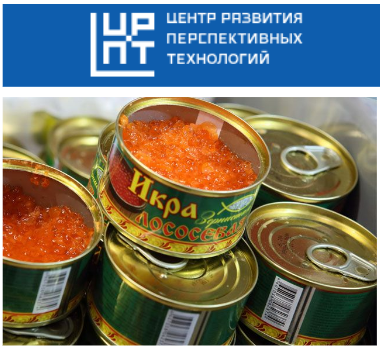
During the 1.5 months of mandatory labeling of red and black caviar, the “Honest Sign” system brought 26 producers out of the shadows, about whom the state was previously unaware. These companies did not reflect their activities in other state systems, reports the press service of the Center for the Development of Advanced Technologies (CRPT - labeling operator).
In total, the labeling system now includes 22.3 thousand market participants, of which 737 companies are manufacturers and importers. “Now we can estimate both the real number of participants in the turnover, as well as the actual volumes of production and imports, and in the near future, the volumes of caviar consumption in Russia,”commented Yulia Kuzmina, head of the department of excise-free food products at the CRPT.
Let us remind you that the labeling of red and black caviar in Russia began on May 1, 2024. Now all manufacturers and importers are required to apply labeling codes to each jar of caviar and provide information about the introduction of products into circulation to Chestny Znak. From April 1 next year, it will become mandatory to transmit information about the sale of these products at retail.
The TAC for the 2026/27 season has been reduced by 18.9% to 3,000 metric tons, while fishermen have agreed to revise the regional allocation.
TOKYO - Japan's Sea of Japan Snow Crab Special Committee has agreed on a new catch quota allocation for the next four years, increasing the relative share assigned to the Hokuriku region.
According to Nikkei Suisan Keizai, the agreement was reached during a closed-door meeting in Kobe and applies to the snow crab stock in Area A of the Sea of Japan.
The total allowable catch (TAC) for 2026/27 has been set at 3,000 metric tons, down from 3,700 metric tons in the previous season, representing an 18.9% reduction.
The redistribution aims to reorganize access to the resource among participating fleets, potentially affecting landings, port activity, and supplies to seafood processors.
Technical dialogue in Can Tho brought together nearly two hundred sector stakeholders to facilitate the transition toward unified sustainability benchmarks and continued global market access.
Can Tho – The Aquaculture Stewardship Council (ASC) has stepped up its technical assistance for Vietnamese aquaculture producers to support the rollout of its unified ASC Farm Standard. During a collaborative workshop held in Can Tho alongside the Vietnam Association of Seafood Exporters and Producers (VASEP), nearly 200 participants gathered, including farmers, processors, exporters, and industry specialists.
The session focused on clarifying operational criteria under the new standard, which evaluates environmental performance, animal welfare, and social responsibility across all farmed species. Throughout the discussions, ASC representatives emphasized that certification must function as a practical framework adapted to local realities, highlighting pathways such as the ASC Improver Programme (AIP) to guide small-scale producers through phased compliance.
Through targeted technical guidance and continuous capacity building, ASC aims to help Vietnamese aquaculture maintain its competitive edge in key international markets, sustain robust supply chain integration, and uphold verifiable responsible farming practices.
Pangasius surimi, sourced from a freshwater fish primarily farmed in Asia, is gaining interest as a potential substitute for Alaska pollock in the Japanese manufacture of kamaboko, chikuwa, and other fish paste products.
Photo: NamMy Seafood
According to a report by Nikkei Suisan Keizai, difficulties in procuring US surimi—traditionally dominant in this market—are driving the search for new raw materials.
The trend coincides with a crisis declaration issued on October 15 by the Japan Kamaboko Association, which warned of historically high prices and supply restrictions.
Pangasius offers a potential alternative to diversify suppliers and reduce costs, though its widespread adoption will depend on texture, gelling capacity, quality, and commercial acceptance.
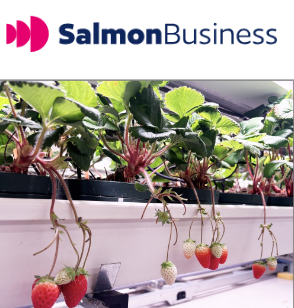
Japanese aquaponics company Aquponi has launched an indoor production system combining rainbow trout farming with strawberry cultivation, with two installations already established in Japan.
The Yokohama-based company announced the commercial launch of its Aquponi Berry Farm system on 5 October, alongside a dedicated aquaponics feed.
Aquaponics combines fish farming with growing plants without soil. Nutrients in the fish-rearing water support plant growth, allowing the two crops to be produced within a linked system.
The system uses triploid rainbow trout, marketed in Japan as salmon.
Source: SalmonBusiness | Read the full article here
Recruitment practices involving foreign fishing crew members could undermine international confidence in South Korean seafood and increase demands for labor traceability.
SEOUL - South Korean lawmaker Lee Jae-gwan (pictured) has raised concerns over shortcomings in the oversight of foreign crew recruitment during a parliamentary audit of the fisheries sector.
According to data provided by the National Federation of Fisheries Cooperatives (Suhyup), 11 of the 15 recruitment management companies examined had collected up to five years of labor management service fees in advance. A government survey also found that 74.6% of the 311 workers interviewed had paid deposits intended to prevent them from leaving their jobs.
The lawmaker warned that such practices could damage international confidence in South Korea's fishing industry amid growing scrutiny of forced labor risks in seafood supply chains.
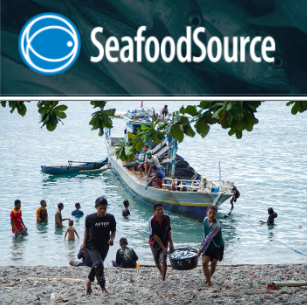
Indonesia’s Ministry of Maritime Affairs and Fisheries (KKP) and environmental organization Konservasi Indonesia (KI) are pushing for the creation of two large-scale marine protected areas (LSMPAs) covering more than 24 million hectares.
The two areas aim to safeguard biodiversity, preserve habitat connectivity, and protect deep-sea ecosystems.
One proposed LSMPA covers approximately 11.3 million hectares in the Banda Sea, where studies have identified rich deep-sea biodiversity, including 397 coral species, more than 100 fish species, and 44 deep-sea animal species.
Author: Toan Dao / SeafoodSource | Read the full article here
This is a joint media release from the Australian Fisheries Management Authority (AFMA) and the Australian Border Force (ABF).
Fourteen (14) Indonesian nationals have pleaded guilty to illegally fishing in Australian waters at Darwin Local Court on Tuesday, 29 September 2026. The charges followed apprehension of two foreign fishing vessels by Australian authorities attached to Maritime Border Command (MBC) during September 2026.
The first fishing vessel was detected and intercepted north of Cape Wessel, Northern Territory, on 9 September 2026. Six crew were on board, along with 70 kilograms of flying fish roe, 135 aggregation devices used to harvest the roe and 30 kilograms of dried fish.
The second fishing vessel was detected in the Torres Strait by aerial surveillance and subsequently intercepted under Operation BROADSTAFF. Eight crew members were on board, along with 600 kilograms of shark, 500 kilograms of reef fish and 4000 metres of fishing net.
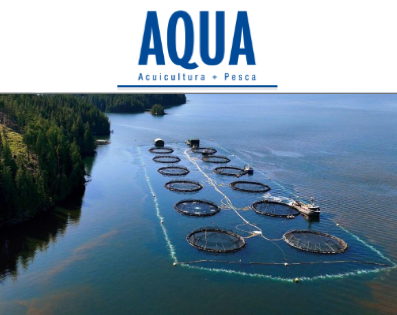
PSP incorporated learnings obtained during algal blooms in Canada into more than 50 mitigation systems it installs this season in Chile.
The Chilean company PSP highlighted the results obtained by its Harmful Algal Bloom (HAB) mitigation systems during the recent summer season in the northern hemisphere, an experience that it now seeks to apply in Chilean cultivation centers in the face of a summer that could be marked by the effects of the El Niño phenomenon.
Salmon farmer Bakkafrost Scotland’s operating loss increased from £6 million in 2024 to £58.1m last year, newly published accounts show.
Its financial loss after tax increased from £23.5m to £63.9m.
The increased losses came during a year when a significant increase in global supply of salmon, particularly from Norway, led to lower market prices which negatively affected financial performance, wrote Bakkafrost Scotland’s directors.
Author: Gareth Moore / fishfarmingexperrt | Read the full article here
The company, which farms the premium white fish off the Norwegian coast, continued its positive operational development with a significantly higher third quarter harvest and sales volumes.
Nordic Halibut also enjoyed stable pricing and strong biomass growth for its fish. It reported an average sales price of 171 NOK per kilo for fresh HOG (head on, gutted) halibut compared to 170 NOK per kilo recorded in the same period last year.
A total of 276 metric tons HOG were harvested during the quarter, compared with 152 tons in Q3 2025.
Author: Vince McDonagh / Fish Farmer | Read the full article here



 RUSSIAN FEDERATION
 In total, the labeling system now includes 22.3 thousand market participants, of which 737 companies are manufacturers and importers.
  JAPAN
JAPAN.png) TOKYO - Japan's Sea of Japan Snow Crab Special Committee has agreed on a new catch quota allocation for the next four years, increasing the relative share assigned to the Hokuriku region.
TOKYO - Japan's Sea of Japan Snow Crab Special Committee has agreed on a new catch quota allocation for the next four years, increasing the relative share assigned to the Hokuriku region. VIET NAM
.jpg)
.jpg)
 Japanese aquaponics company
  SOUTH KOREA
.jpg)
 INDONESIA
 Indonesia’s Ministry of Maritime Affairs and Fisheries (KKP) and environmental organization Konservasi Indonesia (KI) are pushing for the creation of two large-scale marine protected areas (LSMPAs) covering more than 24 million hectares.
 AUSTRALIA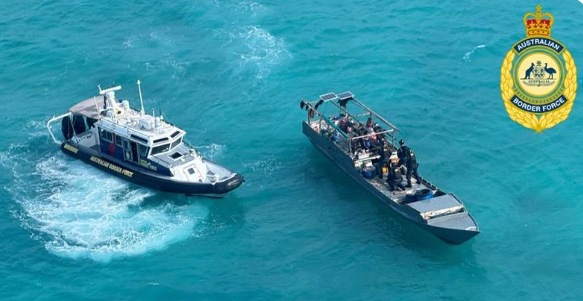
 CANADA
 PSP incorporated learnings obtained during algal blooms in Canada into more than 50 mitigation systems it installs this season in Chile.
 UNITED KINGDOM
.png) Salmon farmer Bakkafrost Scotland’s operating loss increased from £6 million in 2024 to £58.1m last year, newly published accounts show.
Salmon farmer Bakkafrost Scotland’s operating loss increased from £6 million in 2024 to £58.1m last year, newly published accounts show. NORWAY
.png) Nordic Halibut
Nordic Halibut