IN BRIEF - Wholesale Prices of Frozen Pollock by Size in Week 32 of 2024
SOUTH KOREA
Tuesday, August 06, 2024
In Week 32 of 2024, the wholesale prices for frozen pollock in South Korea continue to show slight declines for sizes 6, 7, and 8, while the price for size 9 remains steady.
By the end of July 2024, South Korea imported 76,593 tons of frozen pollock, marking a 10% decrease from the 84,884 tons imported in 2023. Frozen pollack is a significant fish species, accounting for 15% of the total seafood imports in South Korea. The import value for frozen pollock stood at USD 74,179, a 19% decline from USD 91,571 during the same period in 2023. The average import price of frozen pollock by June 2024 was USD 0.97 per kilogram, a 10.2% decrease from USD 1.08 per kilogram in 2023. The country-specific prices were USD 0.96 per kilogram from Russia, USD 1.25 per kilogram from the United States, and USD 1.63 per kilogram from China.
The vast majority of imports, 98.2% (75,201 tons), came from Russia, followed by 1.7% (1,288 tons) from the United States and 0.1% (103 tons) from China.
Specifically, the wholesale price for size 7 frozen pollock is around KRW 40,500, which is a 6.89% decrease from the June 2024 price of KRW 43,500 and a 1.21% decrease from the April 2024 price of KRW 41,000. For size 8, the wholesale price is around KRW 30,500, reflecting a 10.29% drop from the June 2024 price of KRW 34,000 and a 4.68% decrease from the April 2024 price of KRW 32,000
External experts have visited the Falkland Islands (Islas Malvinas) to present differing perspectives during an ongoing public consultation on the potential introduction of commercial salmon farming.
Initiated by Unity Marine—a joint venture aiming to establish an annual production of 50,000 tonnes—the consultation saw the developer bring in Canadian aquaculture specialists Dr. Gary Marty and Bernie Taekema. The experts detailed environmental assessment models, biosecurity controls, and site selection criteria based on British Columbia's regulatory framework.
Conversely, opposition campaigners from Salmon Free Falklands brought in Louise Cherrie, a former environmental authority insider from Tasmania, to highlight concerns regarding local governance, carrying capacity, and long-term marine ecosystem risks. Public engagement on the matter continues through October 30, 2026.
New Dalian subsidiary will integrate seed, breeding, R&D and marine aquaculture
Zoneco Group will establish Zhangzidao Seed Technology with RMB 20 million (US$2.97 million) in capital, consolidating seed, genetics and R&D. Its existing Qingdao Qianyan unit posted RMB 115.45 million in revenue and RMB 10.80 million net profit in H1 2026.
The Chinese firm Zoneco Group announced plans to establish a wholly-owned subsidiary focused on consolidating its operations in seed development, genetic improvement, scientific research, and marine aquaculture.
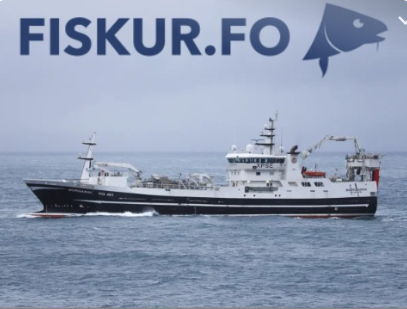
Faroese and foreign vessels intensify operations in international waters north of the archipelago
Mackerel fishing is picking up around the Faroe Islands. Greenlandic vessels Polar Amaroq and Polar Princess landed or scheduled 600 and 700 tonnes in Kollafjørður, while Faroese vessels joined the fishery. On August 25, Norðingur landed 120 tonnes at Pelagos in Fuglafjørður before returning to the grounds.
UF professor honored for his global contributions to aquaculture economics and policy
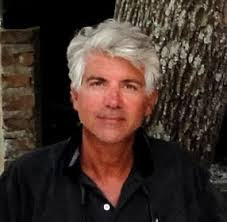
James Anderson, professor at the University of Florida, was named a 2026 World Aquaculture Society Fellow, recognizing his leadership in aquaculture economics, markets and policy. His work includes the Aquaculture Performance Indicators (APIs), a framework assessing economic, environmental and community outcomes across 80+ aquaculture systems worldwide.
Anderson’s own interest in the discipline started not with economics, but with the first fish tank he owned as a child.
TS3 system provides GPS updates every 30 seconds for small-scale coastal fleets
Fiji is piloting Triton’s Spear (TS3), developed by Japan’s Ocean Solution Technology with JICA support. The solar-powered system tracks vessels via GPS every 30 seconds, aiming to improve fisher safety, coastal resource management and sustainable fisheries across the Pacific.
Businessman Álvarez Castellano says the magistrate left unsigned the document that would allow the *J. Barreiro* to resume fishing operations.
Although the Argentine courts ruled to lift the suspension imposed on the *J. Barreiro*—a vessel belonging to the Conarpesa group (42% owned by the Galician firm Wofco)—the ship remained detained as of Tuesday, according to Fernando Álvarez Castellano, director of the Argentine fishing company. He attributes the delay to the missing signature of the judge who originally halted the vessel; she is no longer handling the case after the businessman announced legal action against her.
Author: Cecilia Valdez / La Voz de Galicia | Read the full article here
DSM-Firmenich?Animal Nutrition & Health today announced an update to its Digital SalmoFan software, adding a new algorithm designed to accurately measure trout fillet colour for partners across the entire value chain.
The Digital SalmoFan is a portable device that measures the colour of salmon and trout fillets digitally, using a numeric scoring system. This latest innovation builds on the foundations of the existing physical SalmonFan colour chart widely used in the global salmon industry for fillet colour measurement.
Source: fishfarmingexpert | Read the full article here
Pakistan’s seafood exports to China rose sharply to US$220 million during the first seven months of the current year, registering a 41% year-on-year increase from the corresponding period last year, according to the General Administration of Customs of China.
The growth reflected strong Chinese demand for a diverse range of marine products, particularly frozen fish, cephalopods and live crustaceans. Miscellaneous frozen whole fish led individual categories, generating US$40.04 million from 19,834 tonnes. Frozen cuttlefish and squid varieties together contributed US$36.39 million.
Frozen sardines and sprats generated US$19.49 million from 22,458 tonnes, while live and chilled mud crabs brought in US$18.70 million. Other significant exports included frozen octopus worth US$9.16 million, fish fillets and meat at US$7.71 million, frozen shelled shrimp and prawns at US$6.86 million, and flatfish at US$5.71 million.
Atlantic salmon, salmon fillets and smoked salmon are among seafood products included in Canada's latest retaliatory tariff package.
Canada will impose a 25% tariff on Atlantic salmon and a range of other seafood products originating in the United States from September 8, as part of its latest response to US trade measures.
The United States remains a relatively small producer of farmed Atlantic salmon compared with Canada, Norway and Chile, but it does have commercial production.
Atlantic Sapphire operates a land-based salmon farm at Homestead, Florida, where it harvested 5,096 tonnes in 2025.
Source: SalmonBusiness | Read the full article here
Khyber Aquaculture and the Fisheries Department train farmers in sustainable cold-water aquaculture
Khyber Aquaculture and the Jammu & Kashmir Department of Fisheries launched specialised training for trout farmers from Ganderbal, Bandipora and Srinagar, covering biosecurity, water quality, disease prevention and RAS technology to improve survival, growth and farm efficiency.
The initiative aims to boost trout productivity and develop the region as a hub for sustainable cold-water fisheries.
Illex Squid Closure Reshapes Atlantic Commercial Season United States
NOAA limits directed fishery through year-end after projecting 96% of domestic quota will be harvested
The directed fishery for Illex squid (Illex illecebrosus) is formally closed in United States fe...
Norway Pelagic Fisheries Report, Week 34 Norway
Mackerel Fishing Underway in the Norwegian Sea
First Large-Sized Landings Mark the Start of the Main Offshore Season, While Coastal Fleet Reports Modest Captures and Progress Continues Across North S...
The Sea That Pays and the MEF That Subtracts Peru
Every time an industrial vessel owner unloads anchoveta, jack mackerel, chub mackerel, tuna, hake, or common cusk-eel, they pay a fishing right to the State. It is not a revenue-driven whim, as Articl...
Copyright 1995 - 2026 Seafood Media Group Ltd.| All Rights Reserved. DISCLAIMER




 SOUTH KOREA
 09_06_09.png)
 09_06_56.png)
 09_09_28.png)
 FALKLAND ISLANDS
 CHINA
CHINA.png)
 FAROE ISLANDS
 Faroese and foreign vessels intensify operations in international waters north of the archipelago
 UNITED STATES
 UF professor honored for his global contributions to aquaculture economics and policy
 FIJI
FIJI.png) TS3 system provides GPS updates every 30 seconds for small-scale coastal fleets
TS3 system provides GPS updates every 30 seconds for small-scale coastal fleets ARGENTINA
 Businessman Álvarez Castellano says the magistrate left unsigned the document that would allow the *J. Barreiro* to resume fishing operations.
 UNITED KINGDOM
 DSM-Firmenich?Animal Nutrition & Health today announced an update to its Digital SalmoFan software, adding a new algorithm designed to accurately measure trout fillet colour for partners across the entire value chain.
 The growth reflected strong Chinese demand for a diverse range of marine products, particularly frozen fish, cephalopods and live crustaceans. Miscellaneous frozen whole fish led individual categories, generating US$40.04 million from 19,834 tonnes. Frozen cuttlefish and squid varieties together contributed US$36.39 million.
 CANADA
 Atlantic salmon, salmon fillets and smoked salmon are among seafood products included in Canada's latest retaliatory tariff package.
 INDIA
INDIA.png) Khyber Aquaculture and the Fisheries Department train farmers in sustainable cold-water aquaculture
Khyber Aquaculture and the Fisheries Department train farmers in sustainable cold-water aquaculture