Despite natural fluctuations, fishers, divers and scientists are becoming increasingly concerned about unexplained structural decline of European Lobster (Homarus gammarus) in the Netherlands’ Eastern Scheldt lobster fishery. Precise stock assessments are essential for understanding these declines and implementing sustainable management, but scientific knowledge on lobster stocks in the Netherlands is lacking.
Seeing a need for action, local fishers in the Association of Professional Fishers Oosterschelde, Westschelde and Voordelta (OWV) developed a fishing plan to improve regional fisheries management. They engaged with the government and stakeholders to develop science-based fishery management strategies.
Assessing stocks with a little bit of help from the EU
Using the European Maritime and Fisheries Funds (EMFF), OWV teamed up with Wageningen University & Research to implement ‘LobStAR’, a plan to improving stock assessments through scientific innovations and improvements in research and technology. As Sinke Sinke, chair of OWV explains: ''The lobster stock goes up and down due to natural factors. But how the lobster stock develops over time is not clear, while that information is important for sustainable management.”
The modern vessel, designed by Macduff Ship Design and built by Macduff Shipyards, stands out for its energy efficiency, safety, and suitability for the sustainable fishing of Norway lobster (langoustine) and prawns in the North Sea.
Innovation in fishing vessel design has once again gained international recognition with the "Best Prawn Trawler of 2025" award going to the *Gracious*, a vessel built by the Scottish shipyard Macduff Shipyards based on a design by Macduff Ship Design. The award highlights the growing importance of energy efficiency, safety, and sustainability in the renewal of the European fishing fleet.
Vietnam has reported a record-breaking 2026 first half seafood export performance.
Seafood exports from the country totalled US $5.8 billion (£4.3 billion) between January and June, a rise of 12.8% year on year.
According to the Vietnam Association of Seafood Exporters and Producers (VASEP) The increase was driven by higher demand, market diversification, and improved product restructuring.Vietnam is now a major producer of aquaculture related seafood products, notably shrimp and basa (pangasius).
Author: Vince McDonagh / Fish Farmer | Read the full article here
Global shipping rates continue to be high as the ongoing conflict between the U.S. and Iran drives up costs, and the latest attacks by Iran on vessels in the Strait of Hormuz could cause more issues.
Trans-Pacific shipping rates appeared to moderate in early July, as spot rates for certain major routes stayed relatively flat after months of steady increases, according to shipping rate indexing and analysis firm Xeneta.
Freight rates began to tick up with the commencement of U.S. and Israeli strikes on Iran in March 2026, and have steadily increase up since then.
Author: Chris Chase / SeafoodSource | Read the full article here
The India-UK Comprehensive Economic and Trade Agreement entered into force on Wednesday, eliminating Indian import tariffs on UK exports of fresh and frozen salmon with immediate effect.
The agreement is expected to improve the competitiveness of Scottish salmon in one of the world's fastest-growing consumer markets, where imported seafood has historically faced tariffs of around 33%. The deal also removes tariffs on cod and lamb, while duties on products including whisky and chocolate will be reduced over time.
Source: SalmonBusiness | Read the full article here
The Japanese Oyster Technology Program has distributed over 5 million seeds to producers across eight regions, strengthening the diversification of small-scale aquaculture through technology transfer and technical support.
Two and a half years after its launch, the Japanese Oyster Technology Program (PTEC)—spearheaded by the Universidad Católica del Norte (UCN) and funded by Corfo—has distributed more than 5 million seeds of this species, establishing a network of over 60 beneficiaries, including associations and small-scale producers from various parts of the country.
The Chilean salmon farmer has been accused of failing to provide facilities for nursing mothers, sacking employees who have taken maternity leave, and sending warning letters for non-existent absences
A union representing processing workers employed by Chilean salmon farmer Ventisqueros has claimed that some of their members have had to use staff toilets to express breast milk “as there is no suitable, private, clean, and specially equipped space for exercising this right”.
The Ventisqueros Seafood Workers Union also claims there have be cases of female workers who, “after reporting their pregnancy, have faced actions to remove their maternity leave protections, long after their contracts had been converted to permanent positions.
Author: Jonathan Garcés / fishfarmingexpert | Read the full article here
Catchwise has grown rapidly in the Norwegian fishing industry, with 30% of Norwegian skippers moving to the platform.
In some segments, including larger vessels, longliners, trawlers and pot vessels, the share is significantly higher.
Catchwise is aware that this has not happened by accident. Growth has come from staying close to skippers, listening to what creates problems at sea, and building the product around those needs.
Researchers at the University of Aveiro have shown that marine amphipods can transform low-value agricultural by-products into premium aquafeed ingredients rich in essential omega-3 fatty acids.
The findings, developed under the PUFApods project, offer a sustainable, circular pathway to reduce the dependence of the aquaculture industry on finite wild fish stocks for essential fatty acids.
As the global aquaculture sector expands, securing sustainable sources of essential nutrients – particularly omega-3 long-chain polyunsaturated fatty acids (LC-PUFAs) such as EPA and DHA – remains a critical bottleneck.
Source: The Fish Site | Read the full article here
The governing board of Anfaco-Cytma—the business association representing the canning and processing industry—met this Friday in Vigo to review the scientific, technological, and knowledge-transfer achievements made by its national knowledge center during the first half of the year. During this period, Anfaco-Cytma has had 62 R&D&i projects underway; of these, 15 are international in scope, 60 involve collaboration, and 61% are based on direct contracts with companies. In total, "these projects mobilize a combined budget of €109,676,355," the organization stated in a press release.
Source: La Voz de Galicia | Read the full article here
The 49th session of the Codex Alimentarius Commission (CAC49), held last week in Geneva (Switzerland), concluded with the selection of Spain as the new host country for the Codex Committee on Fish and Fishery Products (CCFFP)—one of the subsidiary bodies of the Codex Alimentarius Commission (CAC) dedicated to international food standardization.
Spain's selection marks a significant milestone for the country's international standing in the fields of food safety and international standardization. According to AESAN, this designation not only recognizes the technical and scientific capabilities of Spanish government bodies and institutions linked to the fisheries, aquaculture, and food sectors, but also strengthens Spain's role in the multilateral forums where international reference standards for global food trade are developed.
Source: ipac.acuicultura | Read the full article here
Time for the fisheries sector Peru
Every five years, the national fishing sector once again expects the State to do justice to one of the country's greatest strengths. Peru possesses privileged conditions. Our sea, our rivers and lakes...




 EUROPEAN UNION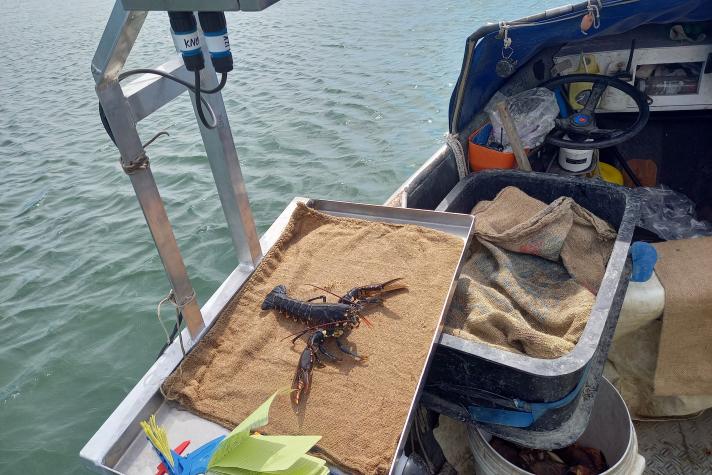
 UNITED KINGDOM
.png) The modern vessel, designed by Macduff Ship Design and built by Macduff Shipyards, stands out for its energy efficiency, safety, and suitability for the sustainable fishing of Norway lobster (langoustine) and prawns in the North Sea.
The modern vessel, designed by Macduff Ship Design and built by Macduff Shipyards, stands out for its energy efficiency, safety, and suitability for the sustainable fishing of Norway lobster (langoustine) and prawns in the North Sea. VIET NAM
 Vietnam has reported a record-breaking 2026 first half seafood export performance.
 WORLDWIDE
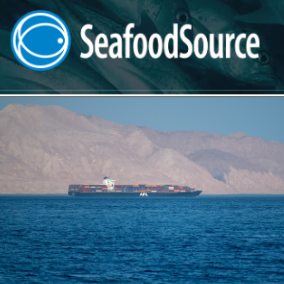 Global shipping rates continue to be high as the ongoing conflict between the U.S. and Iran drives up costs, and the latest attacks by Iran on vessels in the Strait of Hormuz could cause more issues.
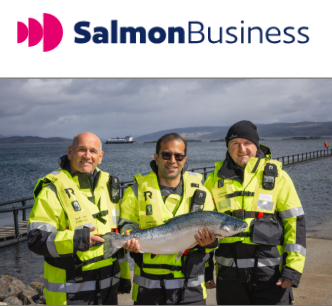 The India-UK Comprehensive Economic and Trade Agreement entered into force on Wednesday, eliminating Indian import tariffs on UK exports of fresh and frozen salmon with immediate effect.
 CHILE
CHILE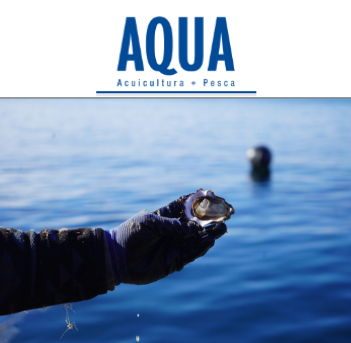 The Japanese Oyster Technology Program has distributed over 5 million seeds to producers across eight regions, strengthening the diversification of small-scale aquaculture through technology transfer and technical support.
.png) A union representing processing workers employed by Chilean salmon farmer
A union representing processing workers employed by Chilean salmon farmer  NORWAY
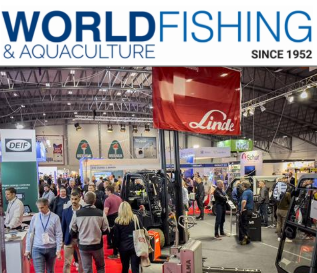 Catchwise has grown rapidly in the Norwegian fishing industry, with 30% of Norwegian skippers moving to the platform.
 PORTUGAL
.png) The findings, developed under the PUFApods project, offer a sustainable, circular pathway to reduce the dependence of the aquaculture industry on finite wild fish stocks for essential fatty acids.
The findings, developed under the PUFApods project, offer a sustainable, circular pathway to reduce the dependence of the aquaculture industry on finite wild fish stocks for essential fatty acids. SPAIN
SPAIN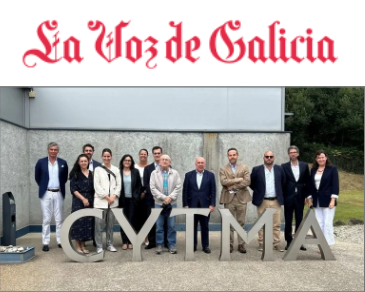 The governing board of
 SWITZERLAND
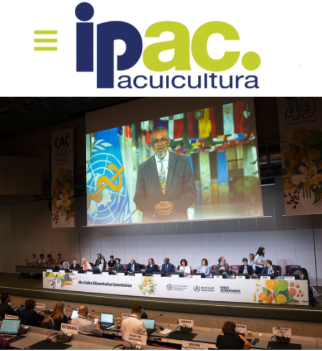 The 49th session of the Codex Alimentarius Commission (CAC49), held last week in Geneva (Switzerland), concluded with the selection of Spain as the new host country for the Codex Committee on Fish and Fishery Products (CCFFP)—one of the subsidiary bodies of the Codex Alimentarius Commission (CAC) dedicated to international food standardization.