IN BRIEF - Excellent catch of Iwashi sardine in Russian waters
RUSSIAN FEDERATION
Thursday, August 15, 2024
The catch of the “people’s” fish, the sardine Iwashi, continues to grow
According to the industry monitoring system of the Federal Agency for Fisheries (Federal Fisheries Monitoring System), by August 13, 2024, Russian fishermen had caught more than 161 thousand tons of Iwashi sardine - almost twice the figure for 2023.
The main fishing area is the exclusive economic zone of Russia, where 149 thousand tons of iwashi were caught. Domestic fishermen fish for iwashi almost all year round, including working in the open waters of the northwestern part of the Pacific Ocean (NWPO) and the exclusive economic zone of Japan.
Pacific Branch of VNIRO weekly places information about the situation with fish approaches, synoptic conditions, and fishing conditions.
Commercial concentrations and the size of individuals this year make it possible to use a large share of the catch not only for technical purposes (fish meal and oil), but also in the production of food fish products (canned and preserved fish) - affordable, healthy and in demand on the domestic market.
Eurostat data confirms that aquaculture in the EU continues to stagnate, while global production, on the contrary, continues its steady upward trajectory.
In 2024, EU aquaculture produced approximately one million tons of aquatic organisms—corresponding to a quarter of total EU fisheries and aquaculture production—worth €4.6 billion, representing just over two-fifths of the total value of EU fisheries and aquaculture production. Four EU countries were responsible for approximately two-thirds (64.6%) of aquaculture production: Spain produced just under a quarter (24.3%) of the total, followed by France (17.9%), Greece (12.6%), and Italy (9.7%).
Source: iPac.aquacultura | Read the full article here
The vessel will operate for NovaNam in Namibian waters and will have the capacity to catch and process up to 2,500 tons of hake annually.
The addition of the Olupale will allow the group to replace the Mar del Cabo, which was damaged by fire last year, and strengthen its fishing activity in a country that has been strategic for Nueva Pescanova since 1990.
Nueva Pescanova is reinforcing its international fishing presence with the addition of the freezer trawler Olupale to the fleet of NovaNam, its subsidiary in Namibia. The operation consolidates the group's commitment to Namibian waters, one of the strategic locations for its fishing and seafood processing activities.
The European Commission has approved Croatia’s plan to provide EUR 8 million (USD 9.3 million) in financial support to its commercial fishing fleet, which like many is suffering from higher fuel costs caused by the Iran War.
Attacks by Israel and the United States on Iran have led to the closure of the Strait of Hormuz, denying substantial amounts of oil from reaching global consumers and leading to a spike in fuel prices. While U.S. President Donald Trump reported the U.S. and Iran have signed a deal to end the conflict, the existing fuel price increase has still made it more difficult for commercial fishers to operate profitably, and European Union officials have sought to alleviate the shock and ensure their members’ fleets don’t remain tied up to the dock until fuel prices go down.
Author: Nathan Strout / SeafoodSource | Read the full article here
Scottish Sea Farms said 86 employees have completed its management training programme since its launch 18 months ago, including 63 current line managers and 23 employees identified as potential future leaders.
The programme, developed in partnership with AAB People, is designed to strengthen leadership and people-management skills across the business. Participants from different departments and regions attend two two-day training sessions held one month apart.According to the company, all employees with management responsibilities are expected to complete the course, while staff identified through succession planning processes are also encouraged to participate.
Source: SalmonBusiness | Read the full article here
The Government of Kenya officially opens the 11th Our Ocean Conference (OOC11) in Mombasa, marking a historic milestone as it is held on African soil for the first time.
Under the theme "Our Ocean, Our Heritage, Our Future," the event convenes global leaders, scientists, and investors to position Africa and the Western Indian Ocean at the center of sustainability and inclusive economic growth.
Over three days, the summit will seek to translate political ambition into measurable actions across six priority areas: Marine Protected Areas, Sustainable Blue Economy, the Ocean–Climate Nexus, Sustainable Fisheries, Marine Pollution, and Maritime Security. Since its inception in 2014, this conference has channeled more than 2,900 financial commitments valued at over US$ 169 billion.
The focus of this edition highlights the mobilization of private capital in aquaculture, biotechnology, and renewable energy, promoting co-management models where local communities act as active partners. Furthermore, Kenya will drive regional cooperation against illegal, unreported, and unregulated (IUU) fishing and promote the global 30x30 conservation target.
Relief for the fleet, which hopes the price will continue to fall
The announcement of the peace agreement between the US and Iran has also brought relief to the fishing fleet, which began to see a drop in diesel prices this Monday. According to the Geoportal of Gas Stations of the Ministry for Ecological Transition and the Demographic Challenge, a liter cost less than 90 cents at 19 of the 25 maritime stations in Galicia listed on that website. This is a decrease compared to last Friday, when the average price in the three Galician provinces was €0.904 in Lugo, €0.926 in A Coruña, and €0.934 in Pontevedra.
Author: S.M / M Gago / La Voz de Galicia | Read the full article here
The agreement also allows the IMO to move forward with its plan to evacuate the thousands of seafarers stranded in the area.
The International Maritime Organization (IMO) is very pleased with the peace agreement reached between the United States and the Islamic Republic of Iran, the parties to the conflict affecting the Strait of Hormuz. It considers this an "important step" towards restoring security in the vital maritime corridor for seafarers and ships, as well as safeguarding the fundamental principle of freedom of navigation.
IMO Secretary-General Arsenio Domínguez expressed his deepest condolences to all victims of the conflict, paying special tribute to the innocent seafarers affected and their families.
Source: Industrias Pesqueras | Read the full article here
Bern Aqua, an ADM group company and supplier of hatchery and nursery feeds for fish and shrimp, has become the first aquaculture feed producer in Belgium to achieve Best Aquaculture Practices (BAP) certification.
The certification was awarded to the company’s feed mill in Olen and marks a significant milestone for both Bern Aqua and the wider Belgian aquaculture sector. The achievement reflects growing global demand for greater traceability, responsible sourcing and independently certified feed production across the aquaculture sector.
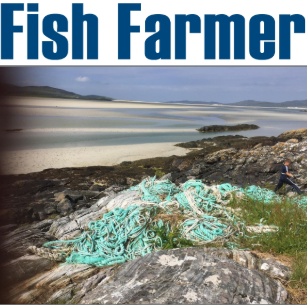
Although the aquaculture industry has good operations and a high level of awareness about marine litter, fish farming equipment is still being lost at sea, according to a new survey conducted by the research organisation Opinion on behalf of the Norwegian Directorate of Fisheries.
The survey is based on interviews with 12 representatives from the aquaculture industry. Eight out of 12 state that they have lost major farming components over the past five years.
The findings show that losses most often occur during demanding operations such as delousing, net changes and maintenance work.
Author: Vince McDonagh / Fish Farmer | Read the full article here
Aquascot, the employee-owned Scottish seafood processor behind Waitrose’s premium Scottish salmon and trout range, has been named Waitrose Own Brand Supplier of the Year 2026.
The award recognises Aquascot’s long-standing commitment to quality, innovation and partnership and marks the first time the Highland-based business has received the honour in more than 30 years of supplying the retailer. Aquascot first started supplying Waitrose in 1993 and has been a permanent dedicated supplier since 2003.
Source: fishfarmingexpert | Read the full article here




 RUSSIAN FEDERATION
.jpg) According to the industry monitoring system of the Federal Agency for Fisheries (Federal Fisheries Monitoring System), by August 13, 2024, Russian fishermen had caught more than 161 thousand tons of Iwashi sardine - almost twice the figure for 2023.
According to the industry monitoring system of the Federal Agency for Fisheries (Federal Fisheries Monitoring System), by August 13, 2024, Russian fishermen had caught more than 161 thousand tons of Iwashi sardine - almost twice the figure for 2023. EUROPEAN UNION
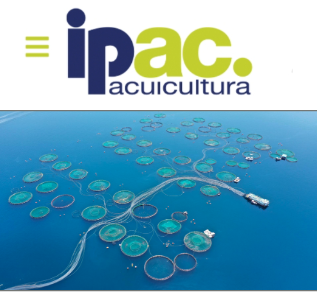 Eurostat data confirms that aquaculture in the EU continues to stagnate, while global production, on the contrary, continues its steady upward trajectory.
 SPAIN
SPAIN.png) The addition of the Olupale will allow the group to replace the Mar del Cabo, which was damaged by fire last year, and strengthen its fishing activity in a country that has been strategic for
The addition of the Olupale will allow the group to replace the Mar del Cabo, which was damaged by fire last year, and strengthen its fishing activity in a country that has been strategic for 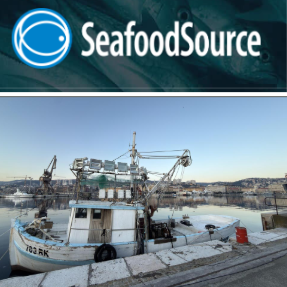 The European Commission has approved Croatia’s plan to provide EUR 8 million (USD 9.3 million) in financial support to its commercial fishing fleet, which like many is suffering from higher fuel costs caused by the Iran War.
 UNITED KINGDOM
 KENYA
KENYA.png) Under the theme "Our Ocean, Our Heritage, Our Future," the event convenes global leaders, scientists, and investors to position Africa and the Western Indian Ocean at the center of sustainability and inclusive economic growth.
Under the theme "Our Ocean, Our Heritage, Our Future," the event convenes global leaders, scientists, and investors to position Africa and the Western Indian Ocean at the center of sustainability and inclusive economic growth.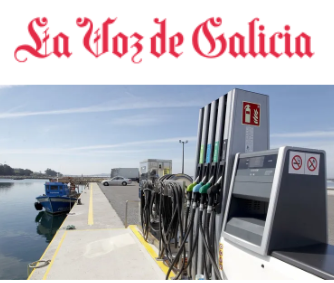 Relief for the fleet, which hopes the price will continue to fall
 WORLDWIDE
.png) The agreement also allows the IMO to move forward with its plan to evacuate the thousands of seafarers stranded in the area.
The agreement also allows the IMO to move forward with its plan to evacuate the thousands of seafarers stranded in the area. BELGIUM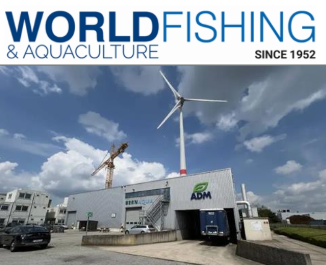
 Although the aquaculture industry has good operations and a high level of awareness about marine litter, fish farming equipment is still being lost at sea, according to a new survey conducted by the research organisation Opinion on behalf of the Norwegian Directorate of Fisheries.
 Aquascot