IN BRIEF - 28 Chinese Fishing Vessels and Warships Surge Into Philippine Waters – Water Cannons Blast Local Fishing Vessels
PHILIPPINES
Friday, October 11, 2024
The Scarborough Shoal, a long-disputed maritime flashpoint in the South China Sea – where over 190 Chinese vessels, including 28 fishing vessels and PLAN warships have been spotted operating in Philippine waters – saw fresh turmoil on Tuesday when a Chinese Coast Guard cutter unleashed a water cannon barrage on a Philippine fisheries vessel. The dramatic confrontation, captured on video and broadcast by the state-run People’s Television Network, underscored the escalating friction between Manila and Beijing over the resource-rich shoal.
According to the Bureau of Fisheries and Aquatic Resources (BFAR), the incident involved two Philippine fisheries vessels—BRP Datu Cabaylo (MMOV-3001) and BRP Datu Sanday (MMOV-3002)—which were in the area to resupply local fishermen. As the ships approached the contested waters, they were met by two Chinese fishing vessels and a warship from the People’s Liberation Army Navy (PLAN). The footage shows China Coast Guard cutter 3301 unleashing torrents of water against the Datu Cabaylo, with Chinese vessels engaging in aggressive maneuvering to obstruct the Philippine boats. Despite the dangerous encounter, BFAR officials confirmed that the ships completed their mission.
PORT VILA – The Royal New Zealand Air Force (RNZAF) has completed a two-week maritime surveillance and reconnaissance patrol operation in Vanuatu's jurisdictional waters, working in close coordination with local agencies and the Forum Fisheries Agency (FFA).
The mission was conducted by an MC-12K King Air aircraft from No. 42 Squadron, temporarily based in Port Vila. During the flights, officers from the Vanuatu Police Maritime Unit, the Vanuatu Fisheries Office, and the Vanuatu Transnational Crime Squad were embarked, focusing monitoring efforts on "dark vessels"—craft deliberately operating without tracking or identification systems to evade fisheries enforcement and transnational crime controls.
The deployment logged activity from multiple fishing vessels and pleasure craft for subsequent regulatory investigation. Additionally, at the request of the Vanuatu National Disaster Management Office (VNDMO), the crew gathered updated imagery of the Ambrym and Ambae volcanoes, confirming eruptive and geothermal activity across their active craters.
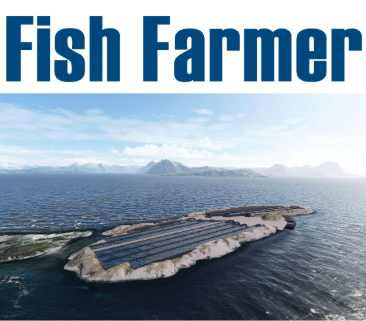
Gigante Salmon, the Arctic land based fish farmer, now has fish in all three pools in its simultaneously for the first time.
The company has a land-based farm at Lille Indre Rosøy in Rødøy municipality, Nordland, northern Norway. It uses a hybrid flow-through system supplied with natural seawater.
Gigante reports today that it is continuing to scale up production throughout the third quarter through further biomass growth, the stocking of the majority of the H2026 generation, and continued efforts to optimise production, fish welfare and biological performance.
Author: Vince McDonagh / Fish Farmer | Read the full article here
Technical dialogue in Can Tho brought together nearly two hundred sector stakeholders to facilitate the transition toward unified sustainability benchmarks and continued global market access.
Can Tho – The Aquaculture Stewardship Council (ASC) has stepped up its technical assistance for Vietnamese aquaculture producers to support the rollout of its unified ASC Farm Standard. During a collaborative workshop held in Can Tho alongside the Vietnam Association of Seafood Exporters and Producers (VASEP), nearly 200 participants gathered, including farmers, processors, exporters, and industry specialists.
The session focused on clarifying operational criteria under the new standard, which evaluates environmental performance, animal welfare, and social responsibility across all farmed species. Throughout the discussions, ASC representatives emphasized that certification must function as a practical framework adapted to local realities, highlighting pathways such as the ASC Improver Programme (AIP) to guide small-scale producers through phased compliance.
Through targeted technical guidance and continuous capacity building, ASC aims to help Vietnamese aquaculture maintain its competitive edge in key international markets, sustain robust supply chain integration, and uphold verifiable responsible farming practices.
Termavi has formalized the expansion of its premises on the Guixar waterfront. The company that manages the Vigo container terminal will increase its space for container logistics operations by 1,440 square meters, following the transfer of the concession previously held by Alpenor. This area will be added to the 180,000 square meters the firm already manages along the city’s waterfront.
Last February, the Port’s board of directors gave the green light for Termavi to take over the facilities formerly held by the now-defunct Alpenor; the company has now taken the next step to formalize its acquisition of these storage areas.
Author: A. Pascual / La Voz de Galicia | Read the full article here
Wisefish has connected AI tools to live seafood business data, helping companies improve traceability, operational visibility and decision-making
Wisefish has launched AI Connect, enabling artificial intelligence tools to access live operational data across seafood businesses, from raw material sourcing and production to sales and customer delivery.
The new capability connects tools including Claude, ChatGPT and Microsoft Copilot directly to Wisefish and Microsoft Dynamics 365 Business Central data, allowing users to retrieve information across the value chain, whether seafood is caught, farmed or purchased.
The TAC for the 2026/27 season has been reduced by 18.9% to 3,000 metric tons, while fishermen have agreed to revise the regional allocation.
TOKYO - Japan's Sea of Japan Snow Crab Special Committee has agreed on a new catch quota allocation for the next four years, increasing the relative share assigned to the Hokuriku region.
According to Nikkei Suisan Keizai, the agreement was reached during a closed-door meeting in Kobe and applies to the snow crab stock in Area A of the Sea of Japan.
The total allowable catch (TAC) for 2026/27 has been set at 3,000 metric tons, down from 3,700 metric tons in the previous season, representing an 18.9% reduction.
The redistribution aims to reorganize access to the resource among participating fleets, potentially affecting landings, port activity, and supplies to seafood processors.
Pangasius surimi, sourced from a freshwater fish primarily farmed in Asia, is gaining interest as a potential substitute for Alaska pollock in the Japanese manufacture of kamaboko, chikuwa, and other fish paste products.
Photo: NamMy Seafood
According to a report by Nikkei Suisan Keizai, difficulties in procuring US surimi—traditionally dominant in this market—are driving the search for new raw materials.
The trend coincides with a crisis declaration issued on October 15 by the Japan Kamaboko Association, which warned of historically high prices and supply restrictions.
Pangasius offers a potential alternative to diversify suppliers and reduce costs, though its widespread adoption will depend on texture, gelling capacity, quality, and commercial acceptance.
Recruitment practices involving foreign fishing crew members could undermine international confidence in South Korean seafood and increase demands for labor traceability.
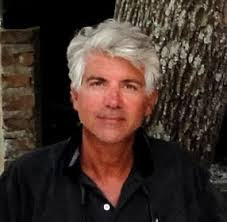
SEOUL - South Korean lawmaker Lee Jae-gwan (pictured) has raised concerns over shortcomings in the oversight of foreign crew recruitment during a parliamentary audit of the fisheries sector.
According to data provided by the National Federation of Fisheries Cooperatives (Suhyup), 11 of the 15 recruitment management companies examined had collected up to five years of labor management service fees in advance. A government survey also found that 74.6% of the 311 workers interviewed had paid deposits intended to prevent them from leaving their jobs.
The lawmaker warned that such practices could damage international confidence in South Korea's fishing industry amid growing scrutiny of forced labor risks in seafood supply chains.
Japanese aquaponics company Aquponi has launched an indoor production system combining rainbow trout farming with strawberry cultivation, with two installations already established in Japan.
The Yokohama-based company announced the commercial launch of its Aquponi Berry Farm system on 5 October, alongside a dedicated aquaponics feed.
Aquaponics combines fish farming with growing plants without soil. Nutrients in the fish-rearing water support plant growth, allowing the two crops to be produced within a linked system.
The system uses triploid rainbow trout, marketed in Japan as salmon.
Source: SalmonBusiness | Read the full article here
Indonesia’s Ministry of Maritime Affairs and Fisheries (KKP) and environmental organization Konservasi Indonesia (KI) are pushing for the creation of two large-scale marine protected areas (LSMPAs) covering more than 24 million hectares.
The two areas aim to safeguard biodiversity, preserve habitat connectivity, and protect deep-sea ecosystems.
One proposed LSMPA covers approximately 11.3 million hectares in the Banda Sea, where studies have identified rich deep-sea biodiversity, including 397 coral species, more than 100 fish species, and 44 deep-sea animal species.
Author: Toan Dao / SeafoodSource | Read the full article here




 PHILIPPINES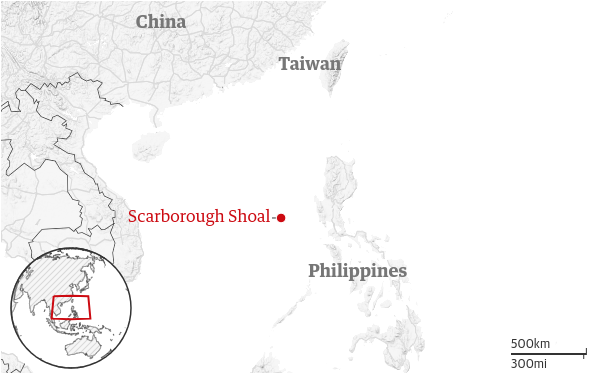
 NEW ZEALAND
.jpg)
 NORWAY
 Gigante Salmon
 VIET NAM
.jpg)
 SPAIN
SPAIN.png) Termavi has formalized the expansion of its premises on the Guixar waterfront. The company that manages the Vigo container terminal will increase its space for container logistics operations by 1,440 square meters, following the transfer of the concession previously held by Alpenor. This area will be added to the 180,000 square meters the firm already manages along the city’s waterfront.
Termavi has formalized the expansion of its premises on the Guixar waterfront. The company that manages the Vigo container terminal will increase its space for container logistics operations by 1,440 square meters, following the transfer of the concession previously held by Alpenor. This area will be added to the 180,000 square meters the firm already manages along the city’s waterfront. ICELAND
.png) Wisefish
Wisefish JAPAN
JAPAN.png) TOKYO - Japan's Sea of Japan Snow Crab Special Committee has agreed on a new catch quota allocation for the next four years, increasing the relative share assigned to the Hokuriku region.
TOKYO - Japan's Sea of Japan Snow Crab Special Committee has agreed on a new catch quota allocation for the next four years, increasing the relative share assigned to the Hokuriku region..jpg)
 SOUTH KOREA
.jpg)
 Japanese aquaponics company
  INDONESIA
 Indonesia’s Ministry of Maritime Affairs and Fisheries (KKP) and environmental organization Konservasi Indonesia (KI) are pushing for the creation of two large-scale marine protected areas (LSMPAs) covering more than 24 million hectares.