Other media | MundoAcuicola: Japan celebrates its first harvest of Atlantic salmon
JAPAN
Tuesday, October 15, 2024
The country marked a major breakthrough in aquaculture with the species farmed in a RAS system in Shizuoka, thanks to the collaboration with Proximar Seafood and Skretting.
On September 30, 2024, Japan took a decisive step in its aquaculture industry by celebrating its first domestic harvest of Atlantic salmon. This salmon was raised in a recirculating aquaculture system (RAS) facility located in Shizuoka Prefecture, built and operated by Norwegian company Proximar Seafood since 2022, marking a significant milestone in the sustainable development of aquaculture in the country.
Skretting, in strategic partnership with Proximar, has been collaborating closely since the start of the project.
Source: MundoAcuicola l Read the full article here
The Antarctic Peninsula MPA and precautionary krill management are critical steps towards representative protection of the Southern Ocean by 2030.
Antarctica2030, a global movement uniting leaders to champion the protection of Antarctica’s Southern Ocean, is urging governments meeting in Hobart from 19 to 30 October to adopt the Antarctic Peninsula Marine Protected Area (Domain 1 MPA) and agree a roadmap to complete their commitments to safeguard the Southern Ocean by 2030.
A foundation is seeking compensation through the courts for 35 years of catches in South Atlantic waters made without Argentine permission.
The Agustina Lerena Foundation has filed a lawsuit with the Federal Court of Tierra del Fuego, seeking approximately 23.6 billion euros in compensation from fishing companies—most of them Galician—and a network of associated firms, for the exploitation of resources in the South Atlantic without authorization from Argentina.
The legal action, spearheaded by César Lerena, president of the Center for Latin American Fisheries Studies, and lawyer Eduardo Barcesat, comes amid the campaign led by [President] Milei to assert the country’s sovereignty over the Falkland Islands.
Author: C. Valdez / La Voz de Galicia | Read the full article here
Alliance promotes tuna, albacore and culinary heritage.
Bermeo Tuna World Capital and Bilbao Hospitality School (ESHBI) signed a strategic agreement to train young chefs in sustainable tuna and albacore gastronomy, strengthen local hospitality, preserve traditional recipes and promote innovation, responsible consumption and Bermeo's maritime heritage.
The collaboration will also seek to strengthen the role of the hospitality sector as an ambassador for the region. With a particular focus on Bermeo and Urdaibai—and looking toward the broader area of ??Bizkaia and the Basque Country—both entities will promote awareness and the proper use of *bonito* (tuna).
The company, which farms the premium white fish off the Norwegian coast, continued its positive operational development with a significantly higher third quarter harvest and sales volumes.
Nordic Halibut also enjoyed stable pricing and strong biomass growth for its fish. It reported an average sales price of 171 NOK per kilo for fresh HOG (head on, gutted) halibut compared to 170 NOK per kilo recorded in the same period last year.
A total of 276 metric tons HOG were harvested during the quarter, compared with 152 tons in Q3 2025.
Author: Vince McDonagh / Fish Farmer | Read the full article here
An investigation by The Outlaw Ocean Project into Peru aligns with studies that warn of the vulnerability of the supply chain and question how the use of wild-caught fish in animal feed is measured.
Fish meal and fish oil are once again at the center of the debate regarding the future of aquaculture. An investigation by The Outlaw Ocean Project—published by *La República* on October 9 and authored by Ian Urbina—documents allegations of pollution, conflicts with local communities, and issues regarding traceability in Peru. These findings contribute to a broader scientific discussion that examines both the aquaculture sector’s reliance on wild-caught resources and the distribution of the benefits and burdens throughout this international supply chain.
Record ocean warming, declining anchoveta stocks and fishing restrictions threaten jobs, exports and global aquaculture supplies.
The 2026 Super El Niño has severely disrupted Peru's anchoveta fishery.
The Central Bank forecasts a 30.7% contraction and 78,000 job losses, while fishmeal prices have reached US$3,500/tonne, increasing costs for global aquaculture.The vast majority of the anchoveta industry is concentrated off the coast of north-central Peru, and it is hard to overstate how economically significant this fish is
Lerøy Seafood Group has introduced poultry byproducts into feed at all its offshore salmon farms, while Mowi is preparing to adopt similar ingredients at its operations in Norway and Scotland.
The developments were reported by the Financial Times on Thursday, which said Europe's largest salmon producers are turning to processed chicken byproducts as rising fishmeal prices increase pressure on feed costs.
Grieg Seafood introduced chicken meal and oil in July, while SalMar began testing poultry-based feed in March, according to the newspaper.
Fishmeal prices have almost doubled over the past two years
Source: SalmonBusiness | Read the full article here
Nearly 200 Vietnamese aquaculture stakeholders have met in Can Tho to discuss certification changes and prepare for ASC’s new Farm Standard
The Aquaculture Stewardship Council (ASC) is stepping up support for Vietnam’s aquaculture industry as producers prepare to transition to its new Farm Standard.
Almost 200 producers, processors, exporters and other industry stakeholders gathered at an event in Can Tho to discuss implementation challenges, understand the new requirements and seek practical guidance from ASC experts.
Simeulue Consolidates a Direct Fresh Seafood Route to Japan Indonesia
The Indonesian island completes its second commercial shipment in two months, mobilizing octopus and fresh fish under strict sanitary standards and reinforcing its public cold chain as a key driver of...
Copyright 1995 - 2026 Seafood Media Group Ltd.| All Rights Reserved. DISCLAIMER




 JAPAN
JAPAN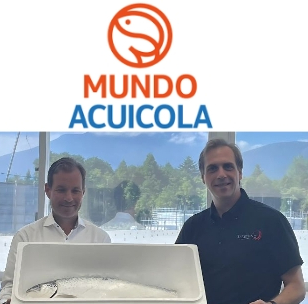 The country marked a major breakthrough in aquaculture with the species farmed in a RAS system in Shizuoka, thanks to the collaboration with Proximar Seafood and
  ANTARCTICA
 The Antarctic Peninsula MPA and precautionary krill management are critical steps towards representative protection of the Southern Ocean by 2030.
 ARGENTINA
.png) The Agustina Lerena Foundation has filed a lawsuit with the Federal Court of Tierra del Fuego, seeking approximately 23.6 billion euros in compensation from fishing companies—most of them Galician—and a network of associated firms, for the exploitation of resources in the South Atlantic without authorization from Argentina.
The Agustina Lerena Foundation has filed a lawsuit with the Federal Court of Tierra del Fuego, seeking approximately 23.6 billion euros in compensation from fishing companies—most of them Galician—and a network of associated firms, for the exploitation of resources in the South Atlantic without authorization from Argentina. SPAIN
SPAIN.png) Alliance promotes tuna, albacore and culinary heritage.
Alliance promotes tuna, albacore and culinary heritage. NORWAY
.png) Nordic Halibut
Nordic Halibut PERU
PERU An investigation by The Outlaw Ocean Project into Peru aligns with studies that warn of the vulnerability of the supply chain and question how the use of wild-caught fish in animal feed is measured.
 OMAN
OMAN
 Record ocean warming, declining anchoveta stocks and fishing restrictions threaten jobs, exports and global aquaculture supplies.
 Lerøy Seafood Group has introduced poultry byproducts into feed at all its offshore salmon farms, while Mowi is preparing to adopt similar ingredients at its operations in Norway and Scotland.
 UNITED KINGDOM
 Review will examine the sustainability of the model in place since 1996.
 VIET NAM
 Nearly 200 Vietnamese aquaculture stakeholders have met in Can Tho to discuss certification changes and prepare for ASC’s new Farm Standard