The Normandy Regional Committee for Fisheries and Marine Farming (CRPMEM) and Normandie Fraîcheur Mer (NFM) jointly announced on October 28 the suspension of MSC certification for the whelk fishery in Granville Bay. "This suspension is not a questioning of the sustainable management practices implemented by fishing companies operating in Granville Bay," Marc Delahaye, director of the CRPMEM of Normandy, which is leading the initiative, is keen to point out. "Rather, it highlights the need to recognize the impacts of climate change on marine resources."
A cold-water species, the whelk is taking the full brunt of the rise in summer temperatures: mortality, loss of feeding and reduced reproductive capacity. The resource is in sharp decline and the climate is "more than moribund" for the 63 whelk trappers from Granville Bay. Because inflation is not helping. " Consumers have turned away from whelk a little,"says Arnauld Manner, director of NFM. The drop in catches has led to a sharp increase in auction prices (+51% between 2010 and 2020, +90% between 2020 and 2023), even if the phenomenon has reversed this year (-45% between 2023 and 2024).
The Marine Stewardship Council certification was obtained in 2017 and renewed in 2023, rewarding the “ considerable ” management efforts of fishermen since 1983.
The Yamagawa Fisheries Cooperative and regional organization SEAFDEC/TD receive top honors at the JSSA 2026 awards
The Executive Committee of the Japan Sustainable Seafood Award announced the winners of its seventh edition in Tokyo. In the National Division, the award went to the Yamagawa-cho Fisheries Cooperative (Ibusuki, Kagoshima) for its blue carbon project. Local fishers deployed 89 vegetative mats covering 445 square meters to restore seagrass beds (Zostera marina), successfully expanding the ecosystem to 1,500 square meters, certifying 1.4 tons of carbon dioxide in blue carbon credits, and commercially utilizing catches of the herbivorous lowfin chub (Kyphosus vaigiensis).
In the newly established Asia Division, the award went to the Training Department of the Southeast Asian Fisheries Development Center (SEAFDEC/TD), affiliated with ASEAN. Backed by the Japanese Trust Fund, the initiative consolidated a database tracking 5,370 fishing vessels across 28 parameters, trained more than 800 fisheries inspectors, and deployed an electronic catch documentation system to combat illegal, unreported, and unregulated (IUU) fishing.
The National Institute of Fisheries Science develops a system that reduces ammonia-related mortality in containers bound for the United States
The National Institute of Fisheries Science (NIFS), led by Director Kwon Soon-wook, has successfully developed and validated a technology designed to mitigate ammonia accumulation and preserve the freshness of live seafood during extended transoceanic routes.
The maritime voyage to the Port of Long Beach in the western United States takes approximately four weeks in total, with a specific sailing time inside live fish transport containers of around 15 days for olive flounder (Paralichthys olivaceus). Through a collaborative project launched in 2024 with local exporters, NIFS engineered an ammonia-reduction device. During real-world testing at destination—which extended to 22 days of transit due to operational delays—the system reduced ammonia concentrations in the tanks by 14.2% and blood ammonia levels in the specimens by 22.2%, while also lowering physiological stress markers. This breakthrough will allow higher loading volumes per container and facilitate market expansion to distant destinations in the Eastern United States and Europe.
The six coastal states formally concluded their multilateral consultations at the London headquarters of the North-East Atlantic Fisheries Commission (NEAFC) without formalizing a binding catch-sharing agreement for the 2027 season.
Despite exhausting the official schedule of dialogue, delegations from the United Kingdom, the European Union, Norway, Iceland, the Faroe Islands, and Greenland failed to reach a consensus on the political distribution of quota shares.
The main bone of contention centered on reconciling historical catch rights with demands for territorial access. The persistence of an earlier four-party framework that sidelined the European Union has led, in practice, to accumulated unilateral allocations that exceed sustainable biological limits.
Negotiators reviewed scientific advice from the International Council for the Exploration of the Sea (ICES), which recommended a total allowable catch (TAC) ceiling of 352,938 tonnes for 2027. Although the spawning stock biomass registered a favorable 4.5% increase above the biological limit point, the industry laments that the lack of a comprehensive settlement will perpetuate operational uncertainty.
Sector consumed 92% of the fishmeal sold in 2025, with almost half of that going to China
Demand from the expanding aquaculture sector was responsible for 96% of a 372,000-tonne increase in fishmeal consumption last year, members of marine ingredients organisation IFFO have been told.The sector consumed 92% of the 5.8 million tonnes of fishmeal sold last year, and 72% of the fish oil, IFFO market research director Enrico Bachis said in a presentation to the organisation’s annual conference in Buenos Aires, Argentina, this week.
Author: Gareth Moore / fishfarmingexpert | Read the full article here
From November 2–6, CITES will review Mexico's efforts against illegal gillnets in Geneva.With only around 12 vaquitas remaining in the Gulf of California, the meeting will assess whether deployed concrete blocks can effectively protect the critically endangered species.
Norway’s fisheries minister has defended a further cut to salmon farming capacity in western Norway, arguing that the environmental benefits justify restrictions on production and employment.
Marianne Sivertsen Næss was responding to Conservative MP Bård Ludvig Thorheim, who asked the government to assess the economic consequences of repeated cuts under Norway’s traffic-light system.
The system divides the coast into 13 production areas. Every two years, each receives a colour based on the assessed impact of sea lice from fish farms on wild salmon. A red designation requires a 6% reduction in permitted farming capacity.
Source: SalmonBusiness | Read the full article here
Moscow — The governments of Russia and China agreed to promote and expand commercial trade in seafood products, following the conclusion of the 31st regular meeting between the heads of government of both nations. The high-level summit was led by Russian Prime Minister Mikhail Mishustin and Chinese Premier Li Qiang.
As confirmed in the final joint communiqué, both delegations established a priority technical agenda for the fisheries sector. Among the key agreements, both nations will work in coordination to restore the export status of key enterprises and advance the formal registration of fishing companies in both jurisdictions.
Furthermore, the parties agreed to expand the list of accredited suppliers, expedite review and processing timelines for commercial applications, and deepen bilateral cooperation mechanisms aimed at ensuring food quality and safety standards across reciprocal shipments of aquatic products.
The president of Europêche, Javier Garat, the community fishing association, conveyed this Thursday to the Commissioner for Fisheries and Oceans, Costas Kadis, the disappointment of the entire sector with the Vision 2040 for fishing and aquaculture presented last Tuesday in Strasbourg. Garat, who criticized that the document avoids the much-requested reform of the common fisheries policy (PCP or CFP, for its acronym in English), did not rule out mobilizations from the sector to attract the attention of President Ursula von der Leyen.
Author:Jose G. Santalla / La Voz de Galicia | Read the full article here
Irish marine engineering firm recognised for innovation and international growth.
SeaQuest Systems, based in Killybegs, Ireland, won BIM Aquatech Business of the Year 2026. Founded in 1986, it employs over 90 people, manufacturing fish pumps, cranes and hydraulic equipment for aquaculture clients in Europe and North America.
Tilapia Wholesale Prices Consolidate Upward Trend in October 2026 China
Farm-gate and wholesale values record year-on-year increases of up to 24.02%, primarily driven by commercial sizes under 500 grams
The wholesale tilapia market in China (Oreochromis niloticus) mainta...
Copyright 1995 - 2026 Seafood Media Group Ltd.| All Rights Reserved. DISCLAIMER




 FRANCE
 JAPAN
JAPAN.png)
 SOUTH KOREA
.png)
 UNITED KINGDOM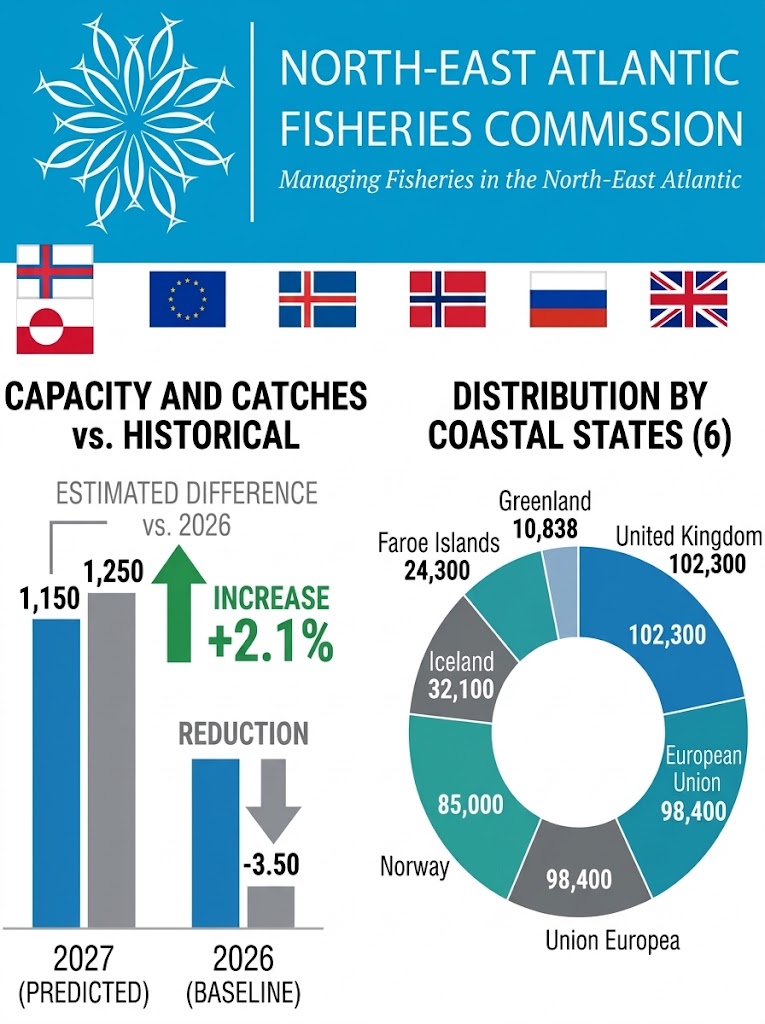
.png) Demand from the expanding aquaculture sector was responsible for 96% of a 372,000-tonne increase in fishmeal consumption last year, members of marine ingredients organisation
Demand from the expanding aquaculture sector was responsible for 96% of a 372,000-tonne increase in fishmeal consumption last year, members of marine ingredients organisation MEXICO
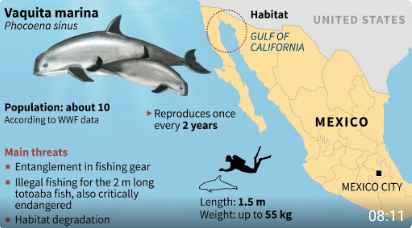 Illegal totoaba fishing threatens its survival.
 NORWAY
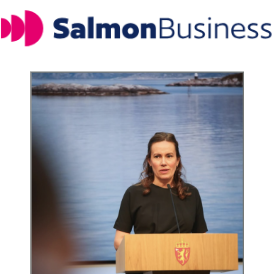 Norway’s fisheries minister has defended a further cut to salmon farming capacity in western Norway, arguing that the environmental benefits justify restrictions on production and employment.
 RUSSIAN FEDERATION
.jpeg)
 EUROPEAN UNION
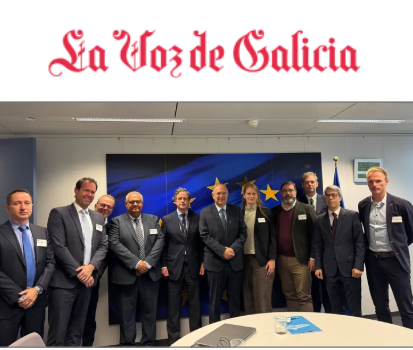 The president of
  REPUBLIC OF IRELAND
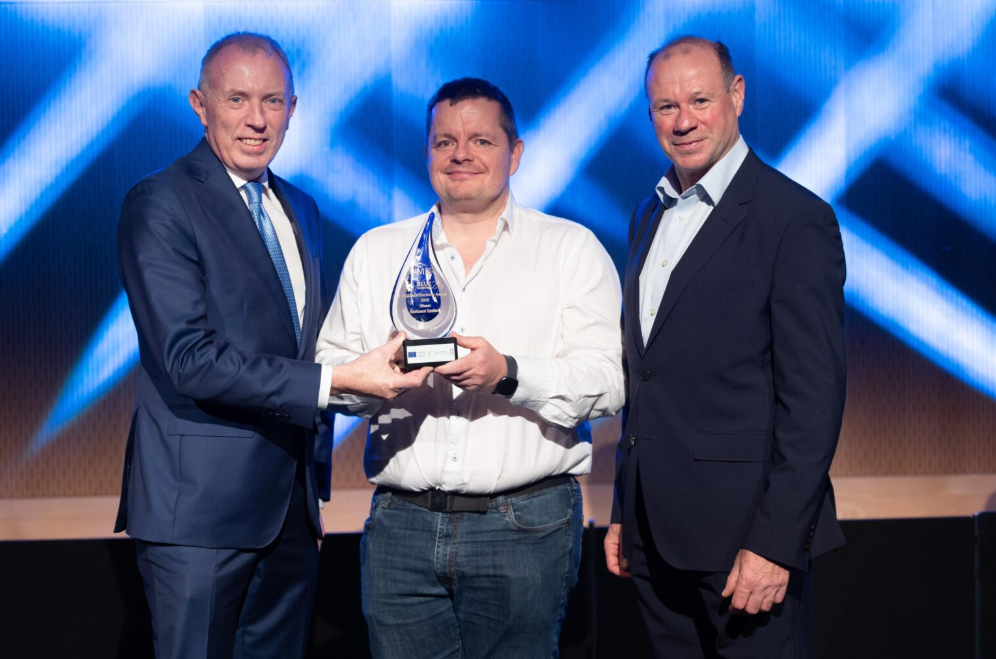 Irish marine engineering firm recognised for innovation and international growth.
 SPAIN
SPAIN