IN BRIEF - Technical report confirms wisdom in suspending Loligo squid harvests
FALKLAND ISLANDS
Friday, December 13, 2024
The Falkland Islands Fisheries Commission this week reviewed a detailed report by three senior members of the Fisheries Department titled “Analysis of the 2024 Loligo Squid Harvest.” The findings confirmed the prudence and justification of not opening the season.
The report was authored by Chief Cephalopod Scientist Irina Chemshirova, Oceanographic Data Analyst Alex Blake, and Senior Scientist and Stock Assessor Frane Skeljo. Their analysis was reinforced by a biomass estimate obtained after a second survey, which corroborated the decision to refrain from harvesting.
One key conclusion of the report highlighted that “the biological data collected during the surveys indicated no major net migration during the course of the season.” However, the report acknowledged challenges in fully confirming low migration patterns due to the significant time gap between the August and September surveys.
Blake further explained that“the unfavorable ocean conditions described during 2024 most certainly facilitated a northern transport of Loligo, out of the Falklands EEZ and toward the high seas during the period of the second harvest.”
Adding to the context, the significant investments made by Falkland fishing companies and their Galician partners in new vessels underscore the high stakes for the 2025 squid harvest. Understandably, this has led to some apprehension about how the upcoming season will unfold.
The Regional Ministry of the Sea and the Fundación Nueva Pescanova will turn Galicia into the international hub for sustainable fisheries and aquaculture with the IV Global Sustainable Seafood Galicia Forum, to be held in Vigo on April 28.
The Regional Minister of the Sea, Marta Villaverde, signed the collaboration agreement with the foundation’s president to support the event, which will once again position the region as a global showcase for the quality and excellence of Galician seafood products.
The forum will bring together professionals involved in the blue transformation, from responsible fisheries and aquaculture to scientific and business innovation. Its third edition gathered more than 300 professionals from 30 countries, reinforcing its international reach.
The Galician Government is allocating €75,625 to the initiative, co-financed by the European Maritime, Fisheries and Aquaculture Fund (EMFAF). The event aligns with the Galicia Blue Economy Strategy, which mobilizes €144 million to strengthen the sector’s social, environmental, and economic sustainability and to consolidate Galicia’s position as a European leader in marine protection and long-term economic development.
In an unprecedented ceremony in SalmonChile's 40-year history, the association's leadership changed hands, with Arturo Clément handing over the presidency to Patricio Melero, a former member of parliament and former minister with extensive experience in the sector, after having served for 20 years on the Aquaculture Commission.
The event, which brought together more than 200 attendees at the Empormontt City-Port Liaison Center, included the participation of regional and municipal authorities, union representatives, artisanal fishing leaders, leaders from other associations, and prominent businesspeople from the production sector.
Source: MundoAcuicola | Read the full article here
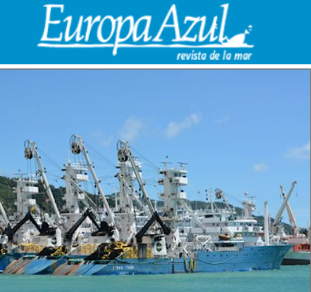
With the 2020-2026 protocol expiring, European purse seiners are now excluded from the quota in the Seychelles EEZ, while Brussels and Victoria are racing against time to negotiate a renewal under pressure from social, environmental, and transparency concerns.
Seychelles wants to rebalance a historic agreement that, since the late 1980s, has guaranteed European access to Indian Ocean tuna. With the protocol expiring on February 23, 2026, fishing activity under this framework is suspended, and negotiations are stalled over a single figure: the archipelago is demanding an improved economic return commensurate with the real value of the resource; the EU is offering a much smaller increase.
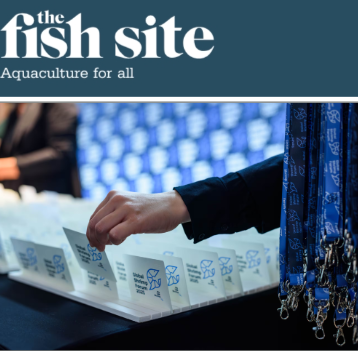
Registration is now open for the fifth Global Shrimp Forum, taking place in Utrecht from 1 to 3 September 2026 and featuring its most extensive, revamped programme to date.
The 2026 Global Shrimp Forum (GSF) is set to combine the successful elements of the previous four conferences with significant structural updates designed to enhance the experience for delegates, speakers and sponsors. Key changes include a redesigned exhibition zone and the relocation of plenary sessions to larger facilities.
Returning by popular demand to deliver the opening plenary will be Jan Lambregts, head of RaboResearch global economics & markets at Rabobank, whose insights on the macroeconomic and geopolitical landscape drew glowing reviews from attendees last year
Source: The Fish Site | Read the full article here
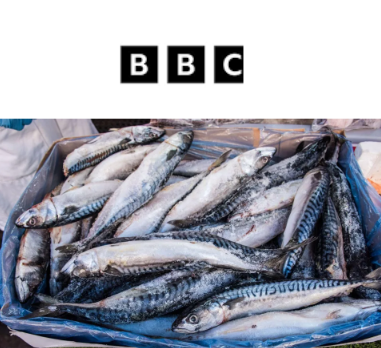
Waitrose is to suspend sales of mackerel products due to concerns about overfishing.
The supermarket said it would stop sourcing fresh, chilled and frozen mackerel by 29 April, as well as tinned mackerel once their current stocks have been sold.
Marine groups have recommended a cut in the amount of North East Atlantic mackerel being caught to prevent a collapse in population numbers.
Waitrose said it was the first UK supermarket to suspend mackerel sales, adding it would only start selling the fish again once it met their "high sourcing standards".
Author: Emer Moreau / BBC | Read the full article here
In its quarterly report, Norwegian producer Hofseth announces a major change
The Hofseth Group will implement a gradual transition in production from trout, which accounted for around half of the fish harvested in Q4, to salmon.
This follows a strategic review of the fish farming business, according to the company's fourth quarter report.
The decision means that the hatchery in Tafjord will switch to producing only salmon smolt in 2026 and that trout will gradually be phased out of the group's production mix.
Author: Ulrik Tallhaug Sydnes / fishfarmingexpert | Read the full article here
YOKOHAMA — Kamome Propeller Co., Ltd., headquartered in Yokohama, Kanagawa Prefecture, has launched its next-generation “SGmax Propeller,” designed to deliver superior energy-saving performance for commercial vessels. The company, led by President and CEO Kazuki Itazawa, began sales on March 2, 2026.
Building on the success of its SG Propeller, introduced in 2010 and delivered to more than 600 ships worldwide, the new model enhances efficiency while supporting efforts to reduce greenhouse gas emissions from maritime operations.
The SGmax Propeller incorporates advanced design technologies refined from the SG series, including hub vortex weakening technology. By optimizing blade area and rake distribution, the new propeller achieved an approximately 2% improvement in efficiency over the SG model during water tank testing. Compared with conventional MAU-type propellers, the SGmax demonstrates an estimated 5% efficiency gain. Cavitation levels remain comparable to the SG propeller, while strict hull vibration targets have been successfully met.
The SGmax expands Kamome’s portfolio of energy-saving solutions, complementing its Controllable Pitch Propeller, GATE RUDDER® SYSTEM, and KAMOME REACTION AND BULB RUDDER, strengthening the company’s commitment to more sustainable and efficient shipping technologies.
Two merchant ships were hit by projectiles in the area this Sunday
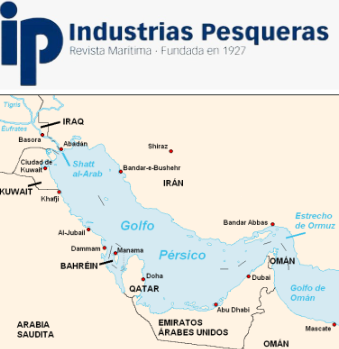
The Iranian Revolutionary Guard prohibited the passage of any vessel through the Strait of Hormuz this weekend. While not officially issuing the warning, they did caution shipping companies about the risks of crossing its waters amidst the ongoing conflict with the United States and Israel. "We have no intention of closing the Strait of Hormuz at this time, nor do we have any plans to do anything that could disrupt navigation in it at this stage," declared Iranian Foreign Minister Abbas Araqchi yesterday. At least two merchant ships ignored their recommendations this Sunday—one of them, the Skylight, is on the US sanctions list for exporting Iranian crude oil—and were hit by projectiles in the area early in the morning.
Following the incidents, major shipping companies Maersk and MSC—which together account for 35% of global container shipping—decided to suspend all vessel traffic through this port "until further notice."
Source: La Voz de Galicia | Read the full article here
The International Chamber of Shipping (ICS), European Shipowners' Association (ECSA), and the Asian Shipowners' Association (ASA), as well as the UN, are calling for measures to be taken to protect the lives of seafarers and the safety of vessels navigating the Strait of Hormuz.
The coordinated attack by the United States and Israel against Iran, launched last Saturday and marking a turning point in the escalating conflict in the Middle East, has triggered widespread alarm within the international maritime community.
The International Chamber of Shipping (ICS), European Shipowners' Association (ECSA), and the Asian Shipowners' Association (ASA) have issued a joint statement warning of the security implications for ships navigating the Strait of Hormuz
Source: Industrias Pesqueras | Read the full article here
Cites management setbacks, climate change, and dramatic environmental changes unravelling the Southern Ocean’s delicate web of life
The Antarctic and Southern Ocean Coalition (ASOC) submitted a formal objection to the Marine Stewardship Council (MSC) regarding the decision to re-certify the Antarctic krill fishery as sustainable, despite serious concerns about growing industrial fishing pressure and dramatic climate-driven impacts on the ecosystem.
The objection initiates an independent legal adjudication process over the coming months that, if successful, could result in a change to the MSC certification of the fishery, or the imposition of new conditions to safeguard the krill stock and wider ecosystem.
China’s Squid Price Index Plunge by Up to 36% China
Zhoushan Squid Price Index confirms generalized declines across the four main distant-water fishing zones as of February 13, 2026, amid increased supply and international demand adjustments
China&rsq...




 FALKLAND ISLANDS
.png)
 SPAIN
SPAIN.png) The Regional Minister of the Sea, Marta Villaverde, signed the collaboration agreement with the foundation’s president to support the event, which will once again position the region as a global showcase for the quality and excellence of Galician seafood products.
The Regional Minister of the Sea, Marta Villaverde, signed the collaboration agreement with the foundation’s president to support the event, which will once again position the region as a global showcase for the quality and excellence of Galician seafood products. CHILE
CHILE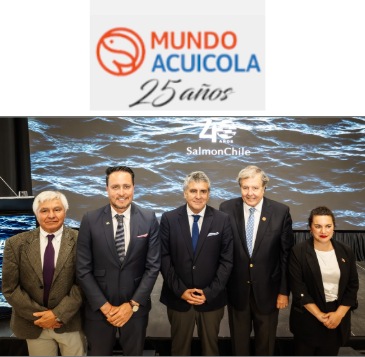 In an unprecedented ceremony in
  SEYCHELLES
 With the 2020-2026 protocol expiring, European purse seiners are now excluded from the quota in the Seychelles EEZ, while Brussels and Victoria are racing against time to negotiate a renewal under pressure from social, environmental, and transparency concerns.
 NETHERLANDS
 Registration is now open for the fifth
  UNITED KINGDOM
 Waitrose
 NORWAY
.png) The
The  JAPAN
JAPAN(2).png)
 IRAN
IRAN.png) The Iranian Revolutionary Guard prohibited the passage of any vessel through the Strait of Hormuz this weekend. While not officially issuing the warning, they did caution shipping companies about the risks of crossing its waters amidst the ongoing conflict with the United States and Israel. "We have no intention of closing the Strait of Hormuz at this time, nor do we have any plans to do anything that could disrupt navigation in it at this stage," declared Iranian Foreign Minister Abbas Araqchi yesterday. At least two merchant ships ignored their recommendations this Sunday—one of them, the Skylight, is on the US sanctions list for exporting Iranian crude oil—and were hit by projectiles in the area early in the morning.
The Iranian Revolutionary Guard prohibited the passage of any vessel through the Strait of Hormuz this weekend. While not officially issuing the warning, they did caution shipping companies about the risks of crossing its waters amidst the ongoing conflict with the United States and Israel. "We have no intention of closing the Strait of Hormuz at this time, nor do we have any plans to do anything that could disrupt navigation in it at this stage," declared Iranian Foreign Minister Abbas Araqchi yesterday. At least two merchant ships ignored their recommendations this Sunday—one of them, the Skylight, is on the US sanctions list for exporting Iranian crude oil—and were hit by projectiles in the area early in the morning. WORLDWIDE
 The International Chamber of Shipping (ICS), European Shipowners' Association (ECSA), and the Asian Shipowners' Association (ASA), as well as the UN, are calling for measures to be taken to protect the lives of seafarers and the safety of vessels navigating the Strait of Hormuz.
 ANTARCTICA
.png) The Antarctic and Southern Ocean Coalition (ASOC) submitted a formal objection to the
The Antarctic and Southern Ocean Coalition (ASOC) submitted a formal objection to the