IN BRIEF - Temporary Closure of the Loligo Squid Fishing Season
FALKLAND ISLANDS
Friday, August 08, 2025
The Fisheries Department of the Falkland Islands Government (FIG) has issued a 48-hour closure notice for the winter loligo fishery season.
Stanley - The fishery, which opened on July 27, saw a rapid drop in initial catches. An initial, or starting, biomass mean estimate of just over 29,735 tonnes was subsequently revised down to 21,695 tonnes. Since then, catches have caused the mean biomass estimate to fall to 14,722 tonnes, with a lower confidence interval value of 6,539 tonnes.
On the grounds of conservation and long-term sustainability of the stock, a closure notice has therefore been issued. This notice is subject to an ongoing assessment of catches, and the closure date may change based on scientific analysis.
Work is ongoing between the industry and the Fisheries Department to identify a timeframe and vessel for a subsequent scientific survey, at which point the biomass estimate will be reassessed. This survey will inform whether the season reopens or remains closed.
This temporary closure follows two years of disappointing second loligo seasons. The FIG remains committed to working with industry members to ensure the continued sustainability of the fishery.
A shopper in southern China has been sentenced to eight days of administrative detention after using artificial intelligence (AI) to create fake images and videos of dead crabs in a fraudulent attempt to secure a refund.
The case, which highlights a new frontier in retail fraud, began when an online seafood seller, Gao, shipped eight live crabs. The customer later claimed six had arrived dead and submitted photos and videos to claim a 195 yuan ($27) refund.
Gao grew suspicious, noting the crabs' stiff, unnatural postures and inconsistent details in the submitted videos (varying counts of male vs. female crabs), suggesting AI manipulation. After reporting the incident to police, the customer was confirmed to have used a mobile phone to create a synthetic video for the fraudulent claim.
The buyer was detained from November 29 to December 7, and the refund was recovered. The incident has raised alarms among Chinese e-commerce merchants about the rise of AI-assisted refund fraud. Retailers are now urging platforms to develop technical tools to detect AI-generated media to better protect them against these rapidly evolving tactics.
Düsseldorf – Global food wholesaler METRO AG, operating over 700 stores across 21 countries, has received significant praise for dramatically improving its animal welfare requirements for seafood across its entire global supply chain.
The company's updated Animal Health and Welfare Position statement introduces a groundbreaking requirement: all fish and crustaceans sourced for METRO’s own-brand seafood products must now be humanely stunned using mechanical or electrical methods before slaughter. This policy applies to all METRO and MAKRO stores spanning Europe and Asia.
The improved standards also include a commitment to ask shrimp suppliers (for both own-brand and branded products) to avoid eyestalk ablation.
"We aim to ensure 100% humane stunning prior to slaughtering in order to minimise anxiety, pain and suffering and the distress experienced by animals," METRO AG stated.
This move is expected to benefit tens of millions of fish and hundreds of millions of crustaceans annually, addressing current industry practices where many aquatic animals are slaughtered without stunning.
The Peruvian fishing sector for Direct Human Consumption (DHC) is consolidating its position as a key economic engine, generating over 74,000 jobs and projecting year-end exports that could surpass US$2130 million.
This was announced by the head of the Ministry of Production (PRODUCE), César Quispe Luján, during a visit to the Piura region. The minister highlighted that, by the end of the third quarter, exports from this subsector had already exceeded US$1500 million.
This dynamism is primarily driven by the high international demand for products such as squid (pota), tuna, shrimp/prawns (langostino), and trout.
PRODUCE emphasizes that the sector's success is due to the collaboration among the industry, artisanal fishermen, and the State, which has strengthened the production chain and the competitiveness of Peruvian products in the global market. The country has around 225 industrial establishments operating within this field.
Planning consent for a new Bakkafrost fish farm off the Isle of Lewis has been refused, because of a clash of interests with local fisheries.
Bakkafrost Scotland has been consulting on the proposed farm, off the east coast of the Isle of Lewis, comprising pens, moorings and a feed barge, but last week the planning board of the local authority, Comhairle nan Eilean Siar, said that the company “had failed to demonstrate that the proposed development would not result in an unacceptable exclusion of commercial fishing activity from a historically important and economically productive fishing ground”.
The decision overturned a recommendation of approval for the development, subject to conditions, by planning officials.
Author: Robert Outram / Fish Farmer | Read the full article here
Shelton, Washington, U.S.A.-based Taylor Shellfish Farms – the largest producer of oysters in North America – was recently certified to the Aquaculture Stewardship Council (ASC) standard.
The certification covers seven species raised by Taylor, including Olympia oyster (Ostrea lurida), Kumamoto oyster (Crassostrea sikamea), eastern oyster (Crassostrea virginica), Mediterranean mussel (Mytilus galloprovincialis), Manila clam (Veneripus philippinarum), geoduck clam (Panopea abrupta), and Pacific oyster (Crassostrea gigas).The multi-day audit that resulted in Taylor securing the certification was carried out by SCS Global Services and assessed six different regions across Washington where Taylor has over 200 aquaculture concessions.
Author: Ned Daly / SeafoodSource | Read the full article here
Skretting and Longyang Fresh deepen partnership for Qinghai-Tibet plateau trout.
Skretting has signed an upgraded strategic cooperation agreement with Longyang Fresh, China’s largest trout producer, in a three-year deal aimed at advancing precision nutrition, supply chain integration and sustainable trout farming on the Qinghai-Tibet Plateau.
The renewed partnership builds on a long-standing collaboration between the two companies in feed innovation, nutritional management and farming practices for plateau trout. Over several years they have developed experience in high-altitude aquatic ecosystems, trout physiology and farming efficiency, providing the basis for what both sides describe as a strategic upgrade.
Source: SalmonBusiness | Read the full article here
The company's Seafood unit announces a US$5 million investment in two phases to enable raw material selection and a new freezing plant.
Nutrisco's Seafood business unit announced the start of studies to modernize its Coquimbo plant, with the aim of resuming the processing of frozen fish for human consumption. The decision was made after a site visit by the board of directors of Orizon—a company belonging to the Seafood unit—to the facilities where the traditional San José jack mackerel brand was born 70 years ago.
The project involves an approximate investment of US$5 million, structured in two phases. In the first stage, Nutrisco will establish a raw material selection area to differentiate fish suitable for human consumption from those destined for fishmeal and fish oil, while the freezing process will be outsourced to a third party under a contract manufacturing agreement.
The agreement sets fishing opportunities “in line with maximum sustainable yield,” introduces a new long-term plan for herring, and cuts the cod quota by around 44%, avoiding a complete closure of the fishery.
The European Union, Norway, and the United Kingdom have reached an agreement on fishing opportunities in the North Sea for 2026 after negotiations marked by tension between conservation demands and the socioeconomic pressures of fishing communities. The agreement establishes Total Allowable Catches (TACs) for the main shared species—cod, haddock, saithe, whiting, plaice, and herring—and guarantees the EU fleet several hundred thousand tons of catches valued at hundreds of millions of euros.
The Rosselkhoznadzor (Russia's Federal Service for Veterinary and Phytosanitary Surveillance) announced on December 2, 2025, that it has granted market access to 10 additional Indian enterprises for the supply of fish and seafood to Russia.
This decision was reached following collaborative efforts between the competent services of both nations and assurances from the Indian side that the products adhere to the veterinary and sanitary requirements of the Eurasian Economic Union (EAEU) and Russia.
The imports are strictly permitted only into Russia and must be accompanied by export certificates, along with copies of safety protocols. These protocols specifically confirm the products are tested for compliance regarding parameters like toxic elements, HCG, S. Aureus, chloramphenicol, sulfonamides, tetracyclines, quinolones, and certain antibacterial drugs (dyes).
With this new inclusion, the total number of Indian fish and seafood production facilities registered by Rosselkhoznadzor in the Register of Third-country Enterprises now stands at 128.
Inverlussa Marine Services has taken delivery of its latest major investment, a new 25-metre hybrid aquaculture support vessel designed and built in Scotland by Macduff Shipyards.
Named Naomi Jennifer, the vessel has been designed to meet high environmental and operational standards, incorporating modern hybrid technology and increased lifting capability. Inverlussa said accommodation is built to a very high standard, in common with its other vessels.Naomi Jennifer is fitted with IMO Tier 3 compliant engines supported by a hybrid system that can store electrical energy for use during operations.
Source: fishfarmingexpert | Read the full article here



 FALKLAND ISLANDS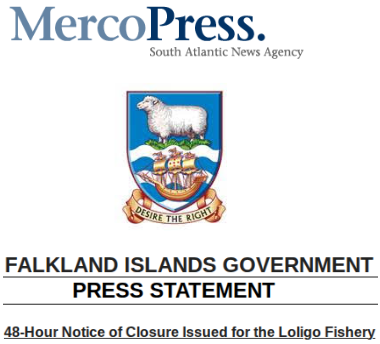
 CHINA
CHINA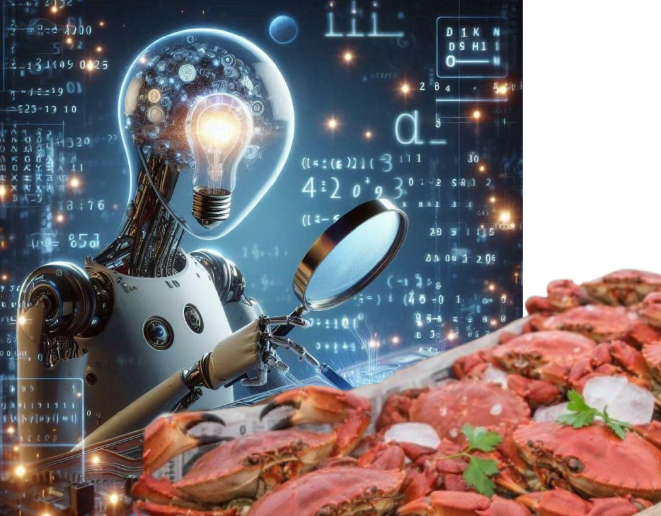
 GERMANY
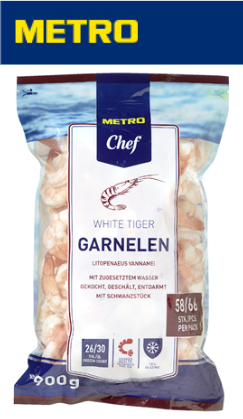 The company's updated Animal Health and Welfare Position statement introduces a groundbreaking requirement: all fish and crustaceans sourced for METRO’s own-brand seafood products must now be humanely stunned using mechanical or electrical methods before slaughter. This policy applies to all METRO and MAKRO stores spanning Europe and Asia.
 PERU
PERU.png)
 UNITED KINGDOM
.png)
 UNITED STATES
.png) Shelton, Washington, U.S.A.-based
Shelton, Washington, U.S.A.-based .png)
 CHILE
CHILE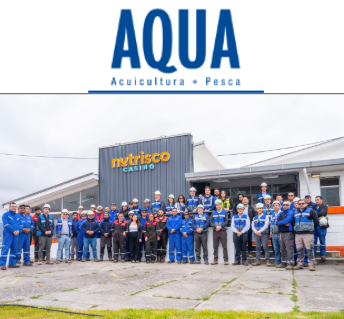 Nutrisco's Seafood business unit announced the start of studies to modernize its Coquimbo plant, with the aim of resuming the processing of frozen fish for human consumption. The decision was made after a site visit by the board of directors of Orizon—a company belonging to the Seafood unit—to the facilities where the traditional San José jack mackerel brand was born 70 years ago.
 EUROPEAN UNION
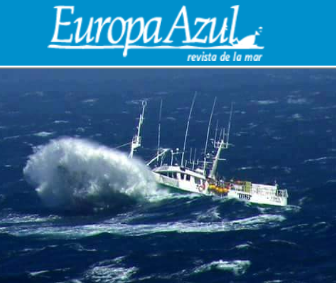 The European Union, Norway, and the United Kingdom have reached an agreement on fishing opportunities in the North Sea for 2026 after negotiations marked by tension between conservation demands and the socioeconomic pressures of fishing communities. The agreement establishes Total Allowable Catches (TACs) for the main shared species—cod, haddock, saithe, whiting, plaice, and herring—and guarantees the EU fleet several hundred thousand tons of catches valued at hundreds of millions of euros.
 RUSSIAN FEDERATION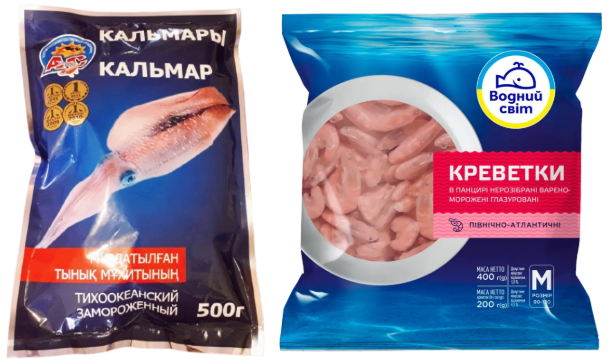
.png) Inverlussa Marine Services
Inverlussa Marine Services