IN BRIEF - DFO Opens Area B Commercial Seine Fishery for Chum Salmon at Fraser River Mouth
CANADA
Friday, October 30, 2026
Controlled opening authorizes up to 20 vessels under strict monitoring and conservation measures
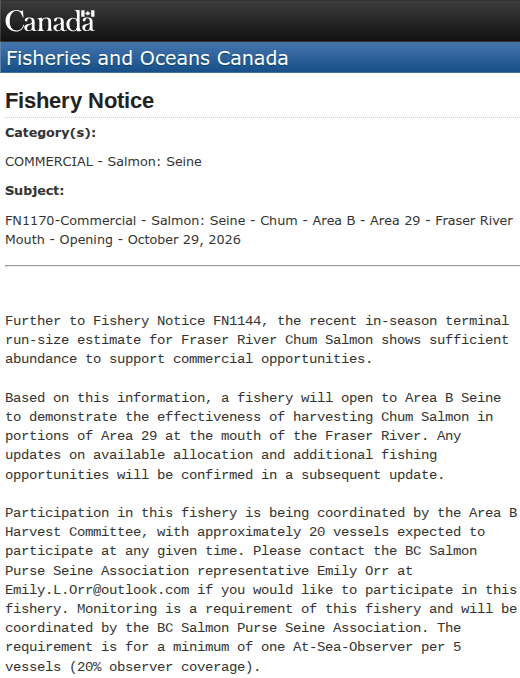
Fisheries and Oceans Canada (DFO) issued fishery notice FN1170, confirming that in-season terminal run-size estimates for Fraser River Chum Salmon (Oncorhynchus keta) indicate sufficient abundance to open commercial purse seine harvesting. The commercial opening applies to Area B Seine across designated sections of Area 29 at the mouth of the Fraser River.
Operations run daily from 07:00 to 19:00 hours on Thursday, October 29 and Friday, October 30, 2026, covering subareas 29-3, 29-4, 29-6, and portions of 29-7, 29-9, and 29-10 in waters no shallower than 45 meters (or 30 meters for shallow seine gear modifications).
The fleet is limited to approximately 20 vessels at any given time, coordinated through the Area B Harvest Committee and the BC Salmon Purse Seine Association. Retention is authorized for Chum Salmon and Pink Salmon (Oncorhynchus gorbuscha), with mandatory non-retention for Sockeye, Coho, Chinook, and Steelhead (
Shipments rise 9% through September as US authorities prepare rapid origin-testing kits under new legislation
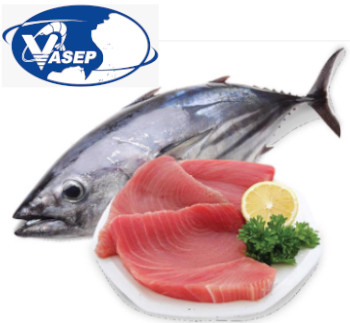
According to the Vietnam Association of Seafood Exporters and Importers (VASEP), Vietnam's tuna exports to the United States exceeded $280 million during the first 9 months of the year, marking a 9% increase year-on-year. The U.S. stands as Vietnam's primary export market, absorbing roughly 39% of total shipments. Across all global destinations, Vietnam's tuna export revenue reached approximately $720 million (+6%), supported by $86 million shipped in September alone (+18%). Frozen tuna led product growth, while canned formats showed modest gains.
The export rebound coincides with tighter U.S. regulatory oversight. Following the enactment of the Illegal Fishing of Red Snapper and Tuna Act, the National Oceanic and Atmospheric Administration (NOAA) and the National Institute of Standards and Technology (NIST) are standardizing origin-testing methods, including rapid field inspection kits to verify catches scientifically prior to distribution. VASEP warned that catch documentation and supply-chain transparency are critical to protect market access.
The joint initiative targets high-potential youth startups across the marine and agri-fisheries ecosystems
Global accelerator GenAxis (CEO Son Mi-kyung) partnered with CNT Tech (CEO Jeon Hwa-seong) to finalize the CNT Tech-GenAxis Future Youth Fisheries Investment Fund on the 29th. The fund was established under the Future Youth (AC) sector of the fisheries account within the Agricultural, Forestry, and Fisheries Food Fund of Funds, overseen by the Korea Agricultural Policy Insurance & Finance Corporation.
Serving as co-GPs, both firms will identify, finance, and accelerate youth-led enterprises specializing in fisheries deep tech. This initiative builds upon their prior appointments managing early-stage portfolios for both the Agri-Food Fund of Funds and the Korea Venture Investment Fund of Funds, reinforcing their footprint across early-stage startup financing.
The fund targets ventures demonstrating verified technological advantages, practical field adoption, and viable revenue models. Backed companies will access scaling support via both accelerators' incubation networks, alongside linkage to public-private programs including TIPS and LIPS.
The Fisheries Development Institute (IFOP) is conducting its scientific survey titled “Evaluation of Anchoveta Spawning Stock and Bio-oceanographic Conditions between the Arica y Parinacota and Antofagasta Regions, Year 2026” throughout October 2026.
The research campaign is underway simultaneously aboard two dedicated vessels: the scientific research vessel B/C Abate Molina, led by project and cruise leader Dr. Jessica Bonicelli, and the B/C Dra. Barbieri, headed by cruise leader Hernán Reyes.
The primary objective of this mission in the northern zone is to collect critical biological and fishery data regarding the fecundity and egg abundance of anchoveta (Engraulis ringens), in addition to performing comprehensive monitoring of prevailing oceanographic conditions across the study area.
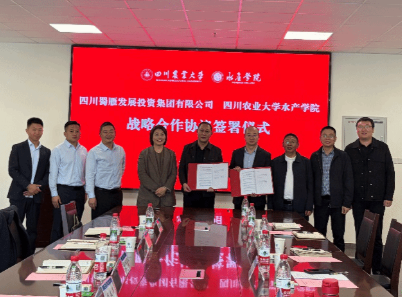
The College of Fisheries and Sichuan Shuyan Development Investment Group Co., Ltd. formally signed a strategic cooperation agreement on October 29th during an official ceremony hosted at the University Science Park.
The signing was attended by key institutional leaders, including Sun Yongjian, Secretary of the Party Committee and Chairman of the Board of Directors of the Group; Tang Haibin, Member of the Party Committee and Deputy General Manager; and 4 accompanying enterprise delegates. Representing the academic sector were Feng Lin, Dean of the College of Fisheries, and 5 faculty representatives.
Following the formal signing, both parties held in-depth discussions focused on accelerating the high-quality development of the aquatic industry. Key collaborative priorities established during the bilateral exchange include advancing technological innovation, streamlining the commercial transformation of scientific achievements, and establishing joint frameworks for specialized talent training across the sector.
Scientific review highlights its role in reinforcing gut morphology, immune defense, and gut microbiota in fish and shrimp feeds
A scientific review published in Aquaculture Science and Management by researchers led by Devkant and Kaliyaperumal Sriranjani identifies tributyrin as a promising feed additive to support the transition toward plant-based aquafeeds. The compound addresses nutritional challenges caused by anti-nutritional factors found in alternative ingredients such as soybean meal.
Chemically structured as a glycerol backbone esterified with 3 butyric acid molecules, tributyrin remains stable through the acidic stomach and undergoes controlled enzymatic hydrolysis in the intestine. This steady release supplies essential oxidative energy to enterocytes, strengthens epithelial tight junctions, and selectively improves intestinal microbiota. In Pacific white shrimp (Litopenaeus vannamei), dietary inclusion between 500 and 1,500 mg/kg (0.1% to 0.2%) enhanced growth rates, feed efficiency, and pathogen resistance against Vibrio species.
KUALA LUMPUR — The Ministry of Finance of Malaysia, led by Prime Minister Anwar Ibrahim, confirmed that preliminary investigations by the Anti-Corruption Commission have found no criminal offenses of internal corruption or embezzlement regarding the investment by the pension fund KWAP in Indonesian aquaculture technology firm eFishery.
The Ministry of Finance, headed by Anwar Ibrahim
In an official written reply submitted to Parliament following an inquiry by Member of Parliament Kalasaran from the Bersatu party, the ministry clarified that KWAP's actual investment totaled 163.4 million ringgit (RM) (approximately US$ 37.2 million), representing 2.51% of the tech firm's equity.
The ministry stated that the transaction strictly complied with standard due diligence protocols and independent international audits prior to approval. However, eFishery was subsequently found to have engaged in deliberate accounting fraud and financial misrepresentation, impacting other top-tier global institutional investors as well. Currently, KWAP is collaborating with law enforcement agencies and international investors to establish accountability and recover the invested capital.
TOKYO — Japanese seafood company Umios Corporation announced the acquisition of an additional 10.31% stake in Sanford Limited, one of New Zealand’s leading seafood companies, for NZ$ 71.99 million (US$ 42.5 million).
Following this transaction, scheduled for completion on November 2, the Japanese group's equity holding will rise from 5.22% to 15.53%.
Sanford, based in Auckland, operates in both wild capture fisheries and aquaculture, with key activities focused on hoki (Macruronus novaezelandiae), scampi (Metanephrops challengeri), King salmon (Oncorhynchus tshawytscha), and greenshell mussel (Perna canaliculus).
The investment will enable Umios to secure stronger access to marine fisheries resources managed under New Zealand’s Quota Management System (QMS) and expand commercial distribution into the United States, Europe, and China.
The move reinforces the company's international expansion strategy, coming just two days after its agreement to acquire Canada-based High Liner Foods.
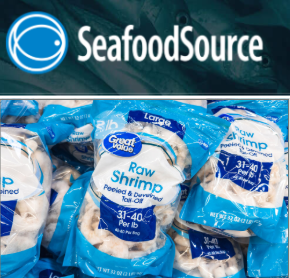
Aclass-action lawsuit filed by a shopper in the U.S. state of Illinois claims that bags of frozen shrimp sold by retail giant Walmart contain fewer shrimp than advertised.
The suit alleges that Walmart is counting the weight of the ice glaze utilized to prevent freezer burn on shrimp in its weight for the product, so when the bag is thawed out and drained, the product contains fewer shrimp than claimed. According to the lawsuit, the bags contain roughly 11 percent fewer shrimp than advertised.
Baptist claims the company is liable in misleading customers and violating Illinois state consumer protection laws.
Author: Nathan Strout / SeafoodSource | Read the full article here
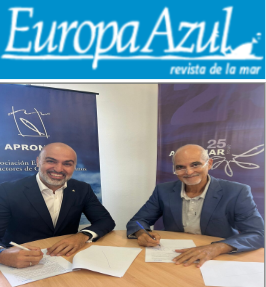
The annual report from APROMAR confirms 3% growth in production during 2025, positioning Spain as the leading aquaculture producer in the European Union by volume, accounting for 24.4% of the EU total. The sector is focusing on species with higher commercial value, though it notes challenges such as administrative hurdles, rising costs, and a lack of generational turnover.
Spanish aquaculture continues its growth trajectory, consolidating its strategic position within European food production. In 2025, the sector reached a production volume of 274,111 tonnes—an increase of 3.02% over the previous year—while the value at first sale hit a record high of 883.5 million euros. These are among the key findings from the annual report *Aquaculture in Spain 2026*




 CANADA
 Fisheries and Oceans Canada (DFO)
 VIET NAM
 According to the Vietnam Association of Seafood Exporters and Importers (VASEP), Vietnam's tuna exports to the United States exceeded $280 million during the first 9 months of the year, marking a 9% increase year-on-year. The U.S. stands as Vietnam's primary export market, absorbing roughly 39% of total shipments. Across all global destinations, Vietnam's tuna export revenue reached approximately $720 million (+6%), supported by $86 million shipped in September alone (+18%). Frozen tuna led product growth, while canned formats showed modest gains.
 SOUTH KOREA

.png)
 CHILE
.png)
 CHINA
 INDIA
 A scientific review published in
 MALAYSIA

 NEW ZEALAND
.png) Following this transaction, scheduled for completion on November 2, the Japanese group's equity holding will rise from 5.22% to 15.53%.
 UNITED STATES
 Aclass-action lawsuit filed by a shopper in the U.S. state of Illinois claims that bags of frozen shrimp sold by retail giant
 SPAIN
 The annual report from