IN BRIEF - United States Accounts for Nearly 39% of Vietnam's Tuna Exports as Shipments Reach US$280 M
VIET NAM
Monday, November 16, 2026
Vietnam's tuna exports to the United States increased by 9% during the first nine months of 2026, reinforcing the country's position in its largest export market despite growing competition and stricter import requirements.
During the first nine months of 2026, Vietnamese tuna exports to the US exceeded US$280 million, representing a 9% year-on-year increase, despite declining overall US tuna imports during the first eight months of the year.
The Chinese company allocated 510.32 tonnes to external sales and recorded cumulative production of 11,100.97 tonnes between January and October 2026.
Fujian — November 17, 2026.Tianma Technology Group (603668) reported harvesting approximately 594.81 tonnes of eels in October 2026, of which 510.32 tonnes were allocated to external sales and 84.49 tonnes to internal use.
According to its stock exchange announcement, selling prices ranged from 25,000 to 70,000 yuan per tonne (US$ 3,723–10,426/t), equivalent to 25–70 CNY/kg, for eels classified between 1P and 7P, based on the number of fish per kilogram.
Between January and October, Tianma recorded a cumulative harvest of 11,100.97 tonnes, including 2,622.55 tonnes for external sales and 8,478.42 tonnes for internal use.
The company explained that some of the price differences were attributable to exports of live Japanese eels to Japan. The figures are based on unaudited internal records and may be revised in the company's final financial reports.
The Aquaculture Stewardship Council (ASC) held its inaugural commercial discovery tour in Iceland, convening key retail buyers from the United States, Canada, and Germany between September 14 and 18.
Delegations from major retail chains, including Sam’s Club, Loblaws, Metro, and COSTA, toured farming facilities to evaluate the sustainable supply of certified salmon.
Driven by abundant clean energy and a strategic location acting as a transatlantic bridge between Europe and North America, Iceland continues to consolidate its leadership in Nordic aquaculture. While Samherji, headquartered in Akureyri, supplies approximately 60% of the global market for Arctic char (Salvelinus alpinus), Atlantic salmon (Salmo salar) currently accounts for more than 90% of the country's total aquaculture output.
In 2025, the nation's farmed salmon volume reached 58,717 tonnes, representing a 19% year-on-year increase. Concurrently, the number of ASC-certified farming sites doubled, while volumes of certified salmon quadrupled compared to 2024, underscoring the rapid momentum of the Icelandic aquaculture sector.)
Ten South Korean SMEs expand their presence in Southeast Asia.
Chungnam's marine and fisheries companies secured $4 million in export contracts at a Singapore trade exhibition. The 10 SMEs held 41 consultations worth $11.85 million and signed five MOUs totaling $620,000, promoting seaweed, dried anchovies and marine-based cosmetics.
The online event will explore FAO initiatives and international career opportunities.
FAOand JISNAS will hold their 13th joint seminar on November 30, 2026. Hana Matsubara, a Junior Professional Officer in FAO's Fisheries and Aquaculture Division, will discuss biodiversity integration, sector developments and careers within the United Nations.
Annual meeting will address management priorities, environmental protection and future projects.
The AAPPMA of Castanet-Tolosan, France, will hold its general assembly on November 25, 2026, electing its board for 2027–2031. Members will review projects and conservation initiatives. The association also promotes recreational fishing and environmental education for children aged 7–14.
The company aims to double its juvenile salmon production within two years to help restore regional fish stocks.
VBR-Trade has completed the third phase of its salmon hatchery in Russia's Khabarovsk Territory, with capacity to release over 45 million salmon fry annually into the Nygay and Koryushka rivers.The company plans to increase its total production capacity from 58 million to 115 million fry within two years and expand employment from 35 to 250 jobs.
A Norwegian salmon processing factory based south of Trondheim is set to close, putting around 300 jobs at risk, it was announced late last week.
The company, Isfjord Norway, has filed a petition for receivership with the district court following financial challenges and an acute liquidity crisis. It had apparently failed to secure fresh finance.
The newspaper Frifagbevegelse.no said: “Despite the fact that the company has laid off many workers and been open about poor finances in recent weeks, employees were surprised by the announcement at Thursday’s general meeting.”
Author: Vince McDonagh / Fish Farmer | Read the full article here
Norwegian salmon farmer Måsøval has raised its full-year harvest guidance to 30,400 tonnes from 29,000 tonnes following improved biological performance and a 44% increase in third-quarter harvest volumes.
The company harvested 8,656 tonnes gutted weight during the quarter, compared with 6,020 tonnes a year earlier, according to results published on Tuesday.
Operating revenue increased 22% to NOK 709 million (€61 million), from NOK 580 million, while operational EBIT improved to NOK 9.1 million from a loss of NOK 41.9 million.
Source: SalmonBusiness | Read the full article here
Two salmon producers in Chile have each agreed to reduce future production at one of their farm sites to make up for unauthorised over-production at those sites in the past, reports Fish Farming Expert's Chilean sister site, Salmonexpert.cl.
The commitments are part of compliance programmes (Programas de Cumplimiento or PDCs) approved by Chile’s environment regulator, the Superintendency of the Environment (SMA). A PDC is the plan of actions and goals submitted by an offender to ensure satisfactory compliance with the specified environmental regulations within a timeframe established by the SMA.
Author: Jonathan Garcés / fishfarmingexpert | Read the full article here
Parasite outbreaks, rising sea temperatures and falling catches raise concerns over seafood supplies.
In Kochi, Japan, a parasitic disease has killed 256,000 farmed greater amberjack, causing losses of ¥720 million (USD 4.6 million) as of November 4. Meanwhile, Pacific saury catches fell 81%, autumn salmon landings declined 45%, and oyster production faces severe losses, highlighting growing environmental and economic pressures on Japan's fisheries and aquaculture industries.





 VIET NAM
.png) VIETNAM – The United States continues to dominate Vietnam's tuna export market, accounting for nearly 39% of total export revenue, according to the
 CHINA
.png) Fujian — November 17, 2026. Tianma Technology Group (603668) reported harvesting approximately 594.81 tonnes of eels in October 2026, of which 510.32 tonnes were allocated to external sales and 84.49 tonnes to internal use.
 ICELAND
.png) Delegations from major retail chains, including Sam’s Club, Loblaws, Metro, and COSTA, toured farming facilities to evaluate the sustainable supply of certified salmon.
 SOUTH KOREA
 Ten South Korean SMEs expand their presence in Southeast Asia.
 JAPAN
.png) The online event will explore FAO initiatives and international career opportunities.
 FRANCE
.png)
 RUSSIAN FEDERATION
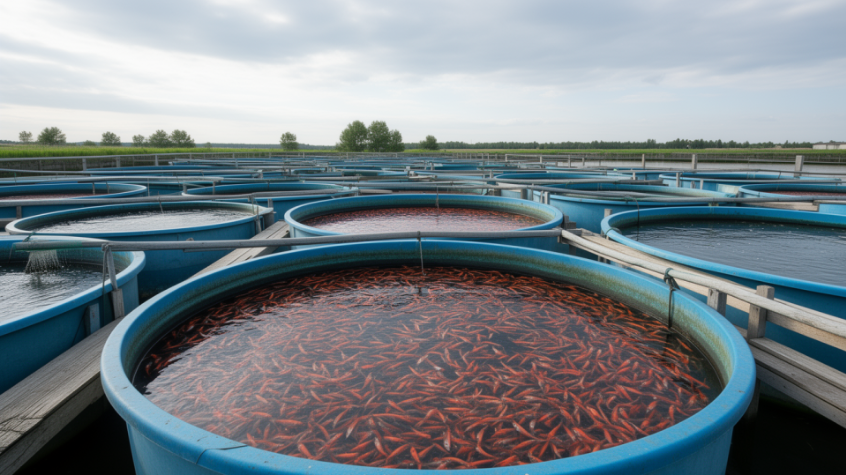 VBR-Trade has completed the third phase of its salmon hatchery in Russia's Khabarovsk Territory, with capacity to release over 45 million salmon fry annually into the Nygay and Koryushka rivers.The company plans to increase its total production capacity from 58 million to 115 million fry within two years and expand employment from 35 to 250 jobs.
 NORWAY
 A Norwegian salmon processing factory based south of Trondheim is set to close, putting around 300 jobs at risk, it was announced late last week.
 Norwegian salmon farmer
 CHILE
.png) Two salmon producers in Chile have each agreed to reduce future production at one of their farm sites to make up for unauthorised over-production at those sites in the past, reports Fish Farming Expert's Chilean sister site, Salmonexpert.cl.
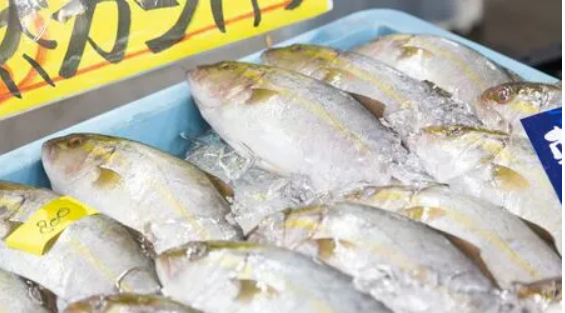 In Kochi, Japan, a parasitic disease has killed 256,000 farmed greater amberjack, causing losses of ¥720 million (USD 4.6 million) as of November 4. Meanwhile, Pacific saury catches fell 81%, autumn salmon landings declined 45%, and oyster production faces severe losses, highlighting growing environmental and economic pressures on Japan's fisheries and aquaculture industries.