|
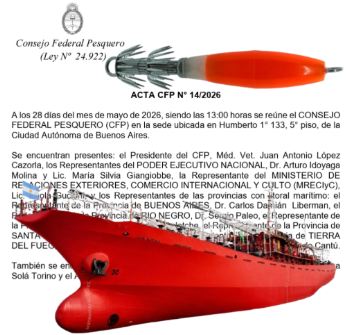
In recent days, the debate over the management of the Illex argentinus squid fishery has flared up again following official announcements to add 18 new vessels to the national jigger fleet. The justifications put forward by the sector's authorities run along strikingly limited tracks. While the National Director of Fisheries Coordination and Control, Arturo Idoyaga Molina, defends the measure under an eminently economic and short-term revenue-driven logic—an argument which, taken to its absurd conclusion, would imply that introducing 180 ships would multiply wealth tenfold without any regard for sustainability—the Chubut representative on the Federal Fisheries Council, Andrés Arbeletche opts for a politically correct simplification: restoring the fleet to the historical size it lost over the years, a decision that within the sector's corridors is flatly attributed to "Article 33"—that is, by force or 'cojones'—
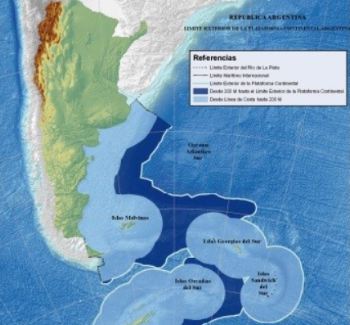
However, the most worrying aspect lies in the technical and scientific backing that claims to endorse these decisions. Recent statements by Dr. Otto Wöhler, director of INIDEP, reveal a fundamental contradiction that the fishing sector can no longer ignore. Wöhler himself acknowledges that the squid, being a highly migratory species, "knows no borders." Despite this biological axiom, the technical report signed by the institute and submitted to the Federal Fisheries Council restricts its analysis exclusively to biomass data within the Argentine Exclusive Economic Zone (EEZ). It deliberately omits the dynamics of the resource in international waters (beyond mile 201) and in the zone administered by the local government of the Falkland Islands in Malvinas. Issuing an opinion on the health of a transboundary species while looking at only one-third of the map is not applied science; it is a bias conditioned by budgetary constraints, political pressures, and an alarming lack of a global vision.
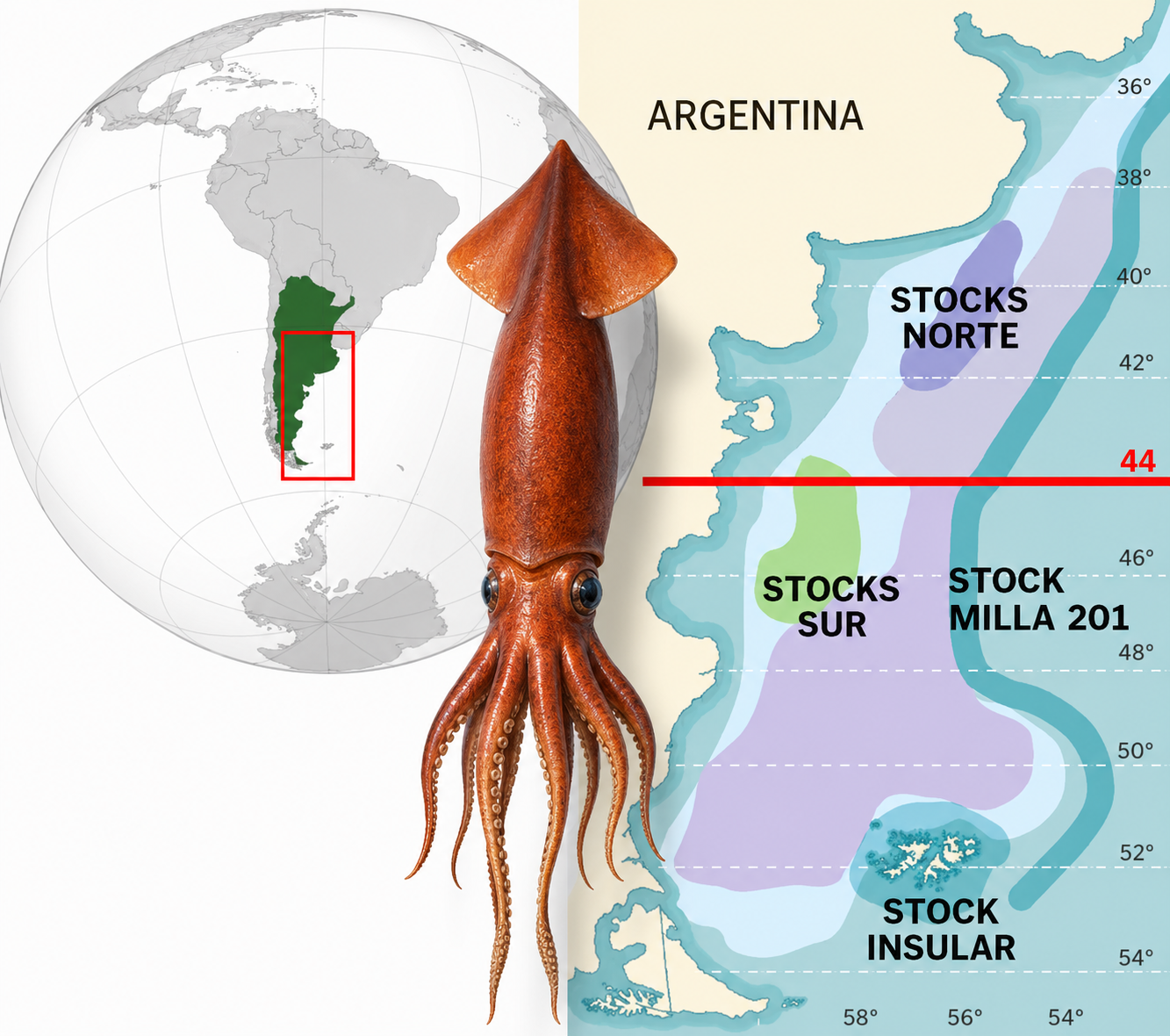
Illex squid stocks according to INIDEP: an analysis restricted to the Argentine EEZ that ignores the entirety of its biological life cycle
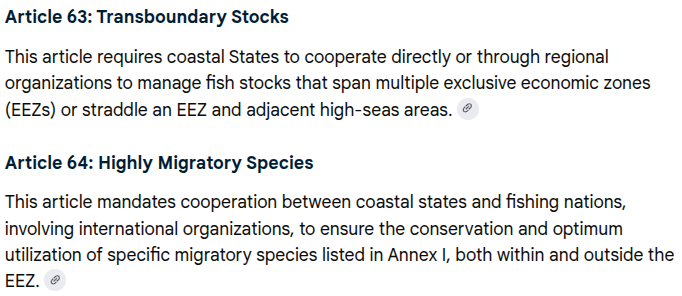
The second critical point raised by INIDEP's leadership states that fishing outside mile 201 is "legal but unregulated." This stance has been solidly challenged by experts such as Dr. César Lerena, who, under the umbrella of UNCLOS, argues that the supposed "freedom of fishing" on the high seas is not a blank check for depletion. The squid caught at mile 201 originally belongs to the South Atlantic ecosystems that have their spawning and development base on the Argentine continental shelf. Fishing without transboundary scientific management violates Articles 63 and 64 of UNCLOS. Argentina must assume an active role as the Protector State of the resource, rather than resigning itself to bureaucratic inaction.
To overcome this paralysis and move past the geopolitical disputes that historically bog down fisheries management, the country should radically shift its paradigm. Argentine diplomacy has traditionally opposed the creation of traditional Regional Fisheries Management Organizations (RFMOs) in the South Atlantic, under the legitimate fear that defining rigid geographical areas on the high seas would end up legitimizing the British presence in our Malvinas and South Georgia Islands. It is a valid argument, but one that is often used as an excuse for inaction. The solution for regulating the Illex squid must not be sought in cartographic or regional boundaries, but in the species itself and throughout its entire life cycle.
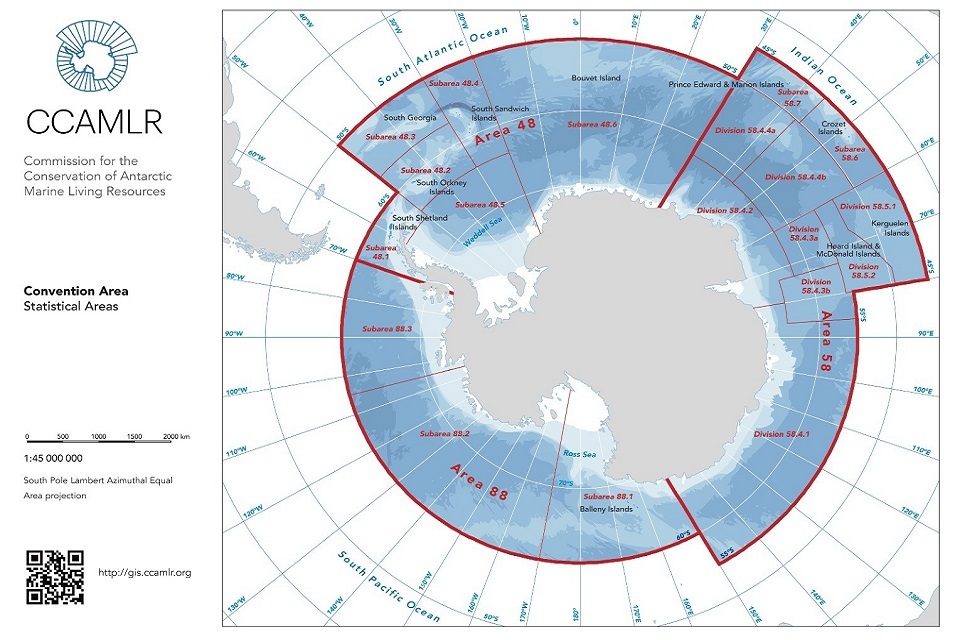
CCAMLR map
The model to follow already exists globally and is successfully applied in the management of tuna. Organizations such as ICCAT (International Commission for the Conservation of Atlantic Tunas) or CCSBT (Commission for the Conservation of Southern Bluefin Tuna) do not operate under a logic of watertight geographical borders dividing sovereignties. Instead, they regulate and manage the biological species across the entire extent of the ocean it inhabits, which includes international waters and areas that the Argentine Constitution considers national territory. The focus is on the resource, its global stock, and its fishing gear, as defined by international scientific committees.
Argentina possesses the technical, legal, and historical credentials to drive a global governance framework centered exclusively on the Illex resource. This is not about negotiating geographical sovereignty or yielding a single centimeter of our claim over the islands; it is about exercising international leadership based on the biological conservation of a resource that originates on our shelf. The most compelling precedent is found in the Commission for the Conservation of Antarctic Marine Living Resources (CCAMLR). Argentina is a founding member of this organization, where it sits to manage the distribution of quotas and fishing gear alongside powers such as the United Kingdom, Russia, the United States, France, and Australia, without this weakening in any way the Argentine sovereign position over the Antarctic sector. Regulating biology multilaterally is legally and politically viable.
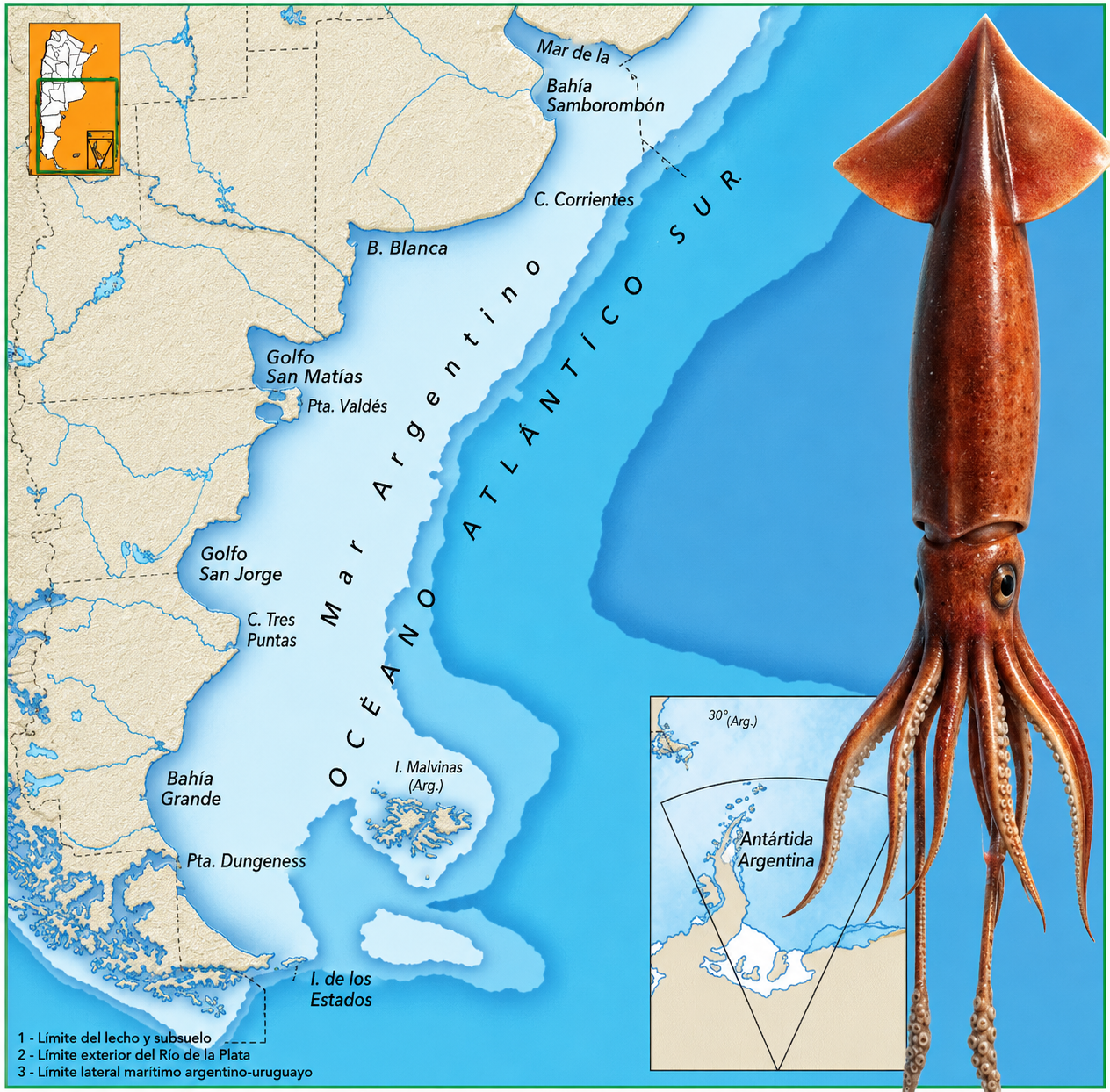
The true map of the borderless squid
Furthermore, local authorities seem to forget that Argentina has international recognition of its Extended Continental Shelf beyond 200 miles. Although the water column at mile 201 is considered the high seas, the seabed and subsoil are under national jurisdiction. This legally empowers the country to immediately prohibit and regulate bottom trawling across the entire extent of its extended shelf. An audacious state policy would demand that squid harvesting in international waters be carried out exclusively with targeted and highly selective fishing gear (such as jiggers), flatly banning the use of midwater trawl nets by subsidized foreign fleets, which cause irreparable collateral damage to the ecosystem.
If Argentina assumes technical leadership of the species throughout its entire migratory range, the benefits will be not only environmental, but also economic and structural. By regulating the extended shelf and discouraging unregulated fishing at mile 201 through strict biological standards, the country will dismantle the economic incentive for fleets operating without control. This would clear the definitive path for a genuine, sustainable, and planned increase of our own national jigger fleet, ushering in a new era for regional fisheries.
It is time for fisheries authorities to stop looking at the 200-mile line as an insurmountable wall of laments and begin seeing it as the starting point for a global, holistic, and truly sovereign maritime policy.

[email protected]
Related News:

.png)

[email protected]
www.seafood.media
|







 Email
Email Print
Print