IN BRIEF - Anchovy: Exchange of professionals between the IFOP and the IMARPE
CHILE
Wednesday, October 16, 2024
Within the framework of the Humboldt II project, a binational Chile-Peru initiative, co-financed by the Global Environment Facility - GEF and implemented by the United Nations Development Program (UNDP) and executed by the Undersecretariat of Fisheries and Aquaculture (Subpesca) and the Vice Ministry of Fisheries and Aquaculture of the Ministry of Production of Peru (PRODUCE), the exchange of professionals is being carried out between the Fisheries Development Institute (IFOP) and the Peruvian Sea Institute (IMARPE) in the anchovy evaluation cruises in the shared stock of southern Peru and northern Chile. This activity is part of the program of the Binational Direct Assessment Working Group that seeks to exchange experiences and standardize methodologies for the quantification of biomass using acoustic methods and Daily Egg Production (MPDH).
On behalf of IFOP, the Direct Assessment Technician Adrián Ibieta will participate on board the 'BIC Luis Flores Portugal', who will participate in the anchovy survey between October 10 and 22 to evaluate the southern area of ??Peru between Puerto Chala and the border with Chile
The European Parliament rejects a move to halt the reform of the REACH regulation and endorses the phased implementation of new limits on the use and marketing of certain lead-containing equipment.
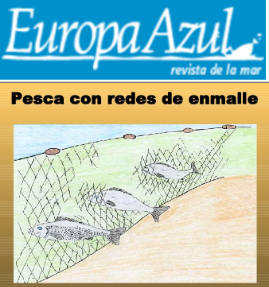
The European Parliament has cleared one of the final political hurdles for the entry into force of new restrictions on the use of lead in certain types of fishing tackle. The plenary session in Strasbourg rejected an objection lodged against the European Commission regulation amending Annex XVII of the REACH regulation, thereby allowing the adoption process to continue for rules that will affect manufacturers and distributors as well as professional and recreational anglers.The vote concluded with broad support for the European Commission's position.
The Ministry of Production (Produce) of Peru has increased by 500,000 tons the maximum limit of total allowable catch (LMCTP) of giant squid or squid, from 539,230 to 589,230 tons, for the second half of the year. The measure was adopted after the accumulated catches reached 95.44% of the current limit.
Jesús Barrientos, Vice Minister of Fisheries and Aquaculture, explained that "this decision reaffirms the Government's commitment to fisheries management based on science. Each measure adopted by Produce responds to technical evidence from Imarpe and seeks to ensure that the use of our hydrobiological resources continues to generate employment and development, while contributing to their sustainability for future generations."
Source: Industrias Pesqueras | Read the full article here
Salmon farmer Alsaker had to reduce biomass under Norway's traffic light system but managed to maintain nearly all of its harvest volume
Norway's Alsaker Group delivered a pre-tax profit of NOK 649 million (£51.7m) in 2025, despite production being affected by 6% capacity reductions under the government's traffic light system, the company said in a press release today.
The group, which is the parent company of Alsaker Fjordbruk, had operating revenues of NOK 2.596 billion. This gives a profit margin before tax of 25%, down from 33.5% in 2024.
Source: fishfarmingexpert | Read the full article here
The European Transport Workers’ Federation (ETF), Europêche and Copa-Cogeca have jointly called on EU institutions to incorporate the revised International Maritime Organization’s STCW-F Convention into European law through a dedicated directive, arguing the move would improve safety, professional recognition and labour mobility for Europe’s fishing workforce.
The revised International Convention on Standards of Training, Certification and Watchkeeping for Fishing Vessel Personnel (STCW-F), which entered into force on 1 January 2026, sets internationally recognised standards for the training, certification and competence of fishing vessel personnel.
Domestic and international factors—including reduced fishing quotas and global uncertainty—shaped the performance of Norwegian seafood exports during the first half of the year.
Norway exported seafood worth NOK 84.5 billion in the first half of the year. This represents a decrease of NOK 669 million, or 1%, compared to the same period last year.
The main markets for Norwegian seafood exports during the first half of the year were Poland, China, and the United States.
As nominations open for the next Prime Minister, food supply chain leaders have penned an open letter to candidates with a five-point plan for a more resilient and affordable food system.
Key areas the new Prime Minister should focus on are delivering value for the public, well-negotiated EU realignment, the planning system, securing workers, and investment and growth.
The NFU, British Retail Consortium, Food and Drink Federation (FDF) and UKHospitality have joined forces to urge those running for Prime Minister to back a five-point plan for a more resilient and affordable food system.
Fish farmers around the world could soon be facing a fishmeal supply crisis and seriously higher costs, according to a new warning from Bloomberg Opinion, the global business platform.
Bloomberg says that wholesale prices have shot up and are now around US $3,000 a metric ton (£2,248).
Peru is the world’s leading supplier and exporter of fishmeal, accounting for almost a third of total global production.Bloomberg says that exceptionally warm Pacific seas from El Niño conditions off South America, and issues with the anchovy fisheries, have resulted in repeated fishing suspensions and the lowest catch quotas for almost 10 years.
Author: Vince McDonagh / Fish Farmer | Read the full article here
Pure Salmon has moved a step closer to building what would become the European Union's largest land-based salmon farm after its proposed facility in south-west France received a favourable environmental opinion from regional authorities.
The project, located in Verdon-sur-Mer, is now awaiting a final decision from local authorities. Approval would allow construction to begin in the coming weeks.
Pure Salmon plans to produce 10,000 tonnes of Atlantic salmon annually using a land-based recirculating aquaculture system.
Source: SalmonBusiness | Read the full article here
The sustainable fisheries agreement between the European Union and the Republic of Mauritania is currently the most significant one the EU has in place with non-member countries—at least in terms of the number of vessels involved and the €60 million Europe pays for fishing rights in those waters. The agreement runs until November 2026. However, not a single bottom longliner has gone there to fish this year. These vessels—classified under Category 3 of the agreement—primarily targeted Ray's bream (or *castañeta*; *Brama brama*). Or rather, they *used* to. The eleven vessels operating under this category—all from Galicia—have abandoned the fishing ground after suffering a drastic drop in catches last year.
Source: La Voz de Galicia | Read the full article here
MEP Francisco Millán Mon supports the modernization of the trade pact but urges caution regarding the future liberalization of canned tuna imports and calls for monitoring of the impact on the European industry.
The modernization of the Global Agreement between the European Union and Mexico has received broad support in the European Parliament, although the text continues to raise concerns within parts of the EU's fishing and canning industries. During the debate held in Strasbourg, Galician MEP Francisco Millán Mon warned of the risks associated with the future liberalization of canned tuna from Mexico and called on the European Commission to continuously monitor the effects on the market.
Mifco recorded tuna purchases worth 11.3 million mvr in June Maldives
The Maldivian state-owned company processed 568 metric tonnes across 517 vessels, consolidating the minimum purchase price to protect the income of local fishermen.
The state-owned Maldives Industr...
Modern technology improves fishing prospects Norway
An unmanned vessel operating ahead of a trawler identifies the highest concentrations of the species in the upper water layers.
Scientists from SINTEF and the Norwegian University of Science and Tech...
Copyright 1995 - 2026 Seafood Media Group Ltd.| All Rights Reserved. DISCLAIMER



 CHILE
CHILE.png)
 EUROPEAN UNION
 The European Parliament rejects a move to halt the reform of the REACH regulation and endorses the phased implementation of new limits on the use and marketing of certain lead-containing equipment.
 PERU
PERU.png) The Ministry of Production
The Ministry of Production NORWAY
.png) Norway's Alsaker Group delivered a pre-tax profit of NOK 649 million (£51.7m) in 2025, despite production being affected by 6% capacity reductions under the government's traffic light system, the company said in a press release today.
Norway's Alsaker Group delivered a pre-tax profit of NOK 649 million (£51.7m) in 2025, despite production being affected by 6% capacity reductions under the government's traffic light system, the company said in a press release today.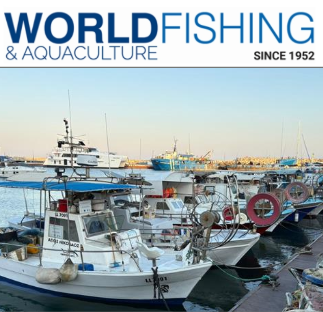 The European Transport Workers’ Federation (ETF), Europêche and Copa-Cogeca have jointly called on EU institutions to incorporate the revised International Maritime Organization’s STCW-F Convention into European law through a dedicated directive, arguing the move would improve safety, professional recognition and labour mobility for Europe’s fishing workforce.
 Domestic and international factors—including reduced fishing quotas and global uncertainty—shaped the performance of Norwegian seafood exports during the first half of the year.
 UNITED KINGDOM
.png) Key areas the new Prime Minister should focus on are delivering value for the public, well-negotiated EU realignment, the planning system, securing workers, and investment and growth.
Key areas the new Prime Minister should focus on are delivering value for the public, well-negotiated EU realignment, the planning system, securing workers, and investment and growth. WORLDWIDE
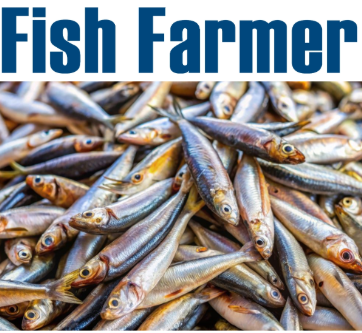 Fish farmers around the world could soon be facing a fishmeal supply crisis and seriously higher costs, according to a new warning from Bloomberg Opinion, the global business platform.
 FRANCE
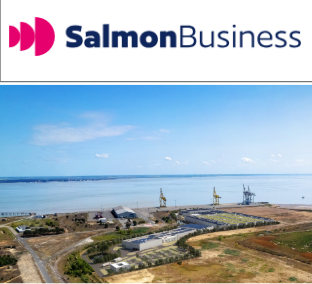 Pure Salmon
 MAURITANIA
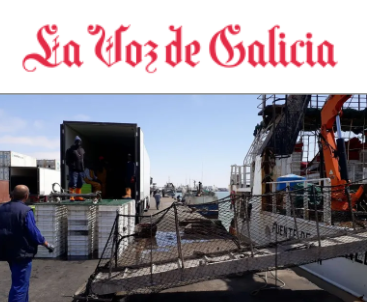 The sustainable fisheries agreement between the European Union and the Republic of Mauritania is currently the most significant one the EU has in place with non-member countries—at least in terms of the number of vessels involved and the €60 million Europe pays for fishing rights in those waters. The agreement runs until November 2026. However, not a single bottom longliner has gone there to fish this year. These vessels—classified under Category 3 of the agreement—primarily targeted Ray's bream (or *castañeta*; *Brama brama*). Or rather, they *used* to. The eleven vessels operating under this category—all from Galicia—have abandoned the fishing ground after suffering a drastic drop in catches last year.
 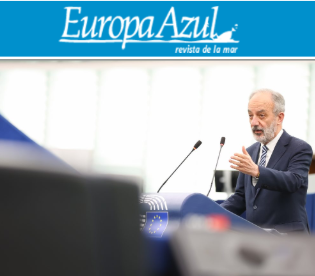 MEP Francisco Millán Mon supports the modernization of the trade pact but urges caution regarding the future liberalization of canned tuna imports and calls for monitoring of the impact on the European industry.