Other Media | SeafoodSource: EU sets new rules regarding listeria contamination, frustrating smoked salmon industry
EUROPEAN UNION
Tuesday, January 14, 2025
The European Commission has set new, more stringent requirements for avoiding listeria contamination in ready-to-eat (RTE) foods.
The updated rules only apply to RTE foods, which have been the cause of many recent listeria cases in the E.U. and are, thus, considered a high-risk food group.
The new rules establish a lower contamination threshold and a longer time frame in which producers are responsible for food safety than those that came before.
Author: Erin Spampinato / SeafoodSource l Read the full article here
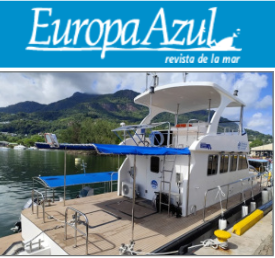
The new agreement for the period 2026-2030 guarantees access for the European fleet to one of the world's main tuna fishing grounds and strengthens economic and fisheries cooperation between the two parties.
The European Union and the Republic of Seychelles have taken a decisive step to ensure the continuity of one of the most important fishing partnerships for the EU tuna fleet after concluding negotiations on a new Implementing Protocol to the Sustainable Fisheries Partnership Agreement (SFPA) for the period 2026-2030. The agreement will allow European vessels to continue operating in the waters of the Indian Ocean archipelago, considered one of the strategic locations for global tuna fishing.
During May 2026, the Environmental Assessment Service (SEA) approved aquaculture initiatives in the Los Lagos and Aysén regions, in a month that registered the highest amount of environmentally qualified investment since the creation of the Environmental Impact Assessment System.
The Environmental Assessment Service (SEA) reported that during May 2026, projects with a total investment of US$13.962 billion were approved, the highest amount recorded in a calendar month since the creation of the Environmental Impact Assessment System (SEIA) in 1992.
With MSC Certification in the bag, one of Korea’s largest tuna companies is just beginning its sustainability work for bigeye, yellowfin and albacore tuna fisheries.
Last year, Sajo Industries secured Marine Stewardship Council (MSC) Certification for 28 of its longline vessels catching tuna in the Eastern and Western Pacific Oceans. For Sajo, one of the largest tuna fishing companies in the world, this was a milestone. It was also just the beginning of their sustainability journey.
Sajo is the first Korean company to install electronic monitoring systems on their longline vessels, part of a government initiative to collect better fisheries data and eradicate illegal, unreported and unregulated (IUU) fishing.
Prices drop sharply as summer volumes weigh on the market.
Norwegian salmon spot prices are expected to fall to around EUR 5.70/kg (USD 6.57/kg) in week 24, down from approximately EUR 6.25/kg (USD 7.20/kg) the previous week, according to analysts.
Prices are expected to remain broadly flat through the rest of June, leaving volume-weighted second-quarter averages at EUR 6.53-6.62/kg (USD 7.52-7.63/kg), below earlier market expectations.
Source: SalmonBusiness | Read the full article here
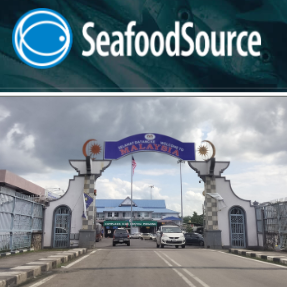
Thailand is set to take its trade dispute with Malaysia to international forums, raising the latter's recent suspension of imports of five Thai shrimp species during discussions at the World Trade Organization (WTO) and the Association of Southeast Asian Nations (ASEAN).
The Thai government’s measures are in response to actions by Malaysia, which announced it had suspended imports of five Thai shrimp species and imposed strict testing mandates on sea bass from Thailand starting 1 June. The Nation reported 7 June, citing Thai Deputy Prime Minister and Commerce Minister Suphajee Suthumpun, that the government is moving on several fronts to address the mandates.
Author: Toan Dao / SeafoodSource | Read the full article here
To mark World Oceans Day, celebrated this June 8, the Marine Stewardship Council (MSC) published its report Fishing for the Future.
Madrid — The document highlights that the Iberian sardine (Sardina pilchardus) has multiplied its adult population nearly fourfold since 2015 thanks to a joint scientific-fishery plan between Spain and Portugal. This success contrasts with the fact that 49% of Spaniards mistakenly believe that an overexploited stock can never recover; only 26% know that it is indeed possible.
The study reveals that 67% of citizens are aware of the increase in overfishing over the last 50 years. However, 53% do not know which ocean most of the tuna they consume comes from. Alberto Martín, director of MSC Spain, and Manuel Barange, director of Fisheries and Aquaculture at the FAO, pointed out that with science-based management, marine recovery is a reality, also citing the success of the Eastern Atlantic bluefin tuna (Thunnus thynnus) and the Cornish hake (Merluccius merluccius), both of which reached healthy levels following strict rebuilding plans.
MIYAGI – According to data compiled by the Miyagi Prefectural Fisheries Co-operative, the cumulative harvest of farmed Coho salmon (Oncorhynchus kisutch) reached 2,201 metric tons as of May 31, 2026. This volume represents a 13% decrease compared to the 2,544 metric tons landed during the same period last year.
click on the image to enlarge it
Although the harvest volume rose to 900 metric tons in late May—up from 686 metric tons in mid-May—current landings are still lagging behind the 987 metric tons recorded in late May of the previous year. Historically, the peak harvest period for products marinos in this region intensifies from June onward.
In terms of pricing, the market is showing a strong price floor. The average unit price rebounded from its mid-May low of 758 yen/kg to 794 yen/kg in late May. The cumulative average price currently stands at 805 yen/kg, marking an 8% decline against the previous year's cumulative average of 878 yen/kg.
Puerto Montt — One week after the conclusion of the Second Chile-ASEAN Business Encounter 2026, organized by ProChile in Bangkok, Thailand, companies from the Los Lagos Region shared a positive assessment. The regional delegation included AquaChile, Granja Marina Tornagaleones, St. Andrews, Marine Solutions, and Imenco, firms connected to salmon farming, mussel farming, seafood, and aquaculture technology.
Francisco Pinto (Marine Solutions), Felipe Kauak (Commercial Manager at Imenco), and Eduardo Piccolo (St. Andrews and representative of Chile Mussels) agreed on the massive potential of Southeast Asia for identifying new marketing channels and strengthening the presence of local marine products and solutions.
For his part, the regional director of ProChile Los Lagos, Ricardo Arriagada, highlighted the area's competitive advantages in these strategic markets. The business matchmaking session took place within the framework of THAIFEX Anuga Asia and brought together more than 40 importers from Thailand, Malaysia, Indonesia, Vietnam, and the Philippines.
Bilbao — To mark the International Day for the Fight against IUU Fishing (Illegal, Unreported and Unregulated), commemorated every June 5, the Bermeo Tuna association hosted a round table titled "Effects of IUU Fishing on the tuna value chain: from traceability to nutrition" at the Itsasmuseum in Bilbao. The event, held following the organization's General Assembly, was moderated by Rogelio Pozo (CEO of AZTI) and featured presentations by Sara Arranz (researcher at AZTI and nutrition expert) and Sergio Gallastegi (CEO of Code Contract).
The debate analyzed tuna as one of the most widely consumed resources globally, whose value chain faces the threat of IUU fishing—a practice that generates unfair competition and jeopardizes food security and ocean sustainability. During the session, the implementation of CATCH was evaluated, which is the new European system designed to block illegal seafood imports into the community market. This event serves as a prelude to the II Bermeo Tuna Forum, scheduled for April 30 and May 1 and 2, 2027, which will place Bermeo, Bizkaia, and Euskadi at the epicenter of the blue economy.





 EUROPEAN UNION
.jpeg) The European Commission has set new, more stringent requirements for avoiding listeria contamination in ready-to-eat (RTE) foods.
The European Commission has set new, more stringent requirements for avoiding listeria contamination in ready-to-eat (RTE) foods. JAPAN
JAPAN.png)
 The new agreement for the period 2026-2030 guarantees access for the European fleet to one of the world's main tuna fishing grounds and strengthens economic and fisheries cooperation between the two parties.
 CHILE
CHILE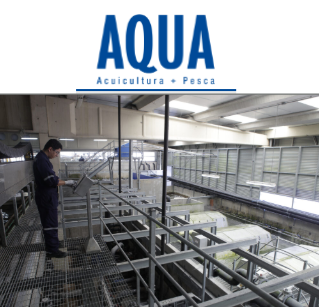 During May 2026, the Environmental Assessment Service (SEA) approved aquaculture initiatives in the Los Lagos and Aysén regions, in a month that registered the highest amount of environmentally qualified investment since the creation of the Environmental Impact Assessment System.
 SOUTH KOREA
.png) Last year,
Last year,  NORWAY
 Prices drop sharply as summer volumes weigh on the market.
 THAILAND
 Thailand is set to take its trade dispute with Malaysia to international forums, raising the latter's recent suspension of imports of five Thai shrimp species during discussions at the World Trade Organization (WTO) and the Association of Southeast Asian Nations (ASEAN).
 SPAIN
SPAIN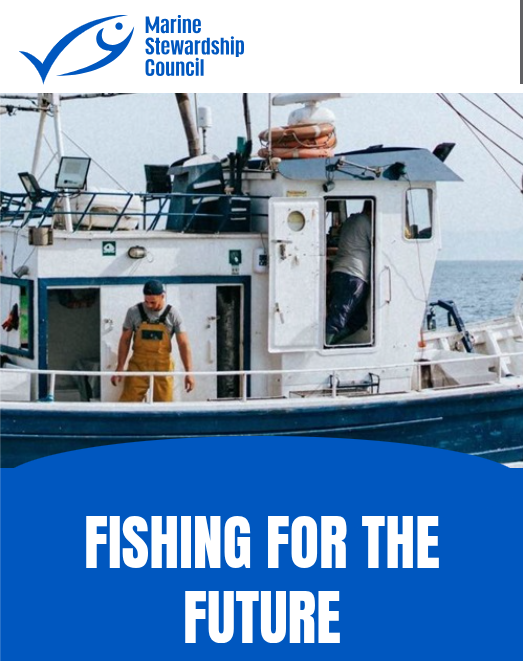 To mark World Oceans Day, celebrated this June 8, the Marine Stewardship Council (MSC) published its report Fishing for the Future.
.png)
.png)
.png)