|
Brazil's expanding foreign trade is being undercut by cheap imports, causing an unsustainable domestic deficit
Brazil Clashes with Rising Imports as Tilapia Shapes Global Aquaculture Ambitions
 BRAZIL
Friday, May 29, 2026, 05:00 (GMT + 9)
A surging import market threatens the country's historic production gains, sparking a critical trade imbalance in the seafood sector.
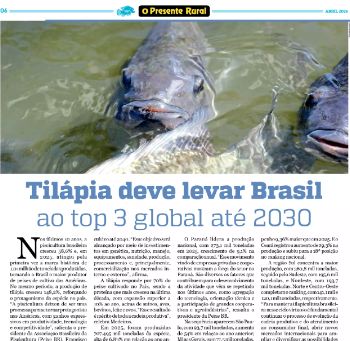
A decade of unprecedented expansion has transformed Brazil into the largest farmed fish producer in the Americas. Driven by a 148.2% explosion in tilapia production over the past ten years, the country crossed a historic milestone in 2025 by producing 1.01 million tons of farmed fish. Tilapia alone accounts for 70% of this volume, yielding 707,495 tons in 2025.
.png) "Fish farming has ceased to be a promise and has become a leading player in the Americas," emphasizes Francisco Medeiros (pictured), president of the Brazilian Fish Farming Association (Peixe BR). Despite long-term goals to reach the global top three by 2030 and world leadership by 2040, the sector is currently navigating intense macroeconomic headwinds defined by a sharp export contraction and aggressive foreign import competition. "Fish farming has ceased to be a promise and has become a leading player in the Americas," emphasizes Francisco Medeiros (pictured), president of the Brazilian Fish Farming Association (Peixe BR). Despite long-term goals to reach the global top three by 2030 and world leadership by 2040, the sector is currently navigating intense macroeconomic headwinds defined by a sharp export contraction and aggressive foreign import competition.
The Key Point: The Export vs. Import Imbalance
The true battleground for Brazilian aquaculture has shifted to international trade. While Brazil works to expand its footprint abroad, cheap foreign fish is increasingly penetrating its domestic market, creating an unsustainable deficit.
The Export Bottleneck
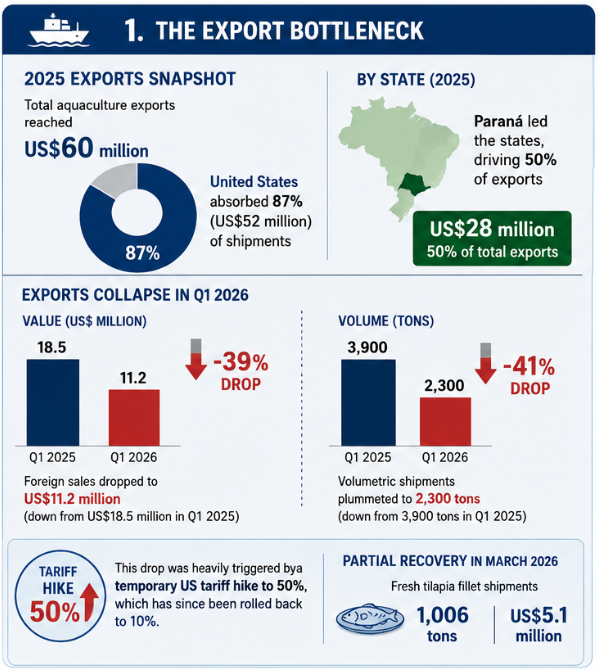
In 2025, total aquaculture exports reached US$60 million, with the United States absorbing 87% (US$52 million) of shipments. Paraná led the states, driving 50% of exports at US$28 million.
However, the first quarter of 2026 brought a severe 39% collapse in foreign sales, dropping to US$11.2 million (down from US$18.5 million in Q1 2025). Volumetric shipments also plummeted 41% to 2,300 tons. This drop was heavily triggered by a temporary US tariff hike to 50%, which has since been rolled back to 10%, sparking a partial recovery in fresh fillet shipments to 1,006 tons (US$5.1 million) in March.
Click on the image to enlarge it
The Import Surge
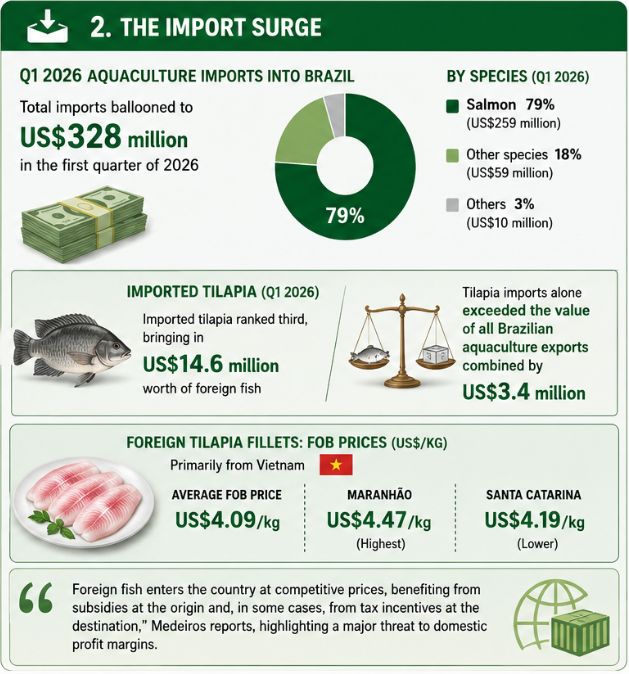
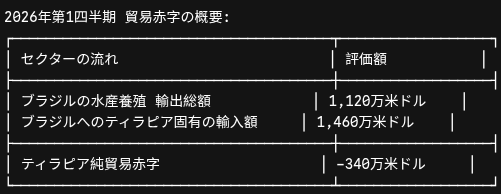
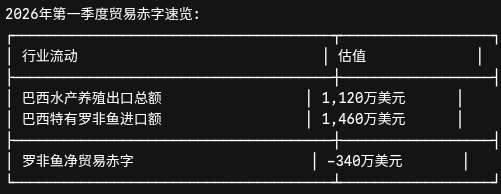
While exports stalled, aquaculture imports into Brazil ballooned to US$328 million in the first quarter of 2026. Salmon dominated at 79%, but imported tilapia ranked third, bringing US$14.6 million worth of foreign fish into the country. Crucially, tilapia imports alone exceeded the value of all Brazilian aquaculture exports combined by US$3.4 million.
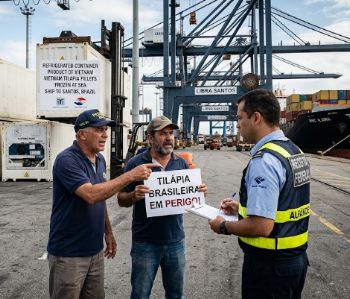
Foreign tilapia fillets—primarily from Vietnam—entered the country at an average FOB price of US$4.09/kg (reaching US$4.47/kg in Maranhão and dropping to US$4.19/kg in Santa Catarina). "Foreign fish enters the country at competitive prices, benefiting from subsidies at the origin and, in some cases, from tax incentives at the destination," Medeiros reports, highlighting a major threat to domestic profit margins.
Click on the image to enlarge it
Strategic Reconfiguration and Biosecurity
To break its heavy reliance on the United States, Brazil is actively diversifying its markets. Canada and Mexico have gained rapid traction, with Mexican sales surging 110% between February and March of 2026 to US$319,000.
Furthermore, the Mercosur-European Union trade agreement, which provisionally took effect on May 1st, has placed tilapia into Category 0. This immediately eliminates import tariffs of 7.5% to 9%, leveling the playing field against Asian competitors. While a 2017 European sanitary ban remains in place, the pact introduces mechanisms like "pre-listing" to smooth out future facility inspections and eventually resume shipments.
.jpg)
Photo: C.Vale
Beyond economic strain, the industry faces severe biological risks. A primary concern for producers is preventing the introduction of TiLV (Tilapia Lake Virus), a devastating pathogen not yet recorded in Brazil.
“The introduction of new pathogens could amplify the existing challenges in tilapia farming, especially in a scenario of intensified production,” warns Medeiros.
Moving through 2026, the sector must fix its industrial processing bottlenecks—shifting focus from low-volume fresh fillets to high-volume frozen fillets—while tightening coordination between producers and regulators to safeguard biosecurity and withstand intensifying global competition.
Related News:
🇯🇵 日本語 (Japanese)
押し寄せる輸入魚との衝突、世界的な水産養殖の野望を形作るティラピア
急増する輸入市場が国内の歴史的な生産拡大を脅かし、水産部門に深刻な貿易不均衡を引き起こしている。
過去10年間にわたる前例のない拡大により、ブラジルは米州最大の養殖魚生産国へと変貌を遂げた。過去10年間で148.2%という驚異的な伸びを記録したティラピア生産に牽引され、同国は2025年に養殖魚の生産量が初めて101万トンに達するという歴史的な節目を突破した。ティラピア単体でこの量の70%を占めており、2025年の生産量は70万7,495トンに達している。
「水産養殖は単なる期待の枠を超え、米州における主要な主役となった」と、ブラジル水産養殖協会(Peixe BR)の会長であるフランシスコ・メデイロスは強調する。2030年までに世界のトップ3に入り、2040年までに世界をリードするという長期的な目標を掲げているにもかかわらず、同セクターは現在、急激な輸出の縮小と激しい外国産輸入魚との競争という、厳しいマクロ経済の逆風に直面している。
最も重要なポイント:輸出 vs 輸入の不均衡
ブラジルの水産養殖にとっての本当の戦場は、国際貿易へと移行している。ブラジルが海外での市場拡大に取り組む一方で、安価な外国産の魚が国内市場への浸透を強めており、持続不可能な赤字を生み出している。
輸出のボトルネック
2025年の輸出総額は6,000万米ドルに達し、米国がその87%(5,200万米ドル)を吸収した。州別ではパラナ州がトップで、輸出の50%にあたる2,800万米ドルを占めた。
しかし、2026年第1四半期は海外売上高が39%も減少するという深刻な事態となり、1,120万米ドル(2025年第1四半期の1,850万米ドルから減少)にまで落ち込んだ。数量ベースの出荷量も41%減の2,300トンに急落した。この減少は、米国による一時的な50%への関税引き上げが主な原因であったが、その後10%に引き下げられたため、3月には新鮮なフィレの出荷量が1,006トン(510万米ドル)へと部分的な回復を見せている。
輸入の急増
輸出が停滞する一方で、ブラジルへの水産養殖製品の輸入は、2026年第1四半期に3億2,800万米ドルへと膨れ上がった。サケが79%と大半を占めたが、輸入ティラピアが第3位につけ、1,460万米ドル相当の外国産の魚が国内に流入した。極めて重要なのは、ティラピアの輸入額だけで、ブラジルの水産養殖の全輸出総額を340万米ドルも上回ったことである。
主にベトナムから輸入された外国産ティラピアフィレは、平均FOB価格が4.09米ドル/kg(マランハオ州では4.47米ドル/kgに達し、サンタカタリーナ州では4.19米ドル/kgに低下)で国内に入ってきた。「外国産の魚は競争力のある価格で国内に流入しており、原産地での補助金や、場合によっては目的地での税制上の優遇措置の恩恵を受けている」とメデイロスは報告し、国内の利益率に対する大きな脅威となっていることを浮き彫りにした。
戦略的再構成とバイオセキュリティ
米国への過度な依存を打破するため、ブラジルは市場の多様化を積極的に進めている。カナダとメキシコが急速に勢いを増しており、メキシコ向けの売上高は2026年の2月から3月の間に110%急増し、319,000米ドルに達した。
さらに、5月1日に暫定発効したメルコスール・欧州連合(EU)貿易協定により、ティラピアはカテゴリー0に分類された。これにより、7.5%から9%の輸入関税が即座に撤廃され、アジアの競合相手に対して公平な競争環境が整うことになる。2017年から続く欧州の衛生面での禁輸措置は依然として有効であるものの、この協定は将来的な施設検査を円滑にし、最終的に出荷を再開するための「事前登録(プレリスティング)」のようなメカニズムを導入している。
経済的な緊張に加え、同産業は深刻な生物学的リスクにも直面している。生産者にとっての最優先の懸念事項は、ブラジル国内ではまだ確認されていない破壊的な病原体であるTiLV(ティラピア湖ウイルス)の侵入を防ぐことである。
「新しい病原体の侵入は、特に生産が強化されている状況において、ティラピア養殖における既存の課題を増幅させる可能性がある」とメデイロスは警告する。
2026年に向けて、同セクターは、少量の新鮮なフィレから大量の冷凍フィレへと焦点を移すことで、産業加工のボトルネックを解消しなければならない。同時に、生産者と規制当局との連携を強化してバイオセキュリティを確保し、激化する世界的な競争に耐え抜く必要がある。
🇨🇳 简体中文 (Simplified Chinese)
巴西遭遇进口鱼涌入冲击,罗非鱼博弈重塑全球水产养殖雄心
激增的进口市场正威胁着该国历史性的生产效益,引发了水产行业临界性的贸易失衡。
过去十年空前的扩张已将巴西转变为美洲最大的养殖鱼类生产国。在过去十年中录得148.2%惊人增长的罗非鱼产业推动下,该国在2025年跨越了一个历史性的里程碑,养殖鱼类产量首次达到了101万吨。仅罗非鱼就占到了这一产量的70%,在2025年的产量达到了70万7,495吨。
“水产养殖业已不再是一个承诺,而是成为了美洲的主要主角,”巴西水产养殖协会(Peixe BR)会长弗朗西斯科·梅代罗斯强调。尽管该行业的长期目标是在2030年前进入全球前三名,并在2040年前取得世界领导地位,但目前该领域正处于严峻的宏观经济逆风中,其特征是出口急剧收缩以及外国进口鱼类的激进竞争。
最核心的要点:出口与进口的失衡
巴西水产养殖业真正的战场已经转移到了国际贸易。在巴西努力扩大海外足迹的同时,廉价的外国鱼类正日益渗透其国内市场,造成了不可持续的赤字。
出口瓶颈
在2025年,水产养殖出口总额达到了6,000万美元,其中美国吸收了87%(5,200万美元)的货量。巴拉那州在各州中处于领先地位,以2,800万美元占到了出口额的50%。
然而,2026年第一季度海外销售额遭遇了39% severe 的严重崩溃,降至1,120万美元(低于2025年第一季度的1,850万美元)。按数量计的货运量也骤降41%至2,300吨。这一跌幅主要是由于美国临时将关税提高到50%所触发的,此后该税率已回落至10%,从而刺激了3月份新鲜鱼排的出货量部分恢复到1,006吨(510万美元)。
进口激增
在出口陷入停滞的同时,巴西的水产养殖进口在2026年第一季度膨胀至3亿2,800万美元。三文鱼以79%的比例占据主导地位,但进口罗非鱼位列第三,为该国带来了价值1,460万美元的外国鱼类。至关重要的一点是,仅罗非鱼的进口额就超过了巴西水产养殖全部出口总额,超出了340万美元。
外国罗非鱼排(主要来自越南)以4.09美元/公斤的平均离岸价(FOB)进入该国(在马拉尼昂州达到4.47美元/公斤,在圣卡塔琳娜州降至4.19美元/公斤)。“外国鱼类以极具竞争力的价格进入该国,受益于原产地的补贴,以及在某些情况下目的地的税收优惠,”梅代罗斯报告说,这突显了对国内利润空间的重大威胁。
战略调整与生物安全
为了打破对美国的严重依赖,巴西正积极实施市场多元化。加拿大和墨西哥获得了快速增长的势头,在2026年2月至3月期间,对墨西哥的销售额激增了110%,达到31万9,000美元。
此外,于5月1日临时生效的南方共同市场-欧洲联盟贸易协定已将罗非鱼列入类别0。这立即免除了7.5%至9%的进口关税,为对抗亚洲竞争对手铺平了公平竞争的道路。虽然自2017年以来欧洲的卫生禁令依然有效,但该协定引入了诸如“预列名(pre-listing)”之类的机制,以理顺未来的设施检查并最终恢复发货。
除了经济压力外,该行业还面临着严重的生物学风险。生产者最首要的担忧是防止TiLV(罗非鱼湖病毒)的传入,这是一种在巴西尚未有记录的具有毁灭性的病原体。
“新病原体的引入可能会放大罗非鱼养殖中现有的挑战,特别是在生产强化的情景下,”梅代罗斯警告说。
迈向2026年,该行业必须解决其工业加工瓶颈——将重点从低产量的新鲜鱼排转向高产量的冷冻鱼排——同时加强生产者与监管机构之间的协调,以保障生物安全并抵御日益加剧的全球竞争。
[email protected]
www.seafood.media
|





.png)
 Print
Print