IN BRIEF - Russian supertrawler Mekhanik Shcherbakov launched in St. Petersburg
RUSSIAN FEDERATION
Friday, November 08, 2024
"Mechanic Shcherbakov" is being built for the Russian Fishery Company under the investment quota program. This is the sixth vessel of the project, named in honor of the honored veteran of the industry, participant of the Great Patriotic War, senior mechanic Ilya Shcherbakov (1930 - 2020).
The large freezer fishing trawler of the ST-192 project is one of the most modern fishing vessels in the world. In terms of its technical and technical-operational characteristics, it surpasses all previously built vessels of its class. In total, the fishing fleet of the Russian Fishery Company will include 11 such supertrawlers.
"The new generation of vessels ensure maximum safety, compliance with global environmental standards and improved working and rest conditions for crews. It is gratifying that such large-scale projects are being implemented in Russia, at the USC enterprise - Admiralty Shipyards. This is the oldest shipbuilding enterprise in our country. It is here that the traditions of domestic shipbuilding are being strengthened and modern competencies are being developed. Behind all this are the people working at the enterprise, who design and build the new Russian fleet,"noted the head of the Federal Agency for Fisheries Ilya Shestakov.
The vessel is designed to catch and process 60 thousand tons of fish annually. On board there is equipment for the production of all types of products from pollock and herring, including a new product - surimi.
The construction process of Pesantar 1, the latest generation trawler that Nodosa Shipyard builds for the Argentine shipowner Pesantar, in which Newsan and Profand participate, has marked a milestone this week. This week, the Marín shipyard facilities hosted the launching ceremony of the ship, designed and developed entirely in Nodosa. After successfully touching the water, the hull of the fishing vessel, 85 meters long and 14 meters wide, was transferred to a slipway with greater capacity with the aim of starting its next construction phase. The goal is for the work to be completed in spring 2027, when delivery is scheduled. With the Pesantar 1, Nodosa, which this year celebrates 50 years of experience, reaffirms its “ability to develop highly complex fishing vessel projects for international shipowners
Source: Industrias Pesqueras | Read the full article here
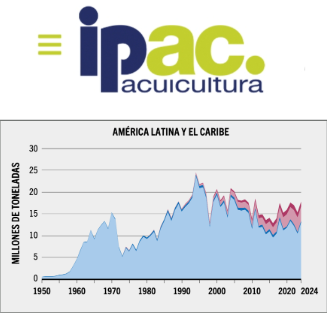
According to the SOFIA 2026 report presented last week, global aquaculture production registered a new record of 142 million tons in 2024, of which 103 million tons (live weight equivalent) corresponded to aquatic animals and 39 million tons (wet weight) to algae. Asia concentrated 92% of the total, followed by Latin America and the Caribbean (3%), Europe (2%), Africa (2%), North America (0.4%) and Oceania (0.2%).
If only aquatic animals are taken into account (103 million tonnes), aquaculture reached a new record, 53% of the total, having surpassed capture fisheries in the production of aquatic animals in 2021, thus confirming its role as a driver of growth in total aquatic animal production.
Source: ipac.aquacultura | Read the full article here
The Okayama University of Science and Murakami City have launched a joint research project to cultivate chum salmon (Oncorhynchus keta) in a land-based aquaculture system using an innovative land-based closed-recirculation aquaculture system (c-RAS).
Operating at the university’s Next-Generation Aquaculture Center, the initiative marks a major milestone for sustainable aquaculture. The initial batch of juvenile salmon, delivered from Murakami earlier this year, has grown to an average weight of 23 grams and an average length of 13 centimetres.
Murakami has been known as one of Japan’s leading salmon-producing regions along the Sea of Japan coast since the Heian period (794–1185). In recent years, however, climate change has altered the distribution of marine species, resulting in increased predation on released salmon juveniles by species such as yellowtail and Spanish mackerel that have expanded northward into the region.
Source: The Fish Site | Read the full article here
Norway’s government has approved production growth in three salmon farming regions while ordering a capacity reduction in one area under the country’s traffic light system for aquaculture.
The decision, announced by Fisheries and Oceans Minister Marianne Sivertsen Næss on Friday, could result in approximately 8,300 tonnes of additional maximum allowed biomass (MTB) being allocated in green-rated production areas. At the same time, production capacity in one red-rated area will be reduced by an estimated 5,300 tonnes.
The traffic light system determines whether salmon farming capacity can increase, remain unchanged or be reduced based on the impact of sea lice on wild salmon populations.
Source: SalmonBusiness | Read the full article here
Tetra Pakand Spanish seafood producer Jealsa have launched what they describe as the world’s first carton packaging solution for shelf-stable tuna, marking a significant innovation in one of the food industry’s most established categories.
The new packaging, based on Tetra Pak’s Tetra Recart technology, was introduced in Sweden last month through retailer Axfood in a 200ml Mini format and is now being made available to food producers and brands globally.
Developed through a collaboration between the two companies, the solution aims to provide an alternative to traditional metal cans while helping brands stand out in the growing shelf-stable tuna market, which is forecast to reach 12.4 billion units by 2030
MOMBASA – In a historic milestone, the first Our Ocean conference in Africa concluded in Mombasa with 320 commitments from over 100 governments and businesses, valued at $6.4 billion to protect oceans and the blue economy.
Among the key announcements, Canada will allocate $682 million to small craft harbors, and the World Bank will invest $1 billion over two years for resilient blue economies. French Polynesia will expand protection in Tainui Atea by 27,000 square kilometers.
As host, Kenya led with 42 commitments worth $1 billion, including $200 million for electronic monitoring on industrial fishing vessels. This measure aims to curb illegal, unreported, and unregulated (IUU) fishing, which costs Africa between $11 billion and $13 billion annually.
The forum brought together 5,000 delegates and highlighted the role of youth in a continent where 70% of the population is under 35 and views the sea as a source of employment and food security. The World Resources Institute (WRI) confirmed that 78% of historical commitments in the region are complete or in progress, marking a definitive shift toward financing and solutions led by Africa itself.
The sector is cautiously welcoming the new formula, which allows for a four-week fishing closure between January 15 and February 27.
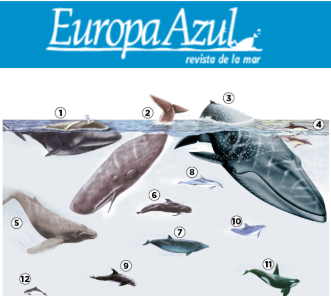
France will maintain the temporary closure of certain fisheries in the Bay of Biscay in 2027 to reduce the accidental capture of cetaceans. The decision was announced by the French Minister of the Sea and Fisheries, Catherine Chabaud, during the Assises de la mer et de la pêche (Sea and Fishing Conference), held on June 18 and 19 in Cherbourg and organized by Le Marin and Ouest-France.
Based on average fuel consumption per vessel, length, fishing gear, and fishing grounds for 2024, the Ministry of Agriculture, Fisheries and Food has just granted the first aid payments to the fleet to alleviate the impact of rising diesel prices. This fulfills its promise made days ago and anticipates a payment to offset the fuel price increase resulting from the conflict in the Middle East. Initially, €6.8 million is being allocated to 4,308 shipowners and 4,650 vessels. They now have five days, starting this Saturday, to correct any errors, accept, or decline the aid.
Source: La Voz de Galicia | Read the full article here
China is continuing to be a major buyer of salmon – and seafood in general - from around the world. The latest data from the Norwegian Seafood Council shows that the huge increase in salmon purchasing which took off late last year shows no sign of letting up, although the pace of increase has slowed down.
The Council says the strong growth shows that the Chinese salmon market still has underlying strengths.
However, it is the lowest growth year-on-year since March 2025, when the market grew by “only” 25%. It is also the lowest monthly import figure since September last year.
Author: Vince McDonagh / Fish Farmer | Read the full article here





 RUSSIAN FEDERATION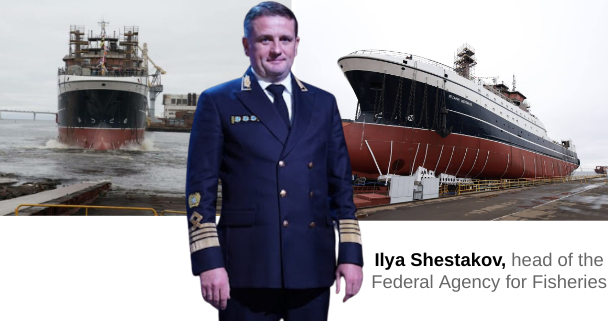
 SPAIN
SPAIN.png) The construction process of Pesantar 1, the latest generation trawler that
The construction process of Pesantar 1, the latest generation trawler that  WORLDWIDE
 According to the SOFIA 2026 report presented last week, global aquaculture production registered a new record of 142 million tons in 2024, of which 103 million tons (live weight equivalent) corresponded to aquatic animals and 39 million tons (wet weight) to algae. Asia concentrated 92% of the total, followed by Latin America and the Caribbean (3%), Europe (2%), Africa (2%), North America (0.4%) and Oceania (0.2%).
 JAPAN
JAPAN.png) Operating at the university’s Next-Generation Aquaculture Center, the initiative marks a major milestone for sustainable aquaculture. The initial batch of juvenile salmon, delivered from Murakami earlier this year, has grown to an average weight of 23 grams and an average length of 13 centimetres.
Operating at the university’s Next-Generation Aquaculture Center, the initiative marks a major milestone for sustainable aquaculture. The initial batch of juvenile salmon, delivered from Murakami earlier this year, has grown to an average weight of 23 grams and an average length of 13 centimetres. NORWAY
.png) The decision, announced by Fisheries and Oceans Minister Marianne Sivertsen Næss on Friday, could result in approximately 8,300 tonnes of additional maximum allowed biomass (MTB) being allocated in green-rated production areas. At the same time, production capacity in one red-rated area will be reduced by an estimated 5,300 tonnes.
The decision, announced by Fisheries and Oceans Minister Marianne Sivertsen Næss on Friday, could result in approximately 8,300 tonnes of additional maximum allowed biomass (MTB) being allocated in green-rated production areas. At the same time, production capacity in one red-rated area will be reduced by an estimated 5,300 tonnes. SWEDEN
.png) The new packaging, based on Tetra Pak’s Tetra Recart technology, was introduced in Sweden last month through retailer Axfood in a 200ml Mini format and is now being made available to food producers and brands globally.
The new packaging, based on Tetra Pak’s Tetra Recart technology, was introduced in Sweden last month through retailer Axfood in a 200ml Mini format and is now being made available to food producers and brands globally. ARGENTINA
 KENYA
KENYA.png)
 FRANCE
 The sector is cautiously welcoming the new formula, which allows for a four-week fishing closure between January 15 and February 27.
 Based on average fuel consumption per vessel, length, fishing gear, and fishing grounds for 2024, the Ministry of Agriculture, Fisheries and Food has just granted the first aid payments to the fleet to alleviate the impact of rising diesel prices. This fulfills its promise made days ago and anticipates a payment to offset the fuel price increase resulting from the conflict in the Middle East. Initially, €6.8 million is being allocated to 4,308 shipowners and 4,650 vessels. They now have five days, starting this Saturday, to correct any errors, accept, or decline the aid.
 CHINA
CHINA China is continuing to be a major buyer of salmon – and seafood in general - from around the world. The latest data from the Norwegian Seafood Council shows that the huge increase in salmon purchasing which took off late last year shows no sign of letting up, although the pace of increase has slowed down.