|
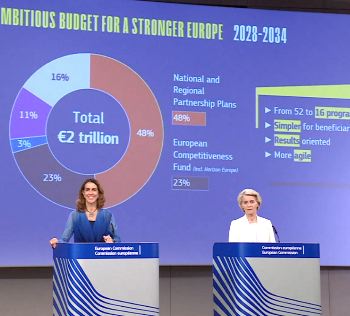
Presentation of the Multiannual Financial Framework_European Commission
Fisheries Alarm: EU Budget Proposal Threatens Devastating Cuts for Fisheries, Sector Organizations Warn
 (EUROPEAN UNION, 7/18/2025)
The European Commission's proposal for the 2028-2034 Multiannual Financial Framework has sparked widespread concern within the EU fishing sector. The initiative foresees drastic fund reductions and the elimination of a dedicated fisheries program, which, according to Europêche and Cepesca, marginalizes a key EU policy and jeopardizes food sovereignty and the survival of thousands of coastal families.
MADRID – The European fishing sector has today raised its voice in a forceful condemnation of the European Commission's budget proposal for the 2028-2034 period. Organizations like Europêche, which includes the Spanish Cepesca, express their "deep concern" over guidelines that, in their view, severely marginalize and weaken fisheries, one of the Union's few truly common policies.
The sector's indignation stems from the fact that fisheries have even been excluded from the title of the new and ambitious European Fund for Sustainable Economic, Territorial, Social, Rural, and Maritime Prosperity and Security. This new financial instrument will merge various programs, including the current European Maritime, Fisheries and Aquaculture Fund (EMFAF), with other funds related to agriculture, cohesion, and regional development.
"This proposal sends a discouraging signal to fishermen and coastal communities dependent on this activity and ignores the strategic importance of the fishing sector," Europêche warns.
Dramatic Cuts and Risk of "Double Absorption"
The concern intensifies when analyzing the figures. The current EMFAF, covering the 2021-2027 period, already suffered a €105 million cut in the last budget review, settling at €6.1 billion. However, the Commission's new proposal limits the specific allocation for fisheries to just €2 billion for the next cycle. This occurs despite the overall European Union budget significantly increasing from €1.2 to €2 trillion.
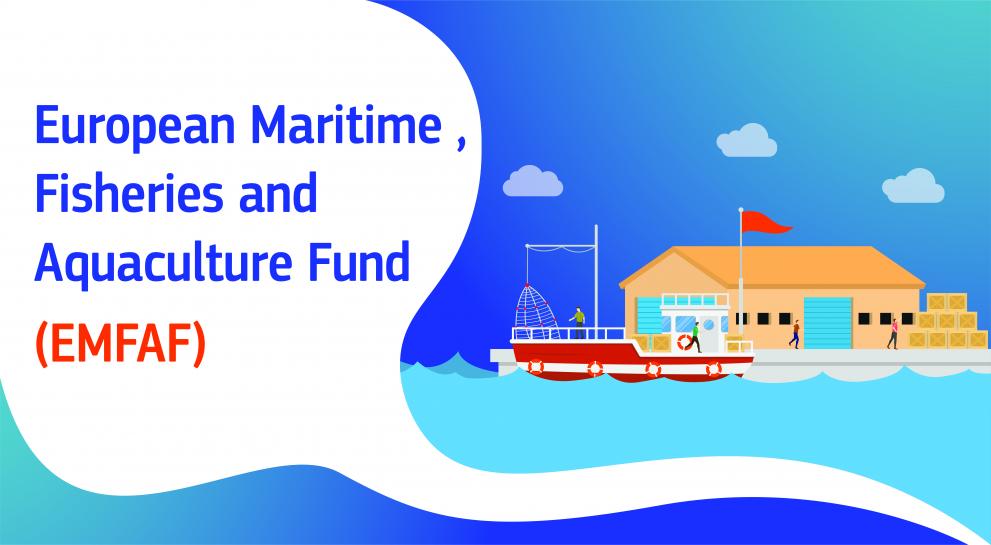
Europêche warns of the risk of a "double absorption" of fisheries funds. On one hand, integration into a broader financial instrument could dilute their purpose, and on the other, alignment with generic objectives of the European Ocean Pact could divert resources. "This dilutes their ability to respond to the real needs of the sector," they emphasize. Furthermore, there is concern that this new fund could be allocated to other areas of the blue economy (such as marine energy or biotechnology), which would directly compete with fisheries for already limited resources.
Policy Inconsistency and Alarming Consequences
.png)
Javier Garat, president of Europêche and secretary general of Cepesca, does not hide his frustration. "We expected ambitious support for a fleet that ensures healthy diets, food security, and environmental protection. Instead, we see support weakening for a sector that already suffers high operating costs, crew shortages, international competition, and an increasingly complex regulatory environment," Garat denounces, pointing out an "inconsistency" between the Commission's major priorities (competitiveness, resilience, strategic autonomy) and the treatment received by the fishing sector.
The organization also warns about the serious consequences of this budget cut: an imminent fall in EU fish production, which would translate into higher prices for consumers and an increased reliance on food imports. "A restrictive funding policy jeopardizes Europe's food sovereignty and the future of a modern, sustainable fleet. Subsidies must encourage responsible production, not feed bureaucratic structures or research detached from the reality of the sea," Garat remarked.
Additionally, the sector criticizes the lack of clear rules on co-financing for vessels over 12 meters and the absence of mandatory financial measures to address the challenges of fishing, leaving the decision to support—or not—their respective fleets in the hands of Member States. This, they argue, generates inequality between countries and breaks fairness within the single market.
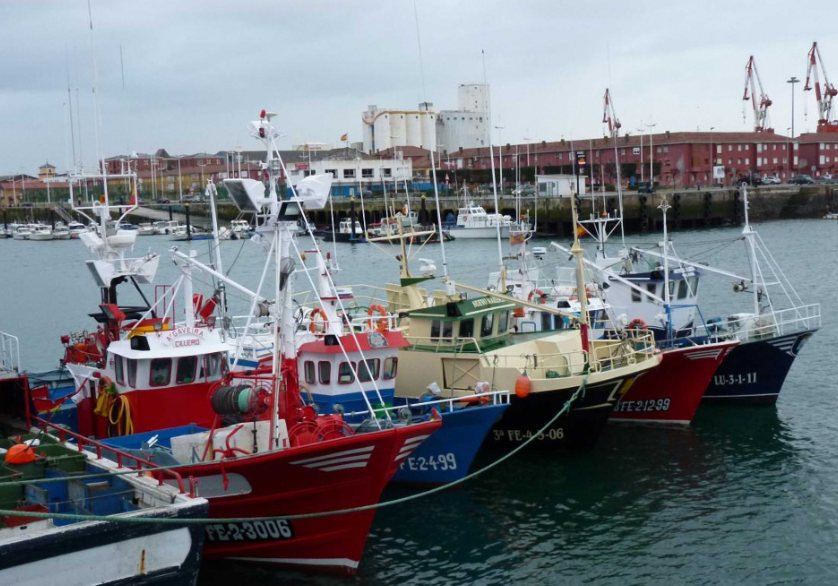
Photo: courtesy Exponav
It is worth remembering that the Multiannual Financial Framework (MFF) is the EU's long-term budget, lasting seven years. It is not just a financial tool but also a political roadmap reflecting the EU's strategic priorities and how it intends to address common challenges. The current MFF (2021-2027) has already been revised twice, with the aforementioned €105 million cut to the EMFAF in the most recent revision.
The fishing sector concludes its strong message with an urgent appeal to European policymakers: "This is not what we were promised. We will continue to work with the Council and the European Parliament to secure an independent, reinforced fund tailored to the specific needs of the European fishing sector."
[email protected]
www.seafood.media
Information of the company:
|
Address:
|
Calle de Velázquez, 41, 4 C
|
|
City:
|
Madrid
|
|
State/ZIP:
|
(28001)
|
|
Country:
|
Spain
|
|
Phone:
|
+34 914 323 489
|
|
Fax:
|
+34 914 355 201
|
|
E-Mail:
|
[email protected]
|
More about: 
|
|
|
|








 Print
Print