


 (NORWAY, 1/30/2026)
Proven experience shows that submersible farming systems can improve fish welfare, reduce sea lice exposure and deliver predictable operations when technology, routines and expertise work together.
Deep farming is still a relatively new operating method for many fish farmers. By keeping fish submerged at greater depths, producers can reduce exposure to sea lice while benefiting from more stable environmental conditions. Experience from early adopters, however, shows that deep farming works – and that it can be implemented predictably when the right expertise , routines and operational support are in place.
.png)
Deployment of an air dome in a Nautilus pen. Photo: AKVA group
For AKVA group , deep farming is about exactly this: applying practical experience and maintaining close operational follow-up. As reported by Anne Oma in AKVA Group News , the company's approach is rooted in lessons learned directly from commercial operations.
Sinkaberg leads the way
 Sinkaberg is currently the company with the most extensive experience in deep farming. Today,100%of its fish are operated either indeep farming systemsor through other forms of shielding, making deep farming a natural part of everyday operations across the organization.
“For us, this is not about trying something new, but about further developing something we know works,” says Tronn-Ove Øren , Project Manager for Development at Sinkaberg .
Documented operational experience
Operational data shows that conditions at depth are generally more stable, with fewer external forces acting on the structures. At the same time, deep farming places high demands on precise rigging and well-established routines . So far, results have been very positive.
Growth , feed conversion ratio (FCR) and production efficiency remain at normal levels. The most significant difference is the sharply reduced need for delousing . With fewer treatments, fish experience less stress – delivering clear benefits for fish welfare .
.png)
Arnstein Hosaas visiting various fish farmers. Photo: AKVA group
However, conditions can vary between sites. In some locations, local current patterns may cause mixing of the water column, pushing sea lice deeper and reducing the overall effect. Experience shows that it is the interaction between technology , site conditions and operations that ultimately determines performance.
The learning curve is steepest during start-up, but efficiency improves as routines become established.
400 pens deployed and counting
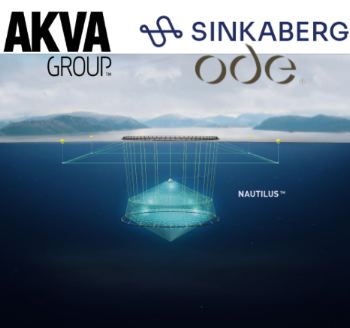
 To date, around 400 Nautilus units from AKVA group have been deployed in collaboration with leading salmon farmers. The solution is also being used commercially by Ode AS in deep farming of cod . In total, more than 25 deep farming production cycles have now been harvested.
These projects have built a strong knowledge base that AKVA group now uses to support customers in their daily operations .
“Deep farming can deliver both higher survival rates and improved fish welfare. We are talking about fish that have remained at depth and have not been handled from stocking to harvest. This shows that the potential is significant,” says Svein-Gustav Sinkaberg , CEO of Sinkaberg .
Planning creates control
.png) Experience also shows that robust planning and routines are essential to success.
Experience also shows that robust planning and routines are essential to success.
“Deep farming can feel more demanding in the early stages. Once routines are in place, we see that operations can be carried out efficiently,” says Arnstein Hosaas , CIO at AKVA group .
Deep farming facilities can be installed within standard mooring frameworks , without the need for specially adapted service vessels – provided that operational procedures are well established.
Collaboration enables better operations
The development of deep farming has been driven by close collaboration between fish farmers and suppliers. Continuous adjustments to equipment and working methods have gradually simplified operations and increased predictability.
_jpg (optimized_original).png)
Nautilus submerged with air dome at approximately 25–60 meters depth. Photo: AKVA group
Deep farming continues to evolve through ongoing cooperation between AKVA group and fish farmers, with technology tested directly in commercial conditions. This work forms part of the company's contribution to more sustainable aquaculture under the vision of Pioneering a better future .
“We improve with every stocking. It is about learning as we go, making adjustments and building expertise throughout the entire operations organization,” says Øren .
Investing in deep farming for cod
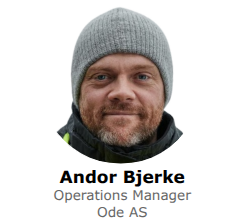 Ode , which has now completed its first commercial cod harvest in submersible Nautilus pens , also highlights operational experience as a key success factor.
“Deep farming provides stable conditions for the fish and better production control. Experience from the first commercial harvest shows good welfare and high fish quality. It takes time to master a new operating method, but with experience the work becomes easier,” says Andor Bjerke , Operations Manager at Ode .
Submersible pens are seen as a natural step towards improving fish welfare , sustainability and product quality . Ode is now planning to stock Nautilus pens at two new sites in 2026 .
Confidence built over time
Both Sinkaberg and Ode describe deep farming as a distinct way of operating aquaculture – not merely a technical add-on. As experience grows and routines mature, uncertainty is reduced and confidence increases, reinforcing deep farming as a viable and scalable production method for the future.


 Print
Print