If you would like to send us an article, contact Margaret Stacey
SAFET’s core mission is to create a future where technology empowers seafood and fisheries to sustainably manage marine resources
SAFET releases report on key technologies for sustainable fisheries management and ocean protection
(UNITED KINGDOM, 1/15/2026)
At the halfway point of ‘The Ocean Decade,’ SAFET’s report, “The Fourth Industrial Revolution at Sea,” shines a spotlight on 10+ key technologies that can enable more sustainable fishing and healthier marine ecosystems.
Decision makers can now investigate real-world deployments and case studies of these solutions via the SEA-TECH-IN-MOTION platform and database.
The report highlights how a suite of modern technologies can support sustainable fisheries use cases and better manage marine environments. SAFET’s newly launched companion database, SEA-TECH-IN-MOTION, showcases real-world technology deployments and success stories in the seafood and fisheries sector to raise awareness and strengthen confidence in these technologies.
The report and platform come at the culmination of a turning-point year for this sector. Sustainable seafood sales reached a record-setting high in 2025. That growth is fueled by shifting consumer sentiment: Research shows that 38% of European shoppers and 42% of those in North America consider sustainability in their purchasing decisions.
While progress is evident, challenges to the seafood and fisheries industry persist. For example, one in every five fish caught is done so through illegal, unreported, and unregulated (IUU) fishing, which costs the global economy billions each year. Global bycatch, or the fish and marine life that are caught unintentionally during fishing, continues to be a significant issue. And mislabelingaffects some 40% of products from restaurants, markets, and fishmongers globally.
Click on the image to enlarge it
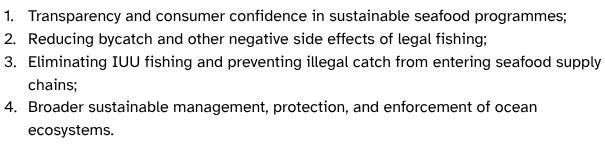
Transparency and verifiability for seafood supply chains has never been more important. And as the world pushes forward to meet a global goal to protect at least 30% of the ocean by 2030, SAFET’s insight brief provides important guidance. The report explores the four leading themes relevant to creating more sustainable seafood supply chains better protecting marine environments:
SAFET’s report also highlights and explores examples of 10+ key technologies that can help the industry better manage sustainable marine ecosystems; curb illegal fishing and its harmful impacts; reduce bycatch and other undesirable outcomes; and improve the transparency, traceability, and consumer confidence of seafood supply chains. The technologies covered include electronic monitoring and logbooks, vessel tracking solutions, traceability systems, AI and machine learning applications, bycatch reduction systems, and more.
In addition to raising awareness for these powerful technologies in its insight report, SAFET is also now spotlighting the deployment of these solutions in the real world via SEA-TECH-IN-MOTION. The platform and database is constantly evolving, with new deployments and changing results published regularly for up-to-date information that keeps pace with the sector overall. By allowing users to pinpoint and learn from commercial implementations, SAFET is instilling confidence in the decision makers who have the power to replicate these projects.
SEA-TECH-IN-MOTION not only features an interactive global map of projects, it also allows users to sort and filter the database by technology type, region, company, use case, and other variables to find useful examples and case studies. Ocean tech companies, government agencies, and NGO programmes are invited to submit case studies for inclusion in the database.
“We’re now halfway through the ‘ocean decade,’ and while positive momentum is building, the world’s seafood and fishing leaders need more clarity and confidence to replicate the most impactful work and adopt the technology that will help us reach those 2030 goals,” said Inga Wise, SAFET’s executive director. “SAFET is providing the tools and insights necessary to bring those goals within reach, lighting the way for a variety of stakeholders to make more informed and impactful decisions.”
SAFET’s core mission is to create a future where technology empowers seafood and fisheries to sustainably manage marine resources. Long known for its biennial ocean technology conference, SAFET also now offers year-round resources to marine and seafood industry stakeholders. The organization’s work encompasses the people, companies, agencies, and projects delivering and using technology for sustainable fisheries and ocean management. SAFET’s conferences are also planned to continue, with the next event set for September 2026 in Cebu, Philippines.
To read the full insight brief, The Fourth Industrial Revolution at Sea: How new technologies enable more sustainable management of fisheries and the ocean environment, click here. For questions or to contact the SAFET team, send a message here.






 (UNITED KINGDOM, 1/15/2026)
.png)
.png)
.png)
.png) SAFET’s report also highlights and explores examples of 10+ key technologies that can help the industry better manage sustainable marine ecosystems; curb illegal fishing and its harmful impacts; reduce bycatch and other undesirable outcomes; and improve the transparency, traceability, and consumer confidence of seafood supply chains. The technologies covered include electronic monitoring and logbooks, vessel tracking solutions, traceability systems, AI and machine learning applications, bycatch reduction systems, and more.
SAFET’s report also highlights and explores examples of 10+ key technologies that can help the industry better manage sustainable marine ecosystems; curb illegal fishing and its harmful impacts; reduce bycatch and other undesirable outcomes; and improve the transparency, traceability, and consumer confidence of seafood supply chains. The technologies covered include electronic monitoring and logbooks, vessel tracking solutions, traceability systems, AI and machine learning applications, bycatch reduction systems, and more.  FIS Seafood Media(1).png) “We’re now halfway through the ‘ocean decade,’ and while positive momentum is building, the world’s seafood and fishing leaders need more clarity and confidence to
“We’re now halfway through the ‘ocean decade,’ and while positive momentum is building, the world’s seafood and fishing leaders need more clarity and confidence to 

 Print
Print