|
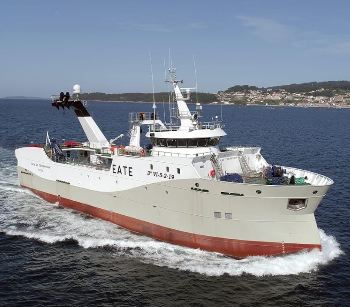
Photo: bdi Comunicacion
The Spanish Fishing Sector on Alert: Brussels Proposes Cutting Funds by 67% and Diluting Its Strategic Identity
 (EUROPEAN UNION, 9/26/2025)
The Spanish fishing sector, led by the Spanish Fisheries Confederation (Cepesca), has begun the political year expressing deep concern over the European Commission's (EC) proposed changes to fishing funds within the 2028-2034 Multiannual Financial Framework (MFF). The EC's proposal not only drastically cuts the budget but also eliminates its specific fund, a move the sector sees as a major strategic risk.
The central concern lies in two points: the drastic 67% reduction in proposed funds (dropping from €6.1 billion to €2 billion) and the integration of these funds into a single, general fund that lumps together activities as diverse as Economic, Social, and Territorial Cohesion, Agriculture, and Fisheries.
(1) (1).jpg)
According to Cepesca, this approach dilutes the identity and distinct personality of fishing as an economic and strategic sector for the European Union (EU), a very negative aspect considering urgent problems like the severe lack of generational renewal. The sector, which is the EU's fishing leader with 8,432 vessels, 30,494 crew members, and 765,638 tons of catches (22% of the EU total), demands a specific budget to ensure the competitiveness of the European fleet.
Javier Garat, Secretary General of Cepesca, called for joint action: "We have two years of negotiations ahead, and we hope that both our government and those of other countries with a great fishing tradition will articulate a common front to guarantee harmonized co-financing... the only formula for European fishing to be competitive against the world."
Urgent Action Plan for the High Seas and Distant Water Fleet
Cepesca has requested an urgent action plan from the Government to address the "critical situation" facing the high seas and distant water fleets. The sector attributes this crisis to an accumulation of five adverse factors: cuts in fishing possibilities, unfair competition from third countries, high taxation, elevated operating costs, and the lack of generational renewal.

To resolve the issue, Cepesca proposes the creation of a Special Registry for high seas and distant water vessels and crew, which would establish a framework with specific conditions for taxation, social security, and operability adapted to their international nature.
Julio Morón, President of Cepesca, emphasized the urgency: "It makes no sense that our fishermen are forced to board vessels of other flags because the Spanish tax system is not competitive... This fact cannot continue if we want to guarantee the future of the fleet and quality seafood products.” These fleets are strategic pillars that ensure fish supply and employment in home ports.
Mediterranean: Crucial Negotiation in December
Another pressing issue for the fishing sector this political year is the Mediterranean negotiation at the EU Fisheries Ministers' Council, scheduled for December 11 and 12 in Brussels. Fishermen point out that the clear improvement in fish stocks must translate into an increase in fishing days and the elimination of red shrimp quotas.
The Spanish sector has met 100% of Brussels' demands, investing up to €7,000 per vessel to renew nets and equipment. Despite the biological improvement, the Mediterranean fleet has lost over 40% of its activity days and 20% of red shrimp catches since the Demersal Fisheries Multiannual Plan (MAP) came into force in 2020.
(1).png) The sector criticizes the "double measure" of the Total Allowable Catch (TAC) for red shrimp, a reference species, arguing that applying a quota makes no sense if the species is already managed based on fishing effort. In 2025, the total red shrimp co-payment will be 710 tons. The sector criticizes the "double measure" of the Total Allowable Catch (TAC) for red shrimp, a reference species, arguing that applying a quota makes no sense if the species is already managed based on fishing effort. In 2025, the total red shrimp co-payment will be 710 tons.
Criticism of Lack of Scientific Rigor in the Atlantic
Finally, Cepesca persists in its fight against the closure of 87 zones to bottom fishing (trawling, longlining, and gillnetting) in the Northeast Atlantic, a measure that entered into force in October 2022. Although the EU General Court (TGUE) dismissed the initial appeal in June, the Government filed an appeal on points of law with the Court of Justice of the EU in July to reverse the prohibition. Cepesca acknowledges and applauds this action and positively values the communicative tone of the new European Commissioner for Fisheries, Costas Kadis, but insists that words must translate into immediate actions that improve the sector's real situation.
[email protected]
www.seafood.media
Information of the company:
|
Address:
|
Calle de Velázquez, 41, 4 C
|
|
City:
|
Madrid
|
|
State/ZIP:
|
(28001)
|
|
Country:
|
Spain
|
|
Phone:
|
+34 914 323 489
|
|
Fax:
|
+34 914 355 201
|
|
E-Mail:
|
[email protected]
|
More about: 
|
|
|
|








 Print
Print