|
Photo: Stockfile/FIS
New Zealand Blocks Tighter Trawling Rules at the SPRFMO Meeting
 (NEW ZEALAND, 3/3/2025)
The South Pacific Regional Fisheries Management Organisation (SPRFMO), a multilateral body regulating fishing in the vast South Pacific Ocean, convened its annual meeting from February 17-21 in Santiago, Chile.
At the meeting, Aotearoa New Zealand vetoed the implementation of a rule designed to significantly reduce bottom trawling, a destructive fishing practice that devastates the seabed and vulnerable marine ecosystems (VMEs), as reported by Edward Carver from Mongabay.
Despite having championed the 2023 adoption of bottom trawling regulations by consensus, New Zealand, under its new government, reversed course and blocked their full enforcement.
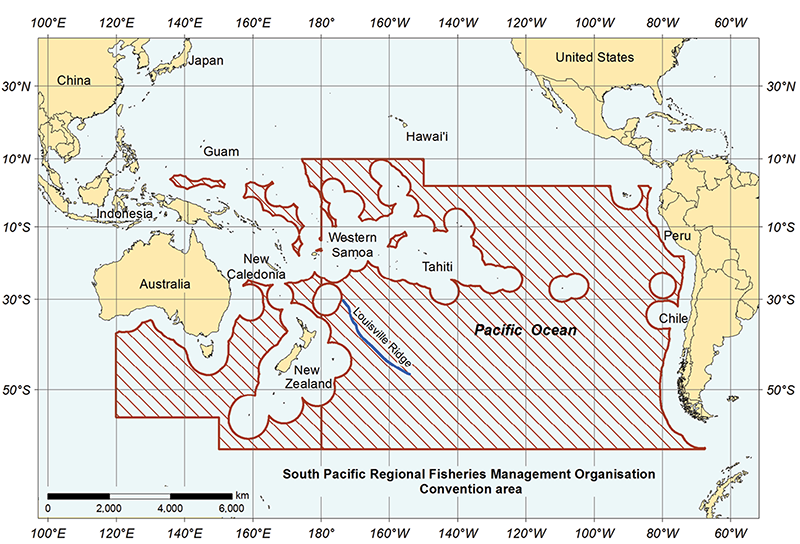
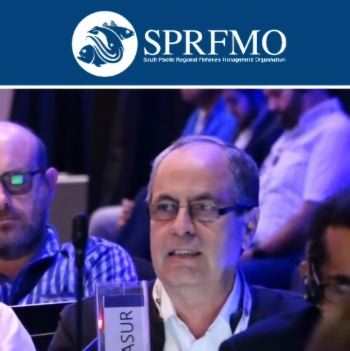
SPRFMO Area
Australia and the United States proposed enacting the 2023 rules, aiming to protect at least 70% of VME indicator species, thereby reducing trawling areas by approximately 45%. However, they "reluctantly" deferred the measure to next year due to New Zealand's opposition—the sole nation whose vessels have engaged in bottom trawling within the SPRFMO's regulatory area in recent years.
Conservationists strongly criticized New Zealand's decision.
 FIS Seafood Media.png) "While other SPRFMO members reaffirmed their commitment to protecting vulnerable marine ecosystems, New Zealand's stance defies scientific consensus, undermines international commitments, and endangers fragile, biodiverse marine ecosystems," stated Bronwen Golder, director of the Deep Sea Conservation Coalition's (DSCC) deep-sea fisheries seamounts campaign. "While other SPRFMO members reaffirmed their commitment to protecting vulnerable marine ecosystems, New Zealand's stance defies scientific consensus, undermines international commitments, and endangers fragile, biodiverse marine ecosystems," stated Bronwen Golder, director of the Deep Sea Conservation Coalition's (DSCC) deep-sea fisheries seamounts campaign.
In other meeting developments, SPRFMO parties made crucial decisions regarding pelagic fisheries. Notably, they increased the jack mackerel (Trachurus symmetricus) fishing quota beyond scientifically recommended limits, while simultaneously advancing a harvest strategy to prevent future abrupt quota increases.
Trawling Politics
The SPRFMO, comprising 16 member nations plus the European Union, governs the vast international waters of the South Pacific. The debate over bottom trawling has persisted for years. Conservationists condemn the practice for its devastating impact on seabed ecosystems. The New Zealand-based High Seas Fisheries Group (HSFG) argues that increasingly stringent regional rules have hindered sustainable fishing and caused job losses.
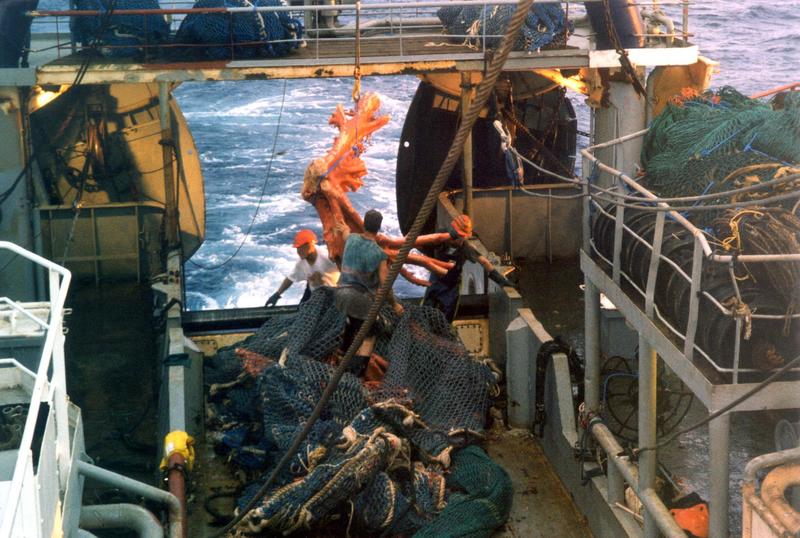
Photo: Mongabay
New Zealand's current government, a conservative coalition aligned with industry interests, took office in November 2023. Shane Jones, Minister for Oceans and Fisheries, has received past election funding from fishing companies and openly expresses pro-industry sentiments, even suggesting New Zealand's withdrawal from the SPRFMO.
(1)(1).jpg) Jones labeled Australia and the U.S. "combatants" regarding their 70% VME protection proposal. Jones labeled Australia and the U.S. "combatants" regarding their 70% VME protection proposal.
The SPRFMO's 2023 measure, based on scientific committee advice, was opposed by the HSFG. However, conservationists, advocating for 100% VME protection, deemed it insufficient.
While the 2023 measure is in force, its 70% VME protection rule remains unimplemented due to New Zealand's repeated obstruction. This year, New Zealand's opposition intensified, drawing sharp criticism.
"This year, they openly opposed the measure, rejecting the responsibility to protect vulnerable marine ecosystems and citing threats to commercial viability," Golder of the DSCC told Mongabay.
New Zealand's veto power stems from the SPRFMO's consensus-based decision-making.
.png) Charlotte Denny, from New Zealand's Ministry of Primary Industries, stated that the delegation sought a broader bottom fishing management package, citing a recent SPRFMO performance review that deemed the 2023 measure "not fit for purpose." Charlotte Denny, from New Zealand's Ministry of Primary Industries, stated that the delegation sought a broader bottom fishing management package, citing a recent SPRFMO performance review that deemed the 2023 measure "not fit for purpose."
The review criticized the measure's complexity and potential "unintended consequences" for industry, advocating for a more "flexible and adaptive management strategy." However, it also acknowledged the "not ideal practice" of ignoring scientific committee advice and emphasized the binding nature of the 70% VME rule.
Trawling in the South Pacific has declined over the past two decades, with New Zealand being the sole country trawling in SPRFMO waters since 2019. Two New Zealand vessels recently resumed trawling, targeting orange roughy (Hoplostethus atlanticus) at Westpac Bank.
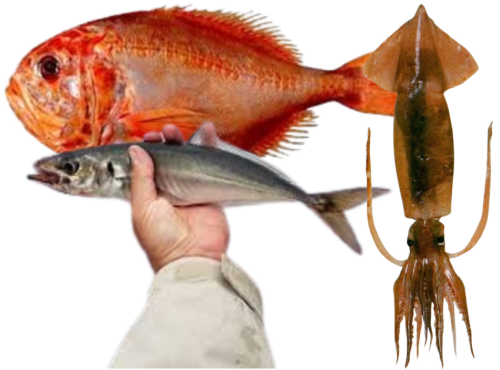
Westpac Bank, a key trawling area, would see significant reductions under the 70% rule. Parties agreed on a 177-metric-ton orange roughy quota, a compromise between scientific recommendations and New Zealand's request.
The permitted carryover of unused orange roughy quota was increased to 100%, despite opposition from conservation groups, who fear increased fishing "footprint" on VMEs.
Other Meeting News
.png) Regarding jack mackerel, parties increased the 2025 quota by 25%, exceeding scientific advice, despite the stock's recovery under SPRFMO management. Regarding jack mackerel, parties increased the 2025 quota by 25%, exceeding scientific advice, despite the stock's recovery under SPRFMO management.
Dave Gershman of Pew Charitable Trusts criticized the quota increase, emphasizing the need for modernized management.“It really demonstrates why the commission needs to modernize its management of this stock,” he told Mongabay.
However, progress was made towards a 2026 harvest strategy for jack mackerel, a best practice in fisheries management.
Pew expressed disappointment over the lack of strengthened regulations for jumbo flying squid (Dosidicus gigas), despite proposals for improved data reporting and area-based closures.
Related News:
[email protected]
www.seafood.media
Information of the company:
|
Address:
|
Level 26 Plimmer Towers, 2-6 Gilmer Terrace (access via Lambton Quay)
|
|
City:
|
Wellington
|
|
Country:
|
New Zealand
|
|
Phone:
|
+64 4 4739579
|
|
E-Mail:
|
[email protected]
|
More about: 
|
|






 Print
Print