|
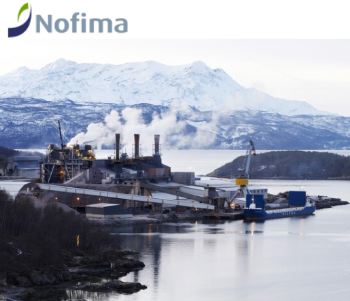
Three research environments are working together with the ferrosilicon plant Finnfjord AS in Troms to turn all polluting CO₂ into healthy salmon feed.
Revolutionary Norwegian Project Transforms Industrial CO₂ Emissions into Sustainable Salmon Feed
 (NORWAY, 7/2/2025)
Scientists, Industry, and Academia Collaborate to Combat Climate Change While Boosting Aquaculture Sustainability with Microalgae-Based Nutrition.
TROMSØ – A groundbreaking Norwegian initiative is turning a climate change challenge into a sustainable solution for the aquaculture industry. In a feat once considered science fiction, scientists are successfully converting polluting carbon dioxide (CO₂) into highly nutritious feed for farmed salmon, utilizing large quantities of microalgae. This pioneering effort brings together innovative research environments, a visionary heavy industry player, and significant funding for green technology.
 At the heart of this transformation is Finnfjord AS, a ferrosilicon producer in Northern Norway, which annually emits approximately 300,000 tonnes of CO₂. Instead of releasing it, this CO₂ is now captured and utilized by microalgae, which effectively "eat" the carbon dioxide as an energy source, much like plants do through photosynthesis. At the heart of this transformation is Finnfjord AS, a ferrosilicon producer in Northern Norway, which annually emits approximately 300,000 tonnes of CO₂. Instead of releasing it, this CO₂ is now captured and utilized by microalgae, which effectively "eat" the carbon dioxide as an energy source, much like plants do through photosynthesis.
The microalgae biomass is then incorporated into salmon feed. "We incorporate the algae into the feed and conduct growth trials with the salmon, from fry to slaughter weight," explains Sten Siikavuopio, a senior scientist at Nofima, who leads the institute's role in the project. "It is technically challenging, but results so far show that the salmon grow well on the algae feed and are in good health."
Diatoms: A Sustainable Omega-3 Powerhouse
This ambitious project, named AlgOpti and supported by NOK 93.3 million from Norway's Green Platform fund, is a collaboration between UiT – The Arctic University of Norway, SINTEF, Nofima, and Finnfjord AS. Their collective goal is to develop salmon feed using captured CO₂ and establish efficient methods for cultivating useful algae. The Mikro-fôr project, funded by FHF – The Norwegian Seafood Research Fund and led by SINTEF Ocean, specifically focuses on microalgae as a feed raw material.
One of the significant challenges in global aquaculture has been securing sufficient marine oils, rich in Omega-3 fatty acids like DHA and EPA, essential for salmon diets. Diatoms, a type of microalgae, offer a promising solution. "Microalgae can grow quickly and produce more of the healthy omega-3 fatty acids when cultivated in large reactors at Finnfjord AS. This makes them particularly interesting as a feed ingredient," says Siikavuopio, who believes algae oil could potentially replace traditional fish oil in aquafeed.
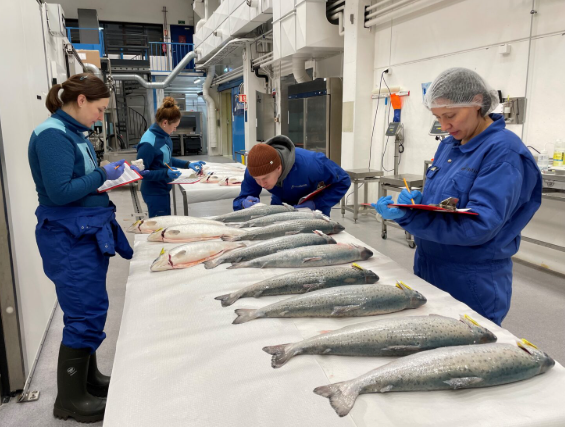
Several experts at Nofima have been involved in the algae feed research. Here, work is being done to map the quality of salmon fed with algae cultivated using waste heat from Finnfjord AS.
Photo: Anne-May Johansen, Nofima
Initial tests had limited algae inclusion to 3% due to processing issues. However, technological advancements have allowed researchers to achieve up to 15% algae inclusion in the new feed formulations. "Trials so far show that the fish grow and thrive very well with a high inclusion of algae in the feed," Siikavuopio confirmed.
Beyond Growth: Health Benefits and Reduced Lice Infection
The interdisciplinary nature of the project is key to its success. Finnfjord AS and UiT – The Arctic University of Norway developed the system to make CO₂ and NOx emissions from ferrosilicon production available to the algae, cultivating them in large tanks at the smelter. This process transforms industrial exhaust into valuable protein and marine oil. The resulting algae biomass is then sent to feed producers like Nofima, Skretting, and Cargill, who formulate the specialized feed using carefully developed recipes.
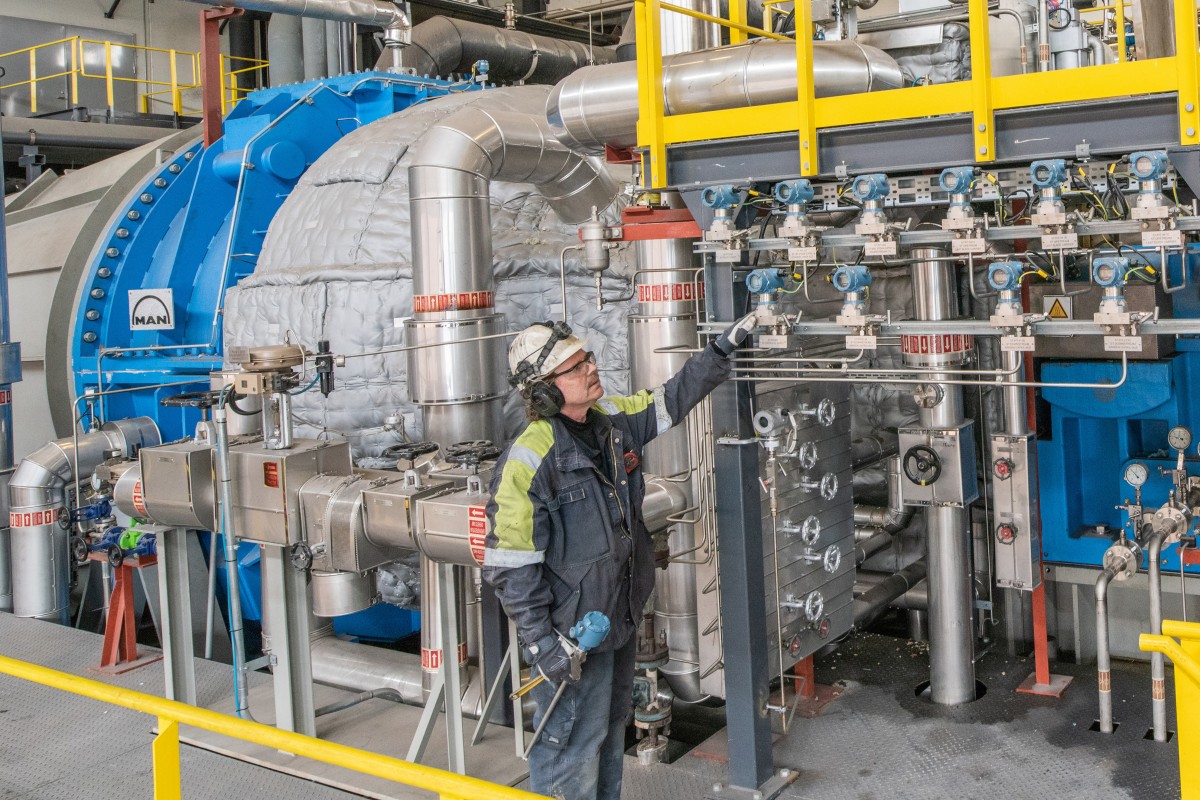
Photo: Finnfjord
Beyond healthy growth, the algae feed has shown another significant benefit: reduced salmon lice infection. "This has been documented," states Siikavuopio.
Extensive testing led by Nofima's quality scientist Stein Harris Olsen and fish health scientist Elisabeth Ytteborg has confirmed the feed's efficacy. The salmon fed with the CO₂-consuming algae are perfectly edible, their muscle composition is no different from other salmon, and their health is excellent.
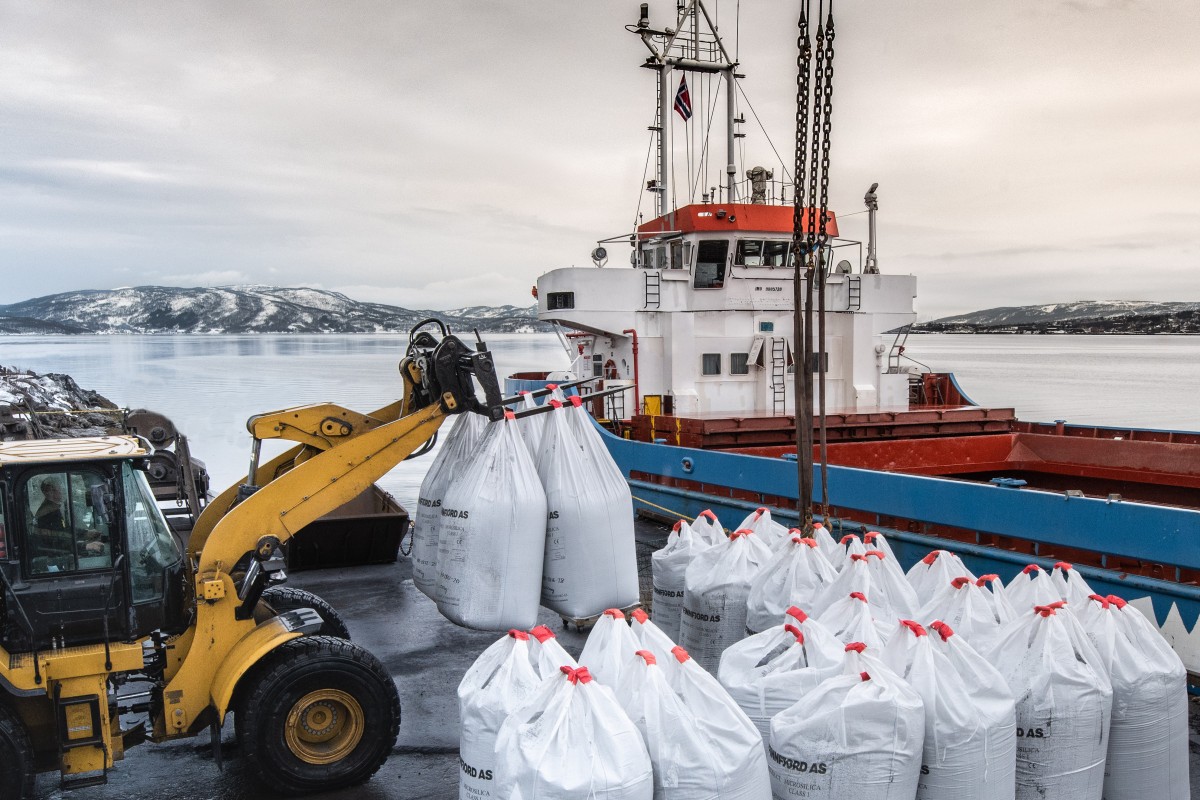
Photo: Finnfjord
Finnfjord AS, already one of the world's most energy-efficient and environmentally friendly producers of ferrosilicon, aims to become the world's first CO₂-free ferrosilicon producer. Their collaboration with UiT on algae utilization dates back to 2014, showcasing a long-term commitment to sustainable practices.
With only a tiny fraction of microalgae species explored for aquaculture feed to date, scientists anticipate further work to test various types of algae and optimize cultivation and feed utilization processes.
[email protected]
www.seafood.media
Information of the company:
|
Address:
|
Muninbakken 9-13
|
|
City:
|
Breivika
|
|
State/ZIP:
|
(N-9291)
|
|
Country:
|
Norway
|
|
Phone:
|
+47 77 62 90 00
|
|
Fax:
|
+47 77 62 91 00
|
|
E-Mail:
|
[email protected]
|
More about: 
|
|
|
|






 Print
Print