|
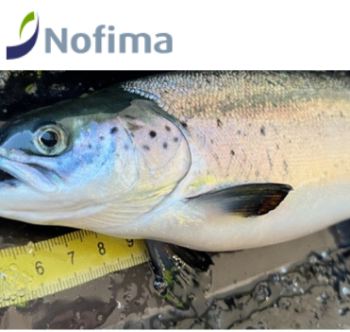
The fish’s growth in the sea was best for those that had lived in relatively warm water during the freshwater phase. Photo: Anja Striberny/Nofima
Surprising Salmon Study: High Rearing Temperatures Boost Sea Growth
 (NORWAY, 10/28/2025)
Contrary to industry concerns, a new Nofima study finds Atlantic salmon reared at warmer freshwater temperatures maintain a superior growth advantage all the way to harvest.
A long-term scientific trial led by Nofima scientists has delivered surprising results to the Norwegian aquaculture industry, suggesting that higher rearing temperatures in freshwater may actually be advantageous for Atlantic salmon performance at sea.
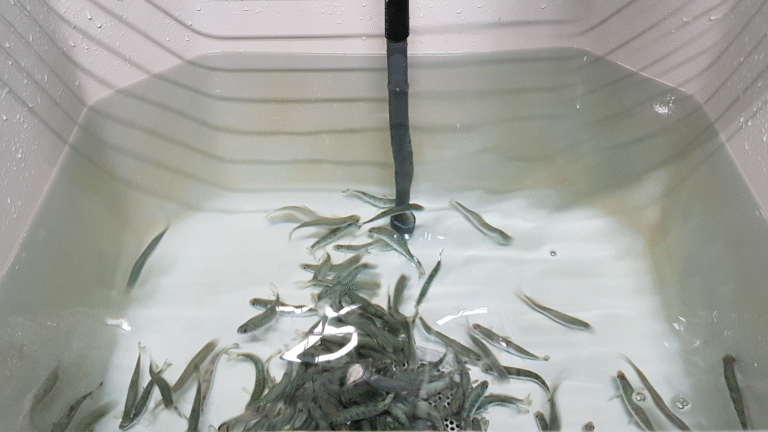
Experimental fish in flow-through tanks with tightly controlled temperature at Nofima’s aquaculture research station in Sunndalsøra. Photo: Anja Striberny/Nofima.
The Trial: Challenging Conventional Wisdom
Temperature is a critical factor in fish development, known as a "master regulator." While warmer water is used to accelerate the growth of juvenile salmon (parr), concerns had grown that excessively high temperatures could compromise their heart health and overall ability to thrive after they undergo smoltification—the physiological change needed for life in seawater.
 To address this, scientist Anja Striberny and colleagues initiated a trial following salmon from the 10-gram stage up to 200 grams (the smolt stage). Groups were reared at varying temperatures: 8, 12, or 14 degrees Celsius. The experiment was set up at Nofima’s aquaculture research station in Sunndalsøra, on the west coast of Norway, and included both flow-through and recirculating aquaculture systems (RAS). Once smoltified, the fish were transferred to the seawater facility at Gildeskål in Northern Norway. To address this, scientist Anja Striberny and colleagues initiated a trial following salmon from the 10-gram stage up to 200 grams (the smolt stage). Groups were reared at varying temperatures: 8, 12, or 14 degrees Celsius. The experiment was set up at Nofima’s aquaculture research station in Sunndalsøra, on the west coast of Norway, and included both flow-through and recirculating aquaculture systems (RAS). Once smoltified, the fish were transferred to the seawater facility at Gildeskål in Northern Norway.
Unexpected Sea Performance
As expected, the salmon reared at higher temperatures were significantly larger at the time of transfer: the 14-degree group weighed an average of 140 grams, double the 70 grams of the 8-degree group.
However, the major surprise occurred during the sea growth phase.
"What did surprise the scientists was that, during the sea growth phase, fish from the higher temperature group continued to grow faster than those from the lower temperature groups," the report notes.
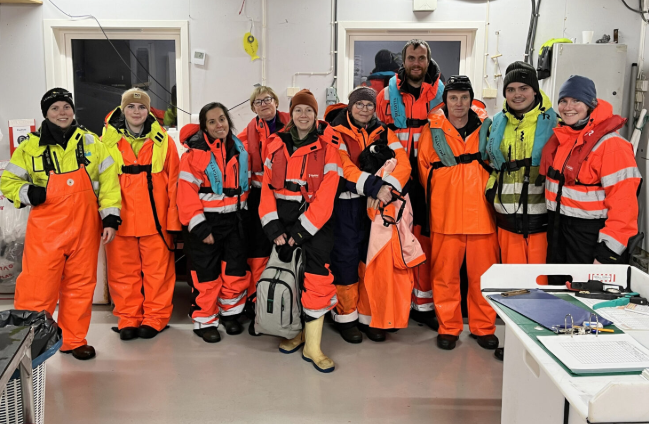
Anja Striberny (to the right) and research colleagues from Nofima, UiT and staff at Gifas research station during the trial, where they investigate how salmon responds to early-life high temperature exposure. Photo: Nofima.
This superior performance continued to harvest, suggesting that temperatures up to 14 degrees Celsius are not only unproblematic for conventional smolt production but may offer a long-term benefit. Furthermore, the 12 and 14-degree groups showed a higher proportion of fish with superior quality and a tendency toward more intense fillet colour, which is desirable for food production.
Health Caveats and Future Context
While growth and survival were high across all groups, the researchers noted minor negative tendencies in the fish that experienced the highest temperatures. These included a tendency for mild cataracts at the end of the seawater phase and slightly smaller hearts—a trait also observed in fish reared in RAS.
 The research, financed by the Norwegian Seafood Research Fund (FHF), is part of its "Robust Fish" research area. Sven Martin Jørgensen, Head of Research at FHF, emphasised the need to view these results in context. The research, financed by the Norwegian Seafood Research Fund (FHF), is part of its "Robust Fish" research area. Sven Martin Jørgensen, Head of Research at FHF, emphasised the need to view these results in context.
"When several of the projects have delivered their recommendations, it will be important to compile the results so that the aquaculture industry can gain updated knowledge," says Jørgensen.
Striberny added a final caution, noting that only temperature was manipulated in this trial, while density and water quality were kept optimal. She warns that altering those factors could yield different outcomes.
The Temp-Intens project involved collaboration with partners including the Arctic University of Norway (UiT), University of Bergen (UiB), Norwegian University of Science and Technology (NTNU), Mowi, Grieg Seafood, and Cermaq.
[email protected]
www.seafood.media
Information of the company:
|
Address:
|
Muninbakken 9-13
|
|
City:
|
Breivika
|
|
State/ZIP:
|
(N-9291)
|
|
Country:
|
Norway
|
|
Phone:
|
+47 77 62 90 00
|
|
Fax:
|
+47 77 62 91 00
|
|
E-Mail:
|
[email protected]
|
More about: 
|
|
|
|








 Print
Print