|
Photo: VASEP/FIS
Vietnamese tuna faces a new differential tariff race in the US market
 (VIET NAM, 7/30/2026)
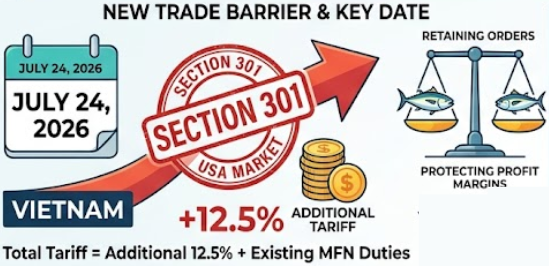
The application of an additional 12.5% tariff under Section 301 starting July 24, 2026 presents a complex scenario for tuna exporters, who must balance retaining orders with protecting profit margins.
.png) The seafood and tuna (Thunnus) export sector of Vietnam is facing a new trade barrier in its primary international market. Starting July 24, 2026, purchases of Vietnamese tuna in the United States are subject to an additional tariff of 12.5% under Section 301, a tax rate that is added to the tariffs under Most Favoured Nation (MFN) treatment and existing tax obligations, as reported by Ms. Nguyen Ha, Tuna Market Expert at the Vietnam Association of Seafood Exporters and Producers (VASEP). The seafood and tuna (Thunnus) export sector of Vietnam is facing a new trade barrier in its primary international market. Starting July 24, 2026, purchases of Vietnamese tuna in the United States are subject to an additional tariff of 12.5% under Section 301, a tax rate that is added to the tariffs under Most Favoured Nation (MFN) treatment and existing tax obligations, as reported by Ms. Nguyen Ha, Tuna Market Expert at the Vietnam Association of Seafood Exporters and Producers (VASEP).
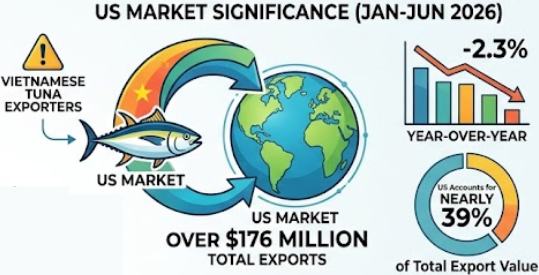
This measure comes into effect at a key adjustment moment for the seafood industry. During the first six months of 2026, the total value of Vietnam's tuna exports to the United States reached over $176 million, representing a 2.3% decrease compared to the same period of the previous year. Despite this slight contraction, the US market remains the largest destination for this product, accounting for nearly 39% of the total export value of Vietnamese tuna.
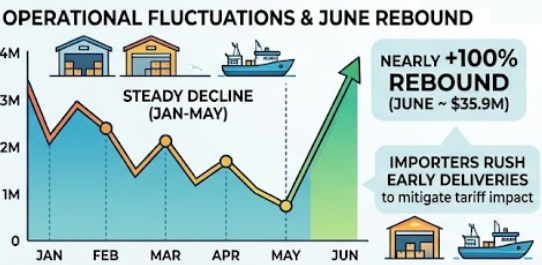
The monthly performance prior to the regulation showed significant operational fluctuations. After experiencing steady declines during the first five months of the year, shipments recorded a rebound of nearly 100% in June, reaching approximately $35.9 million. This specific increase was driven by a strategy among US importers to move up deliveries and mitigate the impact of anticipated tariff changes.
Preliminary reviews confirm that key tuna products have not been included in the Section 301 exemption list. Although the tax obligation legally falls on the importer in the United States, commercial practice often transfers the financial pressure back to the exporter through requests for price reductions at origin, shared tax absorption agreements, adjustments in product specifications, or reductions in order volume.
On the competitive front, Vietnam is not the only regional supplier subject to this 12.5% duty, as major competitors such as Thailand and China are included in the same tax scheme. Consequently, the direct competitive dynamics between Vietnam and Thailand under Section 301 remain largely unchanged, although it forces Vietnamese companies to restructure their operational efficiency to maintain financial viability.
🇯🇵 日本語 (Japanese Version)
ベトナム産マグロ、米国市場で新たな差別関税競争に直面
2026年7月24日からの不当貿易慣行対策(通商法301条)に基づく12.5%の追加関税の適用は、注文の維持と利益率の保護のバランスを取らなければならないマグロ輸出企業にとって複雑なシナリオを提起しています。
ベトナムの水産物およびマグロ(Thunnus)輸出部門は、主要な国際市場において新たな貿易障壁に直面しています。ベトナム水産物輸出生産者協会(VASEP)のマグロ市場専門家であるグエン・ハ(Nguyen Ha)氏の報告によると、2026年7月24日より、米国におけるベトナム産マグロの輸入には、最恵国待遇(MFN)関税および既存の課税義務に加えて、301条に基づく12.5%の追加関税が課されます。
この措置は、水産物産業における重要な調整の時期に発効します。2026年の最初の6か月間において、ベトナムから米国へのマグロ輸出総額は1億7,600万米ドルを超え、前年同期比で2.3%の減少を示しました。このわずかな減少にもかかわらず、米国市場は依然として本製品の最大の輸出先であり、ベトナムのマグロ輸出総額のほぼ39%を占めています。
同規制以前の月別実績は、大幅な業務上の変動を示しました。年初の5か月間にわたり減少が続いた後、6月の出荷量は100%近く急増し、約3,590万米ドルに達しました。この一時的な増加は、予測される関税変更の影響を緩和するために早期納品を進めた米国輸入業者の戦略によるものでした。
予備審査により、主要なマグロ製品は301条の除外リストに含まれていないことが確認されています。法的には納税義務は米国の輸入業者にありますが、実際の商業取引では、原価の引き下げ要求、税負担の折半協定、製品仕様の変更、または注文量の削減を通じて、財務上の圧力が出荷元に転嫁されることが多々あります。
競合の観点からは、タイや中国などの主要な競合国も同じ税制枠組みに含まれているため、この12.5%の課税対象となるのはベトナムだけではありません。したがって、301条の下でのベトナムとタイの直接的な競合関係に大きな変化はありませんが、ベトナム企業は財務上の生存可能性を維持するために業務効率の再構築を余儀なくされています。
🇨🇳 简体中文 (Simplified Chinese Version)
越南金枪鱼在美国市场面临新的差异化关税竞争
自2026年7月24日起根据第301条加征12.5%的额外关税,这为金枪鱼出口企业带来了复杂的局面,企业必须在保留订单与保护利润率之间取得平衡。
据越南水产生产商和出口商协会(VASEP)金枪鱼市场专家阮夏(Nguyen Ha)女士报道,越南的水产品及金枪鱼(Thunnus)出口部门在其主要国际市场面临着新的贸易壁垒。自2026年7月24日起,在美国采购越南金枪鱼需在最惠国(MFN)关税及现有税收义务的基础上,额外缴纳第301条项下的12.5%追加关税。
该措施的出台正值海产品行业进行关键调整的时期。在2026年前六个月中,越南对美国的金枪鱼出口总额超过1.76亿美元,与去年同期相比下降了2.3%。尽管出现轻微收缩,美国市场仍是该产品最大的出口目的地,占越南金枪鱼出口总额的近39%。
在该新规实施前,月度出口表现出了显著的运营波动。在经历了今年前五个月的持续下滑后,六月的出口量大幅反弹近100%,达到约3590万美元。这一具体增长源于美国进口商推进提前交货以减轻预期关税政策变更影响的策略。
初步审查确认,主要金枪鱼产品尚未被纳入第301条的豁免清单。尽管在法律上纳税义务属于美国进口商,但在商业实践中,相关财务压力往往通过要求降低原产地价格、分担税款协议、调整产品规格或减少订单量等方式转嫁给出口商。
在竞争格局方面,越南并非该地区唯一需要缴纳12.5%关税的供应国,因为泰国和中国等主要竞争对手也被纳入了相同的税收体系。因此,仅从第301条关税来看,越南与泰国之间的直接竞争关系并未发生实质性变化,但这也迫使越南企业重构运营效率以维持财务可行性。
[email protected]
www.seafood.media
Information of the company:
|
Address:
|
218 Road No.6, Zone A, An Phu An Khanh New Urban Area, District 2
|
|
City:
|
Ho Chi Minh
|
|
State/ZIP:
|
( )
|
|
Country:
|
Viet Nam
|
|
Phone:
|
+84 28 6281 0430
|
|
Fax:
|
+84 28 6281 0437
|
|
E-Mail:
|
[email protected]
|
More about: 
|
|
|
|








 Print
Print