|
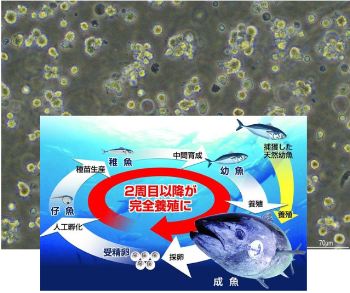
Cells derived from 100% egg-to-harvest bluefin tuna in suspension culture in the background anf the complete aquaculture cycle of Kindai tuna
The Future of the Ocean's Delicacy: Can Technology Save Bluefin Tuna from Overexploitation?
 (WORLDWIDE, 7/28/2025)
Full-Cycle Aquaculture and Cellular Agriculture: Japan and Spain at the Forefront of an Urgent Revolution for Bluefin Tuna
Bluefin tuna, revered in elite kitchens worldwide, especially for its coveted meat in sashimi and sushi, faces a critical crossroads. Soaring global demand collides head-on with the stark reality of its wild populations, pushed to the brink of overexploitation. Against this bleak backdrop, full-cycle aquaculture—the ability to raise this majestic species from egg to spawning, continuously and without relying on wild juveniles—emerges not just as an alternative, but as an imperative necessity. In this race against time, Japan and Spain stand out as the undisputed leaders of innovation.
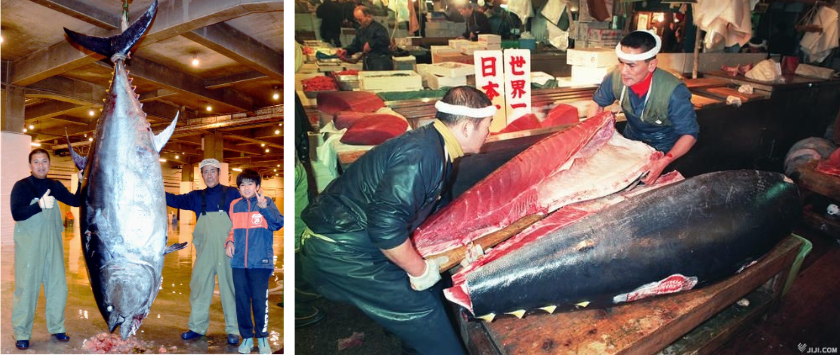
Photo: Stockfile/FIS
The Urgency of Full-Cycle Aquaculture: A Species on the Brink
The story of bluefin tuna is one of commercial success coupled with ecological disaster. Decades of intensive fishing have decimated its populations by up to 90% in some regions. Although certain stocks show signs of partial recovery thanks to strict regulations (such as those from ICCAT for the Atlantic and Mediterranean), the insatiable global market's thirst for this "red gold" continues to grow. Extractive fishing, as we know it, is no longer a sustainable path.
This is where full-cycle cultivation becomes indispensable. It allows for the reproduction and rearing of tuna entirely in captivity, relieving immense pressure on the oceans and offering a high-quality, consistent product with, crucially, impeccable traceability that modern consumers increasingly demand. Furthermore, it opens the door to optimizing feed, health, and potentially reducing environmental impacts associated with fattening wild-caught juveniles.
(1).jpg)
Photo: Stockfile/FIS
Japan: The Cradle of Cultivated Bluefin Tuna Revolution
The epic journey of full-cycle bluefin tuna began in Japan. In 2002, Kindai University (Kinki University) achieved an unprecedented scientific milestone by successfully raising the first full generation of Pacific bluefin tuna in captivity. Japanese perseverance paid off, and by 2007, they were already reproducing a third generation entirely in captivity—a testament to their mastery of aquaculture biology and engineering.
Maruha Nichiro, a giant in the fishing sector, reactivated its own program in 2006 and managed to close the cycle in 2010. By 2015, they began commercializing "egg-to-harvest" tuna, reaching an impressive production of 950 tons from full-cycle aquaculture by 2020. This achievement demonstrated commercial viability on a large scale.
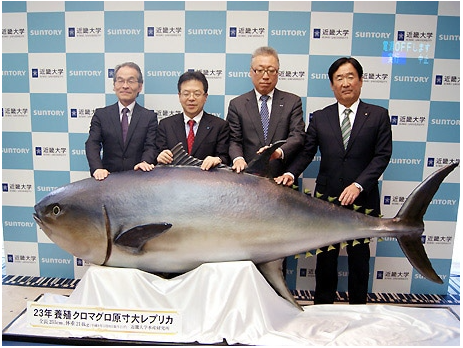
Photo: Kindai University
Although other major Japanese companies like Nissui and Kyokuyo have withdrawn from full-cycle aquaculture in recent years, citing technical complexities and high costs, Maruha Nichiro remains unwavering in its commitment. Despite an expected production reduction for 2025, the company continues to develop innovations. A key example is its collaboration in cellular agriculture with Umami Bioworks in Singapore, pointing to a horizon even beyond traditional aquaculture.
Currently, Japan exports full-cycle tuna to demanding markets such as the U.S. and the EU. However, this full-cycle production still represents a small percentage of the total cultivated tuna in the country (just 2% in 2024, down from 16% in 2020), underscoring the technical and economic challenges that persist for its massive expansion.
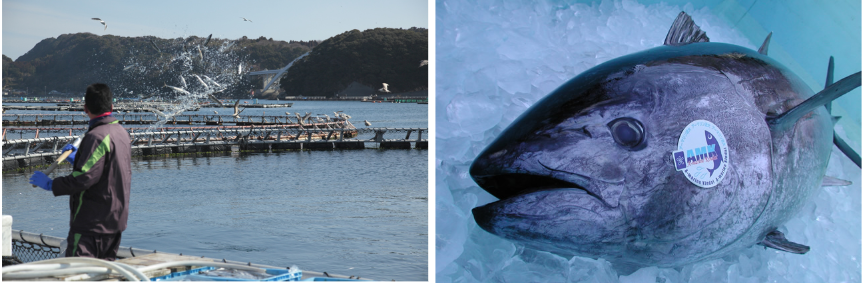
Photo: Stockfile/FIS
Spain: The Atlantic Leap on Land
The Mediterranean and Atlantic have their own history with bluefin tuna, marked by the fattening of wild juveniles. However, Spain has taken a giant leap towards unprecedented sustainability. In a momentous achievement in July 2023, the Spanish Institute of Oceanography (IEO) successfully reproduced Atlantic bluefin tuna in land-based tanks in Murcia. The success was resounding: over 100,000 fertilized eggs and millions of surviving larvae, an unprecedented larval survival rate.
This achievement represents the first instance in Europe of full-cycle aquaculture on land, without any intervention or need to use the ocean for spawning, marking a turning point. It demonstrates the viability of sustainable aquaculture for such complex pelagic species in controlled environments, which could have enormous implications for reducing environmental impact and improving biosecurity. The ability to control all parameters from land opens new avenues for efficiency and risk reduction.
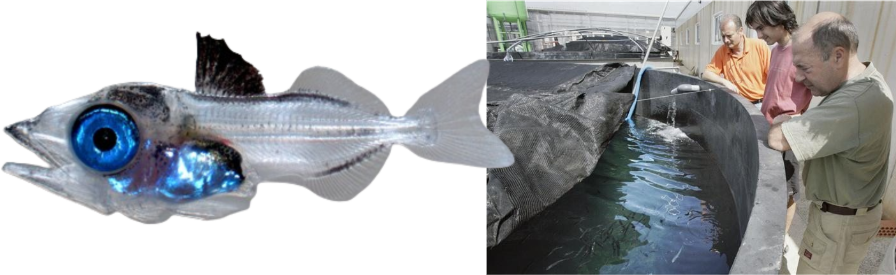
Photo: Stockfile/FIS
But All That Glitters Is Not Gold: The Challenges of Large-Scale Aquaculture
Despite scientific advancements and the promises of full-cycle aquaculture, the path to large-scale commercial viability has not been without obstacles. Since early 2025, there's been a noticeable contraction in the commercial production of full-cycle bluefin tuna among some of its pioneers. Maruha Nichiro, for example, expects to reduce its production volume in fiscal year 2025 by a drastic 80% compared to the previous year, and major Japanese fishing companies like Nissui and Kyokuyo have even completely withdrawn from the sector.
Investment in this technology, once considered a "dream" promising a stable tuna supply, intensified. However, profitability has significantly deteriorated. This is partly due to the recovery of wild resources in some areas (which increases supply and adjusts market prices for wild-caught tuna) and, crucially, the uncontrolled rise in feed prices, escalating production costs to the point of pricing aquaculture products out of the market.
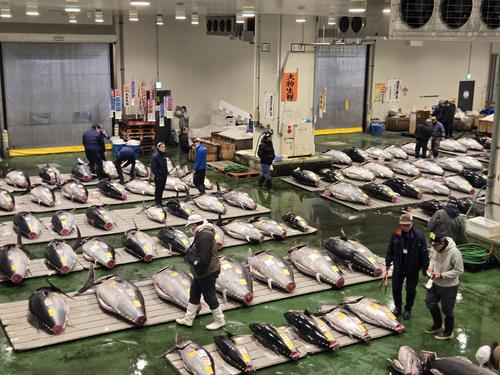
Photo: Stockfile/FIS
"Currently, there aren't many orders for farmed tuna fry," states a key expert from Kindai University, who achieved the world's first farmed tuna aquaculture. While this may be a temporary problem, the situation underscores the fragility of the current economic model. However, the long-term outlook is clear: global demand for tuna will continue to grow, and wild tuna's capacity to meet that trend is limited.
Nevertheless, this situation has spurred the search for new options, unthinkable just 20 years ago, that complement wild fishing and full-cycle aquaculture.
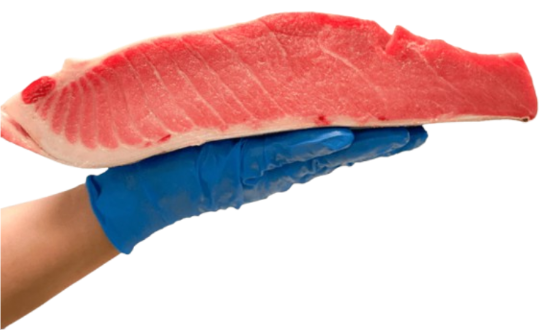
Photo: Stockfile/FIS
The Next Horizon: Cellular Aquaculture and Beyond
Innovation doesn't stop. Beyond traditional full-cycle aquaculture, cellular aquaculture, or lab-grown meat cultivation, is emerging as the next big disruptor. Maruha Nichiro and the Singaporean biotechnology company Umami Bioworks are at the forefront of this promising technology. Using cells from tuna already raised in their full-cycle operations, they aim to scale up sustainable production that requires no living marine resources, completely eliminating pressure on the oceans and the need for large aquaculture facilities. While still facing technological and acceptance challenges, this field offers a window into a future where bluefin tuna could be an unlimited resource.
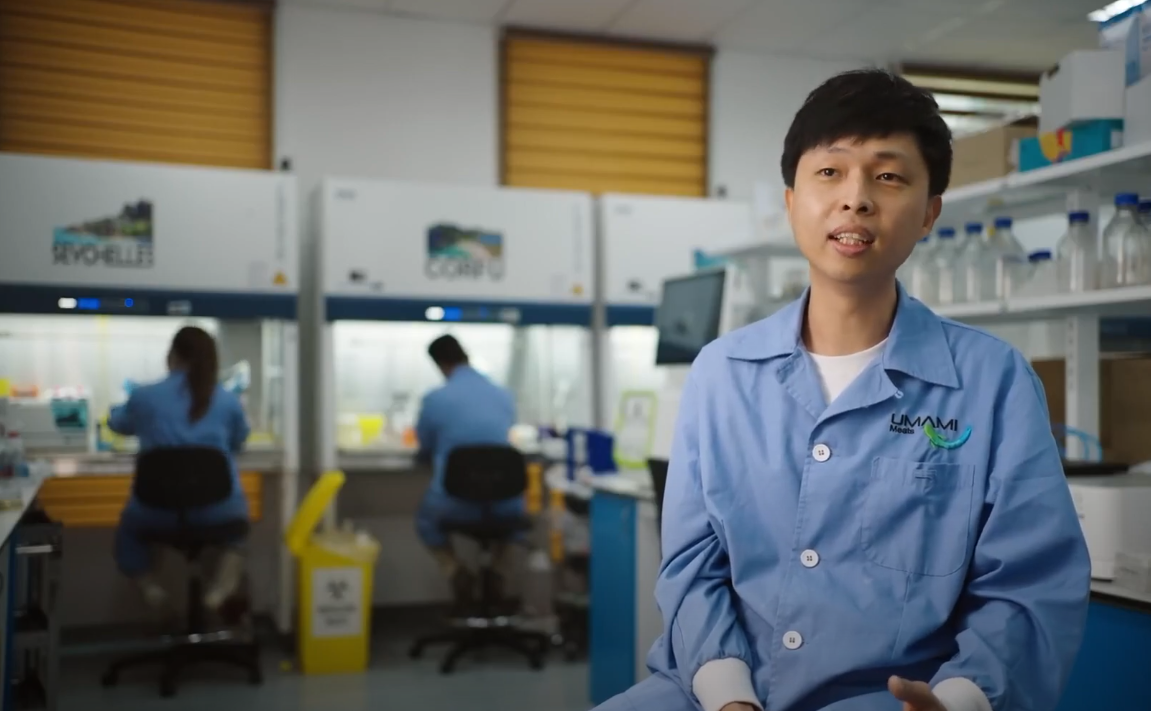
Photo: Umami Bioworks
The Imperative of the Future: Sustainability, Ethics, and Collaboration
With bluefin tuna populations at their limit and global demand continuously rising, full-cycle aquaculture is no longer just a technological option; it is an ecological and commercial imperative. Japan and Spain are demonstrating to the world that it is viable to produce high-quality tuna without exacerbating pressure on wild stocks. However, significant challenges persist: high production costs, high larval mortality in early stages, reliance on raw materials (feed) for fattening, and the need for substantial R&D investments.
The commitment to complementary technologies, such as cellular agriculture or land-based cultivation, solidifies a path toward aquaculture that is not only more efficient but also more ethical and truly sustainable. This not only benefits the environment but also offers food security and stability to a sector with immense economic value.
The future of bluefin tuna hangs in the balance, and the solution lies at the intersection of science, innovation, and a firm will for international collaboration. The sustainability of this oceanic delicacy is no longer a pipe dream but an achievable goal if we continue to invest in and commit to cutting-edge aquaculture.
[email protected]
www.seafood.media
Information of the company:
|
Address:
|
1-2 1-chome, Otemachi, Chiyoda-ku
|
|
City:
|
Tokyo
|
|
State/ZIP:
|
(100-8608)
|
|
Country:
|
Japan
|
|
Phone:
|
+81 3 3216 0821
|
|
Fax:
|
+81 3 3216 0342
|
|
E-Mail:
|
[email protected]
|
More about: 
|
Approval / Accreditation / Certified / Oversight by...


|





 Print
Print